
Last updated November 16, 2026
 Metal roofing
 Architectural shingles
 Tile roofing
 GAF
 Owens Corning
 Flat & low-slope
Free roof inspection with deck photos before we talk money - GAF and Owens Corning certified installation
Roofing Warning Signs: An Enterprise Homeowner’s Reference Guide
Granule loss in the gutters shows up on nearly every roofing warning sign list you’ll find online. In Enterprise’s UV environment though, a little granule shedding is normal aging for shingles that are already ten years or older. The warning isn’t the granules themselves. It’s the pattern and density of granule loss on specific roof sections, which tells you whether you’re looking at ordinary UV degradation or mechanical damage. This guide separates the warnings that mean “watch and monitor” from the ones that mean “schedule an inspection this month” and the ones that mean “call now,” so you can judge urgency yourself instead of having a contractor interpret it for you. We’ll walk through exterior and interior signs, explain how monsoon impact damage differs visually from sun damage, cover why flat sections fail differently than pitched ones, and flag the warning signs some contractors use to oversell a full replacement.
Quick Answer
Roofing warning signs in Enterprise fall into three tiers: cosmetic aging you should monitor (light granule loss, faded shingles, minor surface cracking), structural deterioration that warrants an inspection within 30 days (curling shingles, sagging deck lines, persistent attic moisture stains), and active failure that needs action within days (missing shingles after a monsoon storm, active ceiling drips, exposed fasteners on flat sections). Interior signs, particularly attic temperature swings and decking discoloration, are often more reliable than exterior evidence in a desert climate because sun and heat do damage from above and below at once.
Styles & brands we work with
- Architectural shingles
- Metal roofing
- Tile roofing
- GAF
- Owens Corning
- Flat & low-slope
Table of Contents
- The Three-Tier Warning System: Monitor, Schedule, Act
- Interior Warning Signs That Beat Exterior Clues in a Desert Climate
- Monsoon Impact Damage vs. UV and Thermal Degradation
- Why Flat and Low-Slope Roofs Fail Differently Than Pitched Roofs
- Warning Signs Contractors Use to Oversell Replacement
- When Repair Is the Right Answer and When Replacement Genuinely Is
- What a Proper Roof Inspection Should Cover
- Reading Your Roof’s Material and Age
The Three-Tier Warning System: Monitor, Schedule, Act
Most roofing warning sign lists mash everything together, which leaves homeowners unable to tell whether a slightly curling shingle edge means “note it and check back next season” or “call somebody this week.” Separating the signs into three tiers solves that problem. Here’s how we categorize them for Enterprise homes.
Tier 1: Cosmetic aging (monitor). These signs show the roof is getting older but isn’t failing.
- Granular shedding in gutters, moderate and even across the roof plane
- Faded or chalky shingle color compared to what you remember from installation
- Fine hairline crazing on shingle surfaces
- Minor rust streaks on vent pipe collars or flashing edges
- Small gaps at ridge cap shingle joints
Tier 2: Structural deterioration (schedule inspection within 30 days). These signs suggest the roof is losing its ability to shed water or hold together.
- Shingle curling, clawing, or buckling across several linked courses
- A visible sag or dip in the roof line, seen from the street or yard
- Persistent dark stains on ceiling drywall or attic rafters
- Granule loss concentrated in a specific area rather than spread evenly
- Exposed nail heads or lifted fasteners on flat sections
- Loose or separating flashing around chimneys, skylights, or wall transitions
Tier 3: Active failure (act within days). These signs mean water is likely entering the home or will shortly.
- Missing shingles after a monsoon storm or high-wind event
- Active ceiling drips or bubbling paint
- Visible daylight showing through the roof deck in the attic
- Open or torn membrane on a flat section
- Soft deck spots that give when you press gently from inside the attic
If you can only remember one thing from this guide, make it this: tier 1 signs get a note on the calendar; tier 2 signs get a call; tier 3 signs get immediate action. Our Enterprise Roofer team can tell you which tier you’re in during a free inspection, but the point of this framework is that you can often tell yourself before you call anyone.
Interior Warning Signs That Beat Exterior Clues in a Desert Climate
In Enterprise, the attic often tells you more than the roof surface does. Sun exposure above and heat transfer below both stress the deck and shingles, and interior signs catch that double-sided wear earlier than a street-level look at the shingles.
Attic temperature anomalies
A properly vented attic in Enterprise runs hotter than an outside shaded area, but it shouldn’t run dramatically hotter than the top floor of the house. If the attic feels like an oven relative to the rest of the house more than it used to, or if the top-floor rooms struggle to cool while lower floors are fine, that’s a ventilation or thermal barrier issue that often starts at the roof. Heat buildup accelerates shingle aging from the underside, so this is a sign worth acting on before the visible shingles start showing it.
Decking discoloration
From inside the attic, look at the underside of the roof deck. New decking fades to a uniform gray-brown as it cures, and that’s normal. What’s not normal is irregular staining: dark patches that follow rafter lines, blotches near penetrations, or streaks that grow over time. Irregular staining usually points to moisture getting in and drying, not just the deck curing. A phone photo taken once a season gives you a record you can compare against.
Rafter moisture that persists
In a desert climate, moisture dries fast. If you’re seeing persistent stains on rafters, white powdery residue on the wood, or soft spots on the deck that don’t dry out, that means water is entering as fast as it’s leaving, which means something on the roof surface is failing. Persistent rafter moisture is one of the few interior signs that should move you to tier 2 without a second thought. If you’re seeing it and an exterior look doesn’t reveal an obvious cause, an inspection is the right next step. We offer roof repair as a standalone service, so you’re not committing to a replacement just to get someone out to diagnose the problem.
The big advantage to reading interior signs: you don’t need to climb a ladder to do it. A flashlight and a phone camera give you most of what you need to judge whether a warning sign is tier 1 or tier 2. For signs that involve the exterior surface, or if you aren’t comfortable on a roof, an inspection is safer than a weekend climb.
Monsoon Impact Damage vs. UV and Thermal Degradation
This distinction matters financially. Monsoon-season storm damage is often covered by homeowner insurance, but sun and heat damage is not. Both show up on the roof, but they look different if you know what to look for. We’re not in the business of deciding insurance claims for you, but we can help you read the roof’s evidence, and an honest inspection will tell you what’s actually causing what.
What monsoon impact damage looks like
- Hits concentrated on the windward face of slopes and the ridge
- Scattered shingle damage from flying debris: nicks, fractures, or tears in straight lines or clusters
- Lifted or torn flashing at edge transitions after wind events
- Fresh granule displacement following a specific storm, in a directional pattern
- Hail damage is uncommon in Enterprise, so if a storm sign looks suspiciously like hail impact, have it verified before you assume it’s a claim
What UV and thermal degradation look like
- Uniform fading or color change across the full sun-exposed planes
- Crazing, embrittlement, and fine surface cracking spread evenly
- Shingles that are firm and intact on day one and brittle as eggshell after years of heat cycling
- Edge curling on the south- and west-facing slopes more than the north- and east-facing ones
- Adhesive strip failure that follows thermal cycling, not weather-event timing
The quick visual rule: localized, directional, or patterned damage after a specific weather event leans toward impact; uniform aging across sun-exposed planes leans toward UV and thermal wear. The two can overlap, and often do. If you’re planning to speak to your insurer, a written inspection that clearly separates storm-related from age-related damage is useful, and it’s also fair to you: it prevents a repair that isn’t needed and prevents a claim on damage you’d be paying for on every roof at that age anyway.
Why we distinguish
At Enterprise Roofer we work with materials from seven leading brands, including GAF and Atlas, and we recommend based on what the roof actually needs. If the truth is that your roof has a specific storm-damaged section and the rest is fine, a repair is the right answer, and an inspection-first process is designed to find that. If the truth is that the whole surface is UV-degraded, we’d rather tell you that plainly than sell you a repair that fails in a season. Either way, the diagnostic inspection isn’t a sales funnel.
Why Flat and Low-Slope Roofs Fail Differently Than Pitched Roofs
Many Enterprise homes have both a pitched main roof and a flat or low-slope section over an addition, a garage, or a patio. The two fail in completely different ways, and reading one isn’t the same as reading the other. This trips up a lot of homeowners who judge their whole roof by the pitched surface they can see from the street.
Pitched roof warning signs, revisited
- Shingle surface condition: curling, clawing, granule loss, brittleness
- Flashing condition at penetrations, valleys, and transitions
- Ridge and hip cap shingle integrity
- Underlayment age inferred from surface condition and visible edge clues
- Deck integrity judged from attic side and from surface feel
Flat and low-slope warning signs
- Ponding water that stays more than 48 hours after rain
- Blisters, bubbles, or open seams on the membrane surface
- Alligator cracking, where the surface develops a continuous pattern of small cracks
- Separation at terminations and edge metal
- Punctures from foot traffic, debris, or equipment
- Roof drain or scupper blockage causing back-up along the low edge
Flat sections fail at their seams and edges first, and by the time you see an active leak inside, the water has usually been traveling laterally along the deck for a while. Underlayment-based pitched roofs, by contrast, fail as a surface first: the shingles go first, then the underlayment, then the deck. That’s why the interior signs described above catch flat-roof issues earlier, and why a close visual look matters more on flat. If you’re seeing multiple warning signs on a flat section at once, that’s often a tier 2 call, whereas the same cluster on a pitched section might be tier 1. When it’s time to look at options, our team walks through roof replacement for the section that needs it, not the whole roof if the whole roof doesn’t need it.
Warning Signs Contractors Use to Oversell Replacement
A fair inspection tells you what your roof needs. An overselling inspection starts from “replace” and works backward to find arguments for it. Here’s a plain-spoken breakdown of signs that are frequently used as replacement arguments but don’t necessarily mean replacement, plus the signs that genuinely do point to replacement over repair. You should be able to reference this list on your own, before you talk to anyone.
Frequently oversold signs (not necessarily replacement)
- Granule loss in the gutters. Some granule shedding is normal. Pattern and density matter. Evenly spread granule loss on a ten-year-old roof in Enterprise is often age, not failure.
- Faded or chalky surface. Fading and chalking are cosmetic in a desert climate and don’t predict imminent failure on their own.
- A single damaged or missing shingle. One affected area doesn’t mean the whole plane should come off; it means it should be repaired and watched.
- Rust on some flashing. Flashing wears faster than shingles and is replaceable on its own.
- Age alone. Shingle age matters, but age is a range, not a verdict. Surface condition and deck integrity together tell you more than the calendar.
- “Your neighbor just replaced theirs.” Neighbors’ roofs age differently based on orientation, tree cover, and material, so this is not diagnostic.
Signs that genuinely point to replacement over repair
- Widespread deck failure. If the wood under the shingles is soft or failing across a meaningful area, shingle-only repair can’t fix it.
- Multiple failed layers or a failed underlayment across the whole plane. Repair on top of a failed base layer is throwing money away.
- Active failure across multiple slopes at once. Patch repair on several simultaneous failure points usually costs more than starting fresh and still leaks.
- Persistent interior moisture with no exterior point-source cause found on inspection. That pattern often indicates the roof surface has stopped shedding water as a whole.
- Damage tied to a single event that an insurer has provisionally decided to cover as full replacement. The insurer’s policy wording drives this, not the roofer.
Our process is deliberately built around the honest version of that list. We offer full-scope roof inspections as a standalone service, not as a sales funnel for replacement, and we treat repair as a legitimate outcome. When we do recommend replacement, we explain why, and we make sure you understand what’s driving it.
When Repair Is the Right Answer and When Replacement Genuinely Is
Repair-first is the right default. Here’s how we think about it, and it’s the same logic you can apply on your own.
- Is the failure localized? If the damage is confined to one slope, one flashing detail, or a small cluster of shingles, repair is almost always the answer.
- Is the deck sound? Tap gently from the attic side. A deck that firms up under light pressure is repairable. A deck that gives means a shingle-only fix won’t hold.
- Is the underlayment still doing its job? Shingle failure at the surface can be repaired if the underlayment is intact. A failed underlayment across a whole plane can’t be patched meaningfully.
- Are the failure points clustered or scattered? Clustered points lean repair. Widespread scattered points lean replacement.
- Is the failure tied to one event or many? A single storm event usually points to a targeted repair. Accumulated age-related failure points to replacement.
- Does the repair leave you with a roof that will still be worth it five years from now? This is the test that matters most. A repair that buys you five good years is often the right call; a repair that buys you one is often money down the drain.
An inspection should answer each of those questions clearly. Our Enterprise team completes inspections that cover all of them and shows you photos of what we’re seeing, not just conclusions.
What a Proper Roof Inspection Should Cover
A real inspection is more than a walk around the exterior with binoculars. Here’s what we cover, and what you should expect from any roofing specialist in Enterprise.
- Exterior surface review of every roof plane, including the flat and low-slope sections, with close-up photos
- Attic review of the underside of the deck, rafters, and insulation for staining, soft spots, or ventilation problems
- Penetration and transition review at vents, chimneys, skylights, valleys, and wall junctions
- Flashing and edge metal review for rust, separation, or lifted edges
- Gutter and drainage review, including granule patterns, drainage pathways, and ponding on flat sections
- Written findings with photos so you can see what we saw, categorized by tier and by repair vs. replacement
- Options discussion with a clear written line-item estimate for whichever path makes sense
You should be able to read the findings and understand your roof’s status without a roofing background. If you can’t, ask for clarification until you can, and don’t feel bad about it. An inspection that ends with a photo folder and a written explanation is the standard to hold any company to.
Reading Your Roof’s Material and Age
Shingle type and installation quality shape which warning signs you’ll see first. We work with materials from seven leading brands, including GAF, Atlas, Tamko, and Boral, so we see the differences across all of them, and a few patterns repeat:
- Standard asphalt shingles respond to UV by fading and losing granules. If surface condition is uniform, the roof is aging evenly; if one plane is much worse, that plane is getting more sun or had different material.
- Architectural shingles hold their appearance longer and often hide surface degradation until the deck has already been stressed. Their warning signs show up later but can be more significant when they do.
- Tile systems can look fine on top while underlayment beneath has aged out. Visual surface age doesn’t equal material age on tile, so interior moisture patterns matter more.
- Flat membrane systems age in reverse of shingles: the surface often looks fine while the seams have already failed underneath. Interior signs and seam inspection matter more than surface appearance.
- Mixed roofs with pitched and flat sections should be evaluated on the flat sections more aggressively than on the pitched ones because flat surfaces fail silently.
Age is a useful input, but it’s only one input. The visual condition of the surface, the deck integrity from the attic side, and the pattern of any interior signs together tell you more than the calendar does. Our technicians have up to 9 years of experience, and reading buildings where the visible surface tells one story and the attic tells another is the bulk of what that experience trains.
Common Mistakes to Avoid
- Treating all warning signs as equal. Mixing cosmetic aging with active failure on one mental list causes you to either panic over a ten-year-old roof with normal granule loss or ignore a tier 2 sign that’s actually getting worse. Sort what you see into tiers before you decide what to do.
- Judging a desert roof by its street view alone. Sun and heat damage to the deck comes from the underside as much as the top, so a roof that looks roughly intact from the street can still be in serious trouble internally. Get into the attic with a flashlight at least once a year.
- Assuming storm damage is or isn’t a claim before an inspection. Enterprise monsoon damage often looks different from UV wear, but the visual distinction needs a trained eye, and if you assume wrong in either direction you’re worse off. Get an actual look before you call your insurer or give up on a claim.
- Treating flat sections like pitched ones. Flat roofs fail at seams and edges and hide their damage from the surface. If you’re reading the top shingle layer and calling it a day, you’re missing the part that fails first.
- Accepting a replacement pitch without a written, photo-documented inspection. Verbal explanations with no photos and no line-item estimate are the easiest way to get upsold on a roof that could have been repaired. Ask for the written version, with photos, before you decide anything.
- Letting a small repair become a big one because the calendar fell off the radar. Tier 1 signs are for watching. Tier 2 signs are for calling. If you’re not sure which is which, treat it as tier 2.
- Assuming single-brand recommendations are best for you. Single-brand roofing companies push the material they carry, and that can be the right material, but it won’t always be. When the recommendation is tied to what a specific brand rep visited last, you’re not getting need-based advice.
See the difference
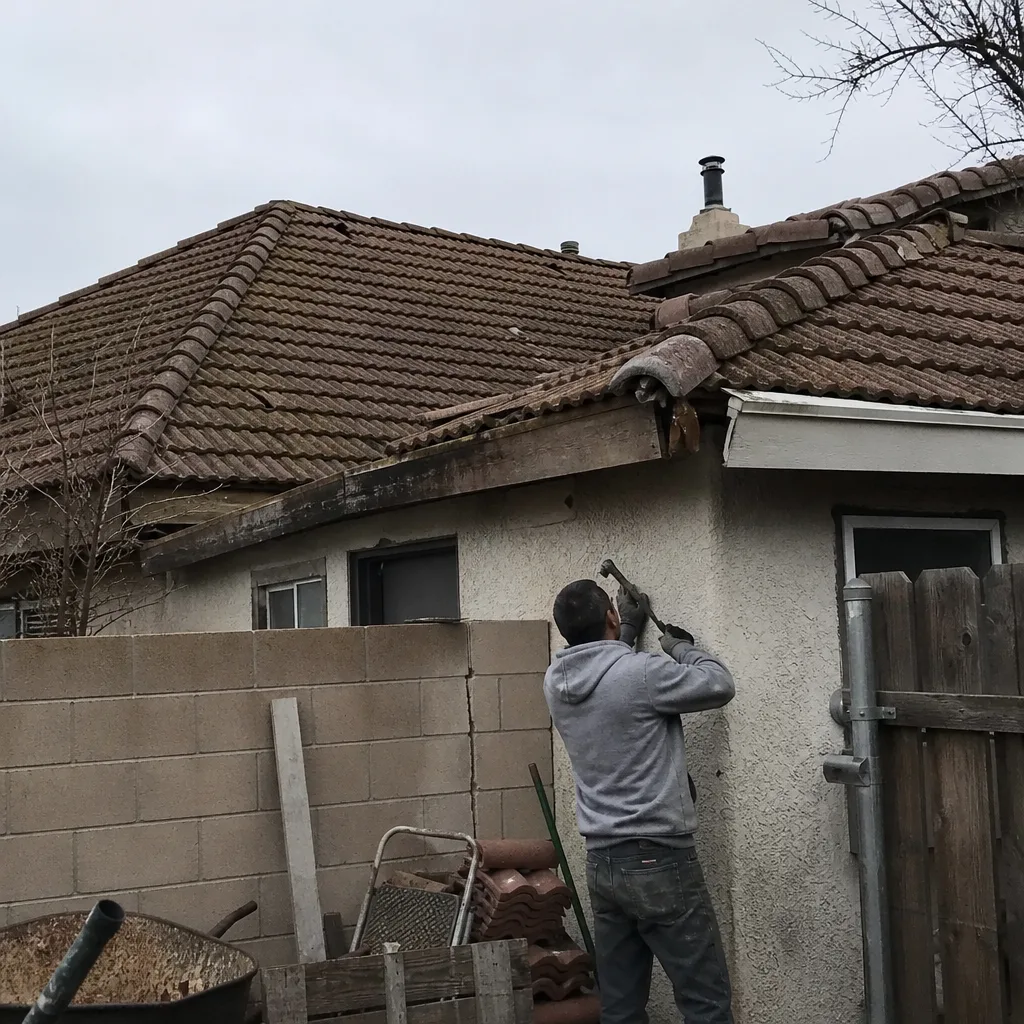 Before
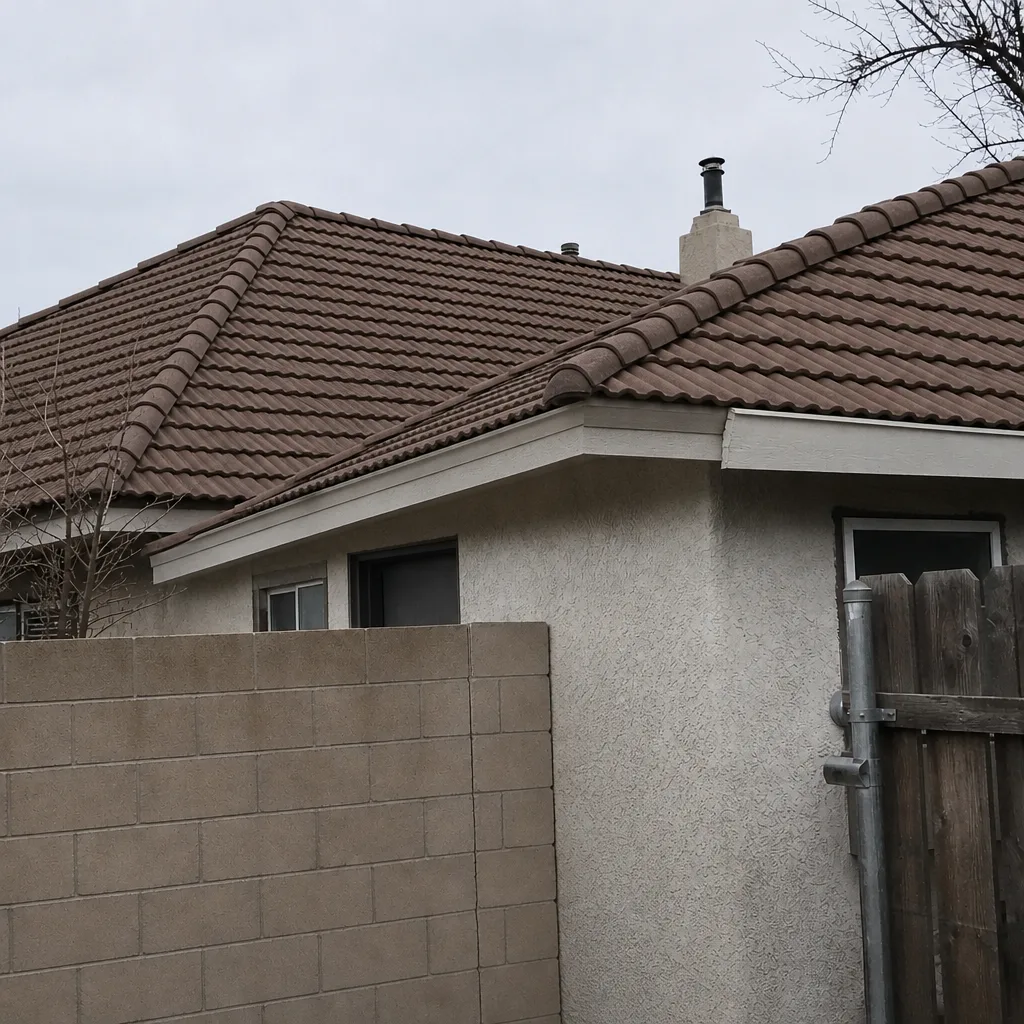 After
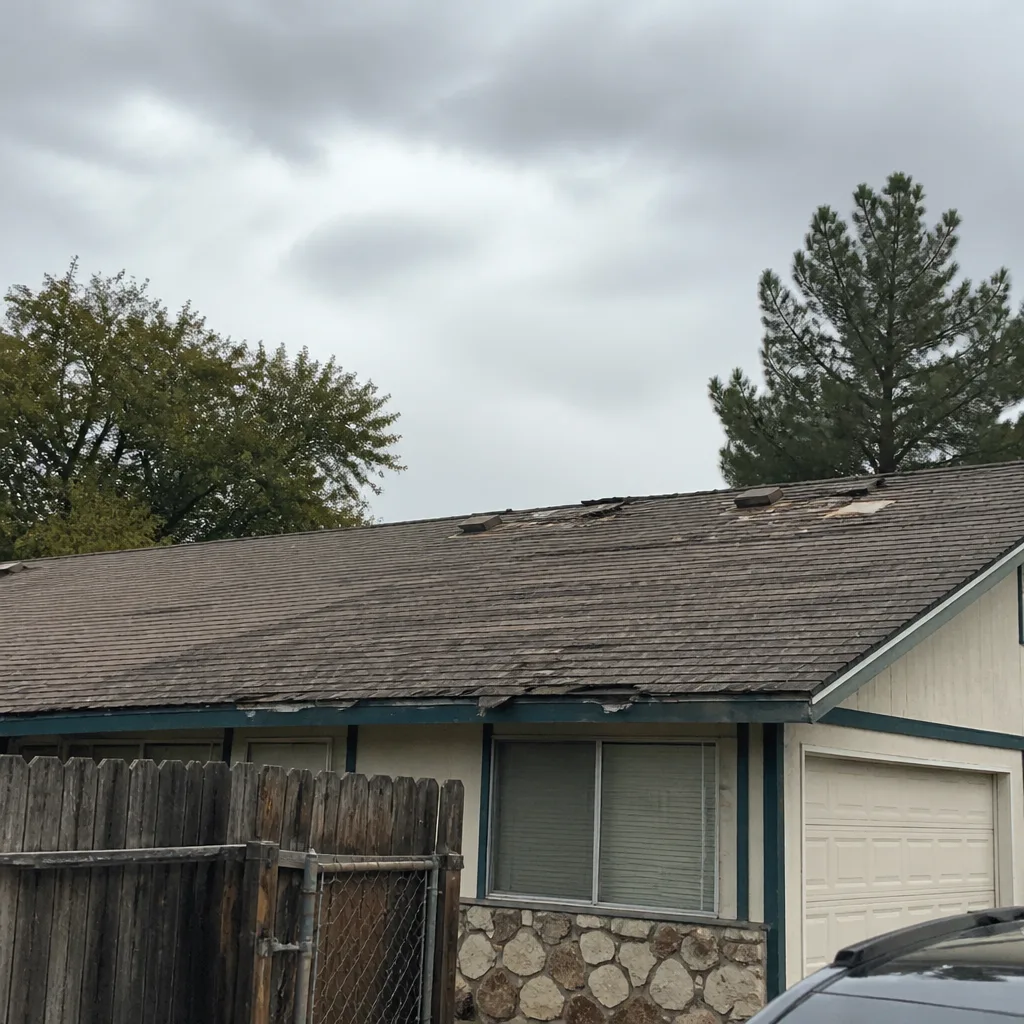 Before
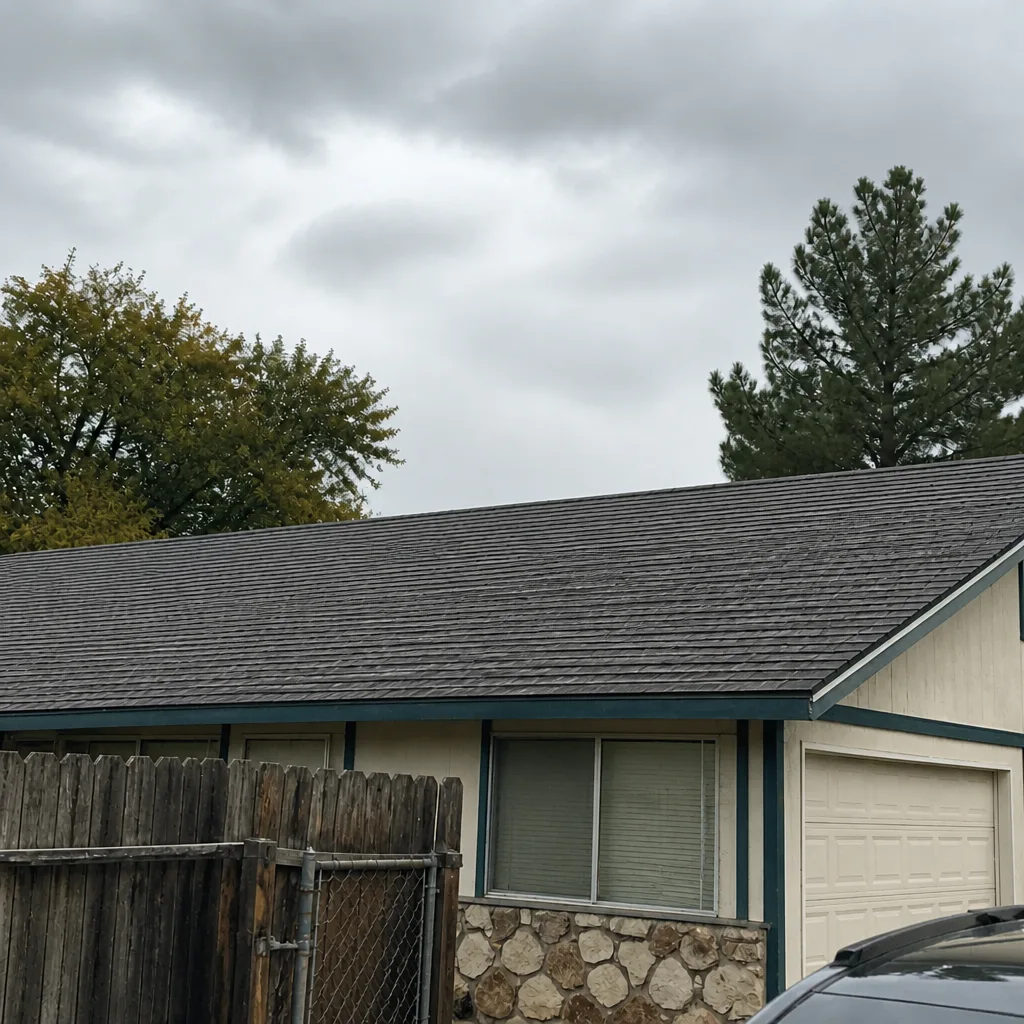 After
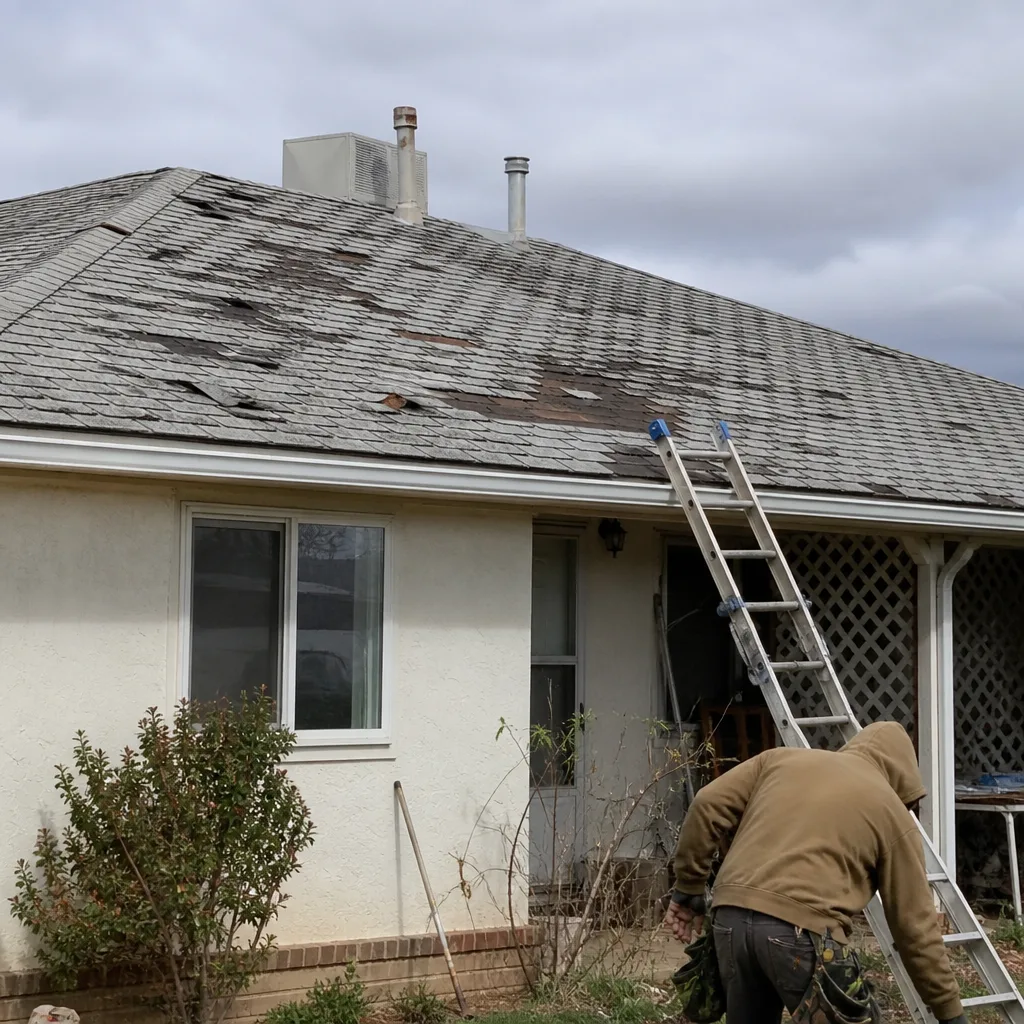 Before
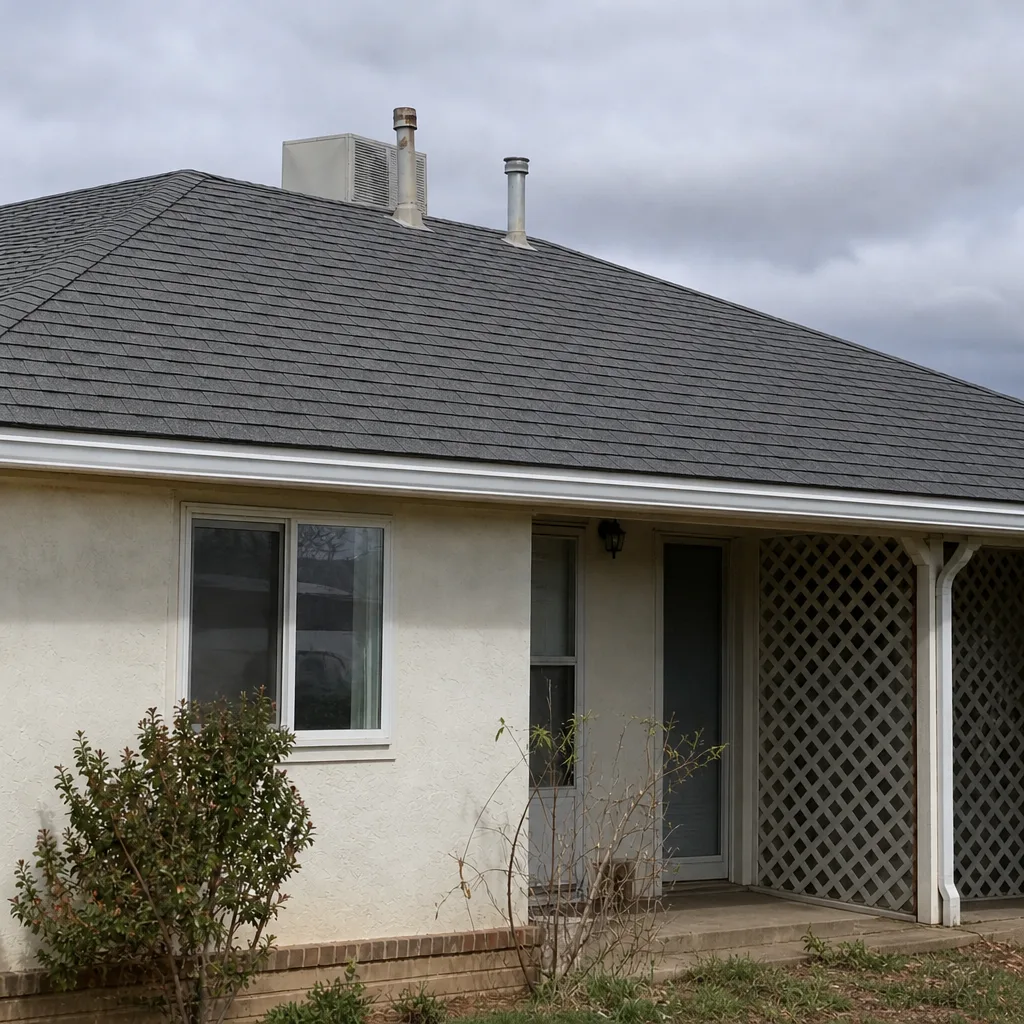 After
When to Call a Professional
Call a roofing professional when you see any tier 2 or tier 3 sign, when an interior moisture pattern has persisted through two dry weeks, when a flat section is ponding or showing open seams, or when storm damage has visibly disrupted the surface even if the interior looks fine. Call when you’re not sure which tier a sign belongs to, and you can’t get a clear read from the attic. Call before a repair that’s above a one-shingle scope, because the diagnostic value of an inspection is high compared to the cost of an unneeded or under-scoped repair. Enterprise Roofer offers free estimates in Enterprise, so the first call doesn’t cost anything. Call (866) 834-8493. We answer 24/7. Fast dispatch from 7am to 7pm, Sunday through Friday.
Frequently Asked Questions
In Enterprise, the first reliable sign is usually an interior one: attic temperature running hotter than it used to, or irregular decking stains that grow over time. That’s because sun and heat damage from above and below both stress the deck, and interior signs catch that double-sided wear before the surface shingles look obviously worn. If you’re checking only the exterior, you’re behind. Call (866) 834-8493 for an exact quote on an inspection – estimates are free.
Not by themselves. Moderate, evenly spread granule loss on a shingle roof ten years or older is normal UV aging, and it’s a tier 1 sign. Granule loss that’s concentrated in a specific area, or paired with visible surface damage, actually points toward a repair or targeted inspection rather than a full replacement. Call (866) 834-8493 and we’ll look at the pattern with you – estimates are free.
Look for local pattern: storm impact shows up as directional hits on windward slopes, scattered shingle fractures, and fresh damage after a specific event. UV and thermal degradation spreads evenly across sun-exposed planes and follows the sun rather than the weather. Hail damage is uncommon in Enterprise, so if a storm sign looks suspiciously like hail, have it verified before assuming it’s a claim. Call (866) 834-8493 for a written inspection that separates the two – estimates are free.
Yes, fundamentally. Flat and low-slope roofs fail at seams, terminations, and edges, and they often hide surface damage because water travels laterally along the deck before showing inside. Pitched shingle roofs fail from their surface down: shingles, then underlayment, then deck. That’s why we inspect flat sections more aggressively and rely on interior signs more on them. Call (866) 834-8493 to schedule an inspection – estimates are free.
No. We give you a written line-item estimate before any work begins, and the written estimate sets the final price. There are no change orders after we start, and there’s no surprise upcharge for what the repair actually turns out to involve. If repair is the right answer, an honest inspection says so – if replacement is the right answer, we explain why before you commit. Call (866) 834-8493 for a free estimate.
A typical inspection takes about an hour including the attic walk, and you get written findings with photos afterward. Permits apply to repair and replacement work, not to inspection itself, and for any work that requires one we pull the permit and coordinate the inspection as part of the job. Call (866) 834-8493 to schedule – estimates are free.
The Bottom Line
Warning signs matter most when they’re sorted by urgency, not when they’re lumped together in one long list. Cosmetic aging gets monitored. Structural signs get an inspection within 30 days. Active failure gets action within days. In Enterprise, interior signs are often more telling than exterior ones, and monsoon impact damage looks different from UV wear in a way that matters for insurance. Flat and pitched sections fail differently on the same building, so read both. And when a replacement pitch comes at you, ask for the written inspection with photos. If the roof can be repaired, it should be; if it genuinely needs replacement, you should be able to see why. Enterprise Roofer handles inspection, repair, and replacement as three equal outcomes of an honest assessment, and we work across seven major material brands so the recommendation fits your roof, not a brand push. Call (866) 834-8493 for a free estimate. We answer 24/7. Fast dispatch from 7am to 7pm, Sunday through Friday.
Written by the team at Enterprise Roofer.