
Last updated November 16, 2026
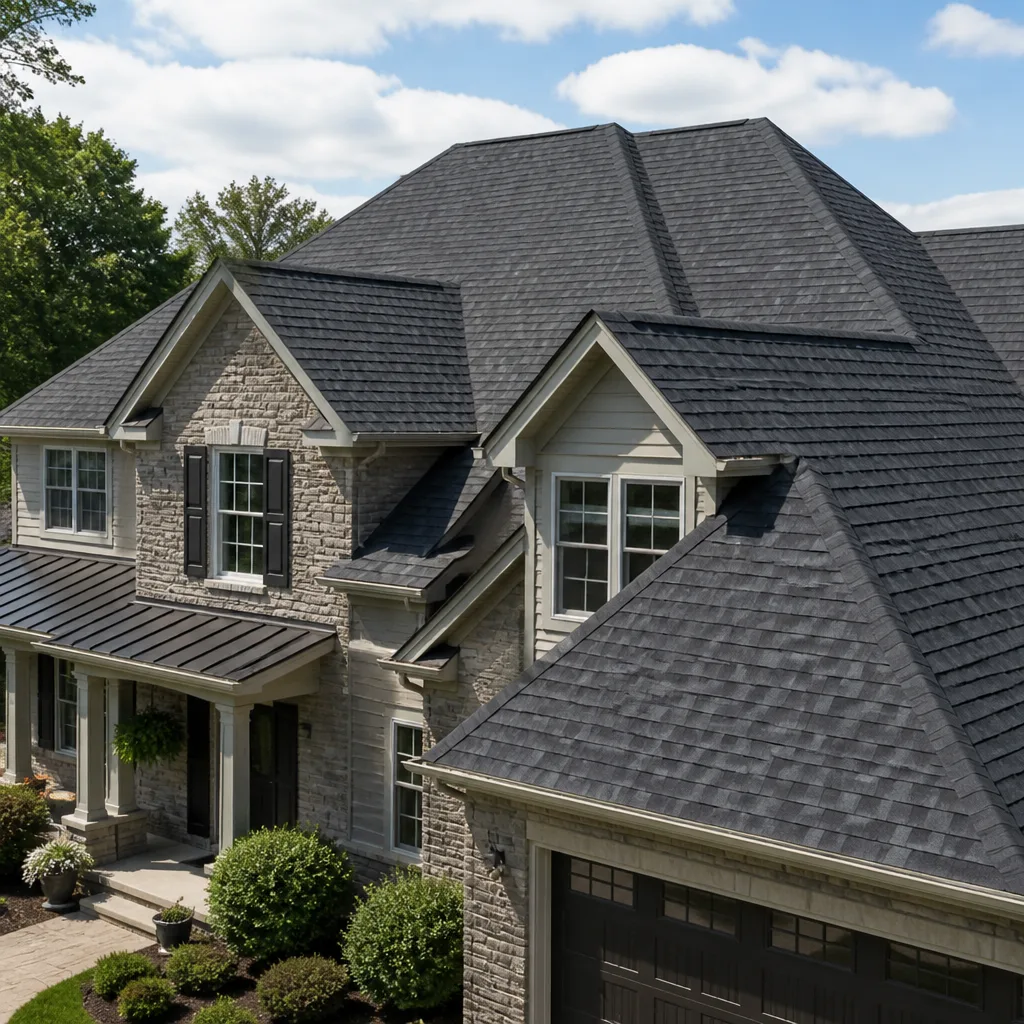 Architectural shingles
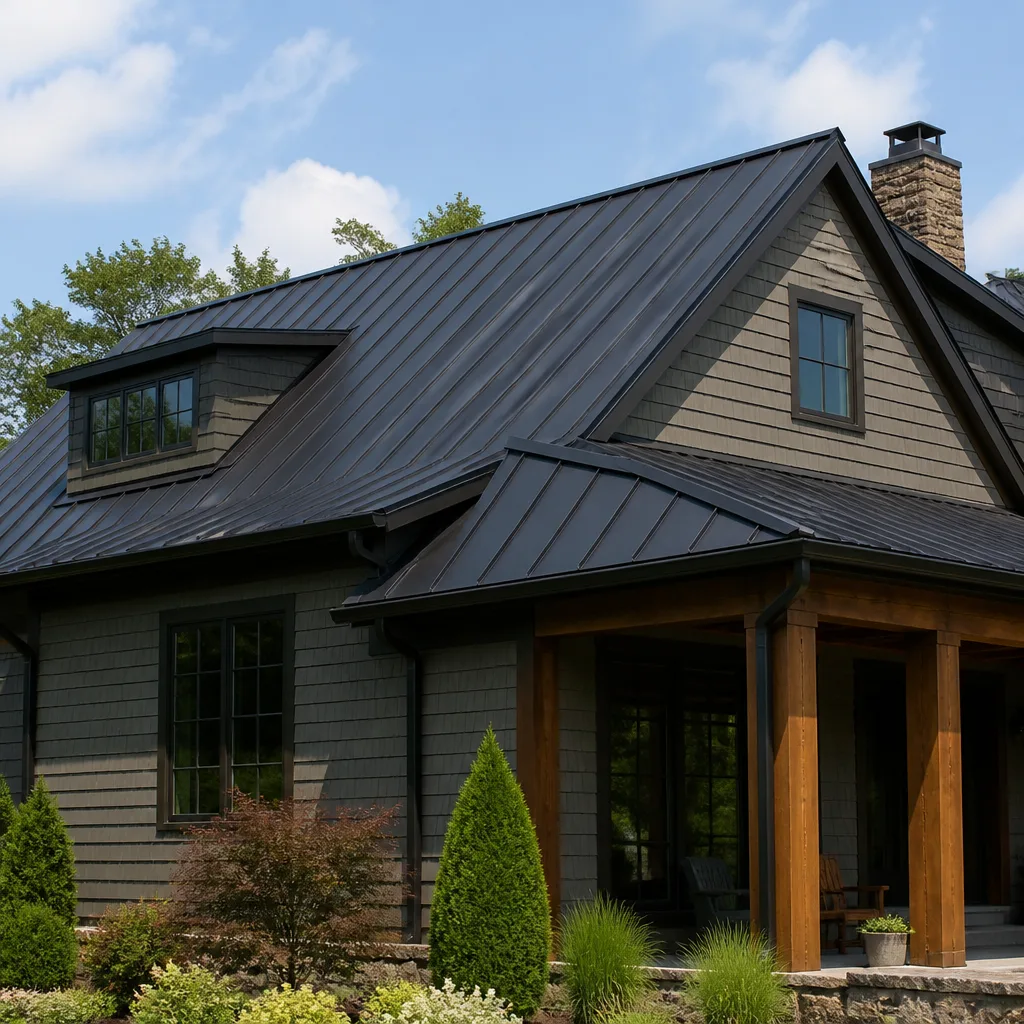 Metal roofing
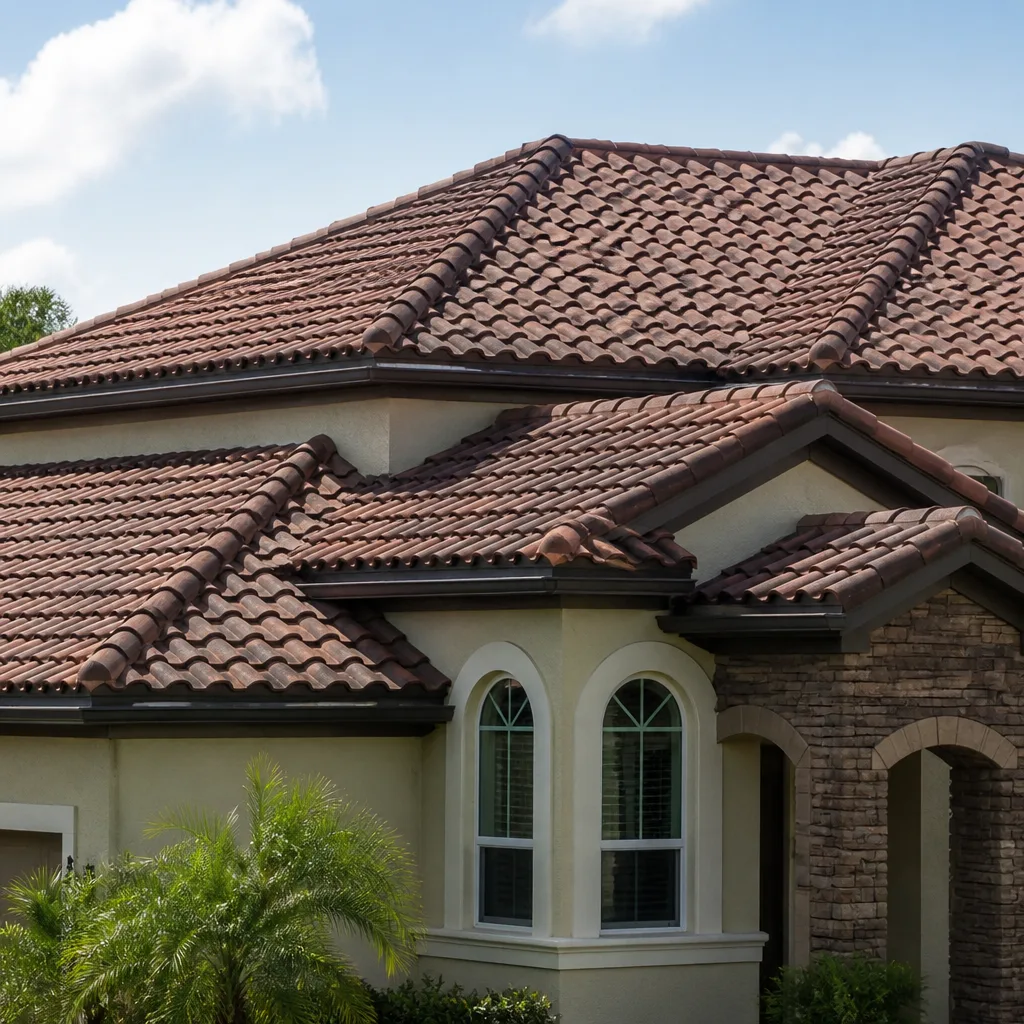 Tile roofing
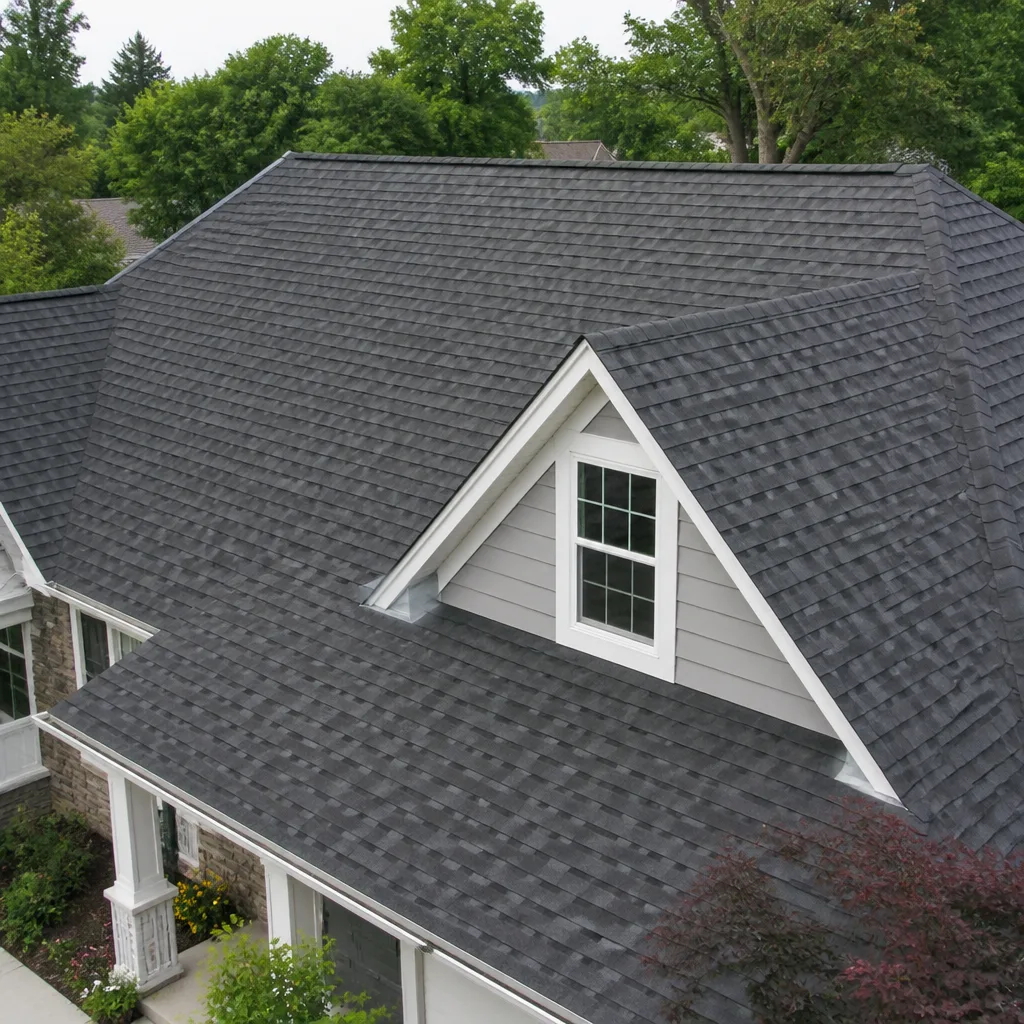 GAF
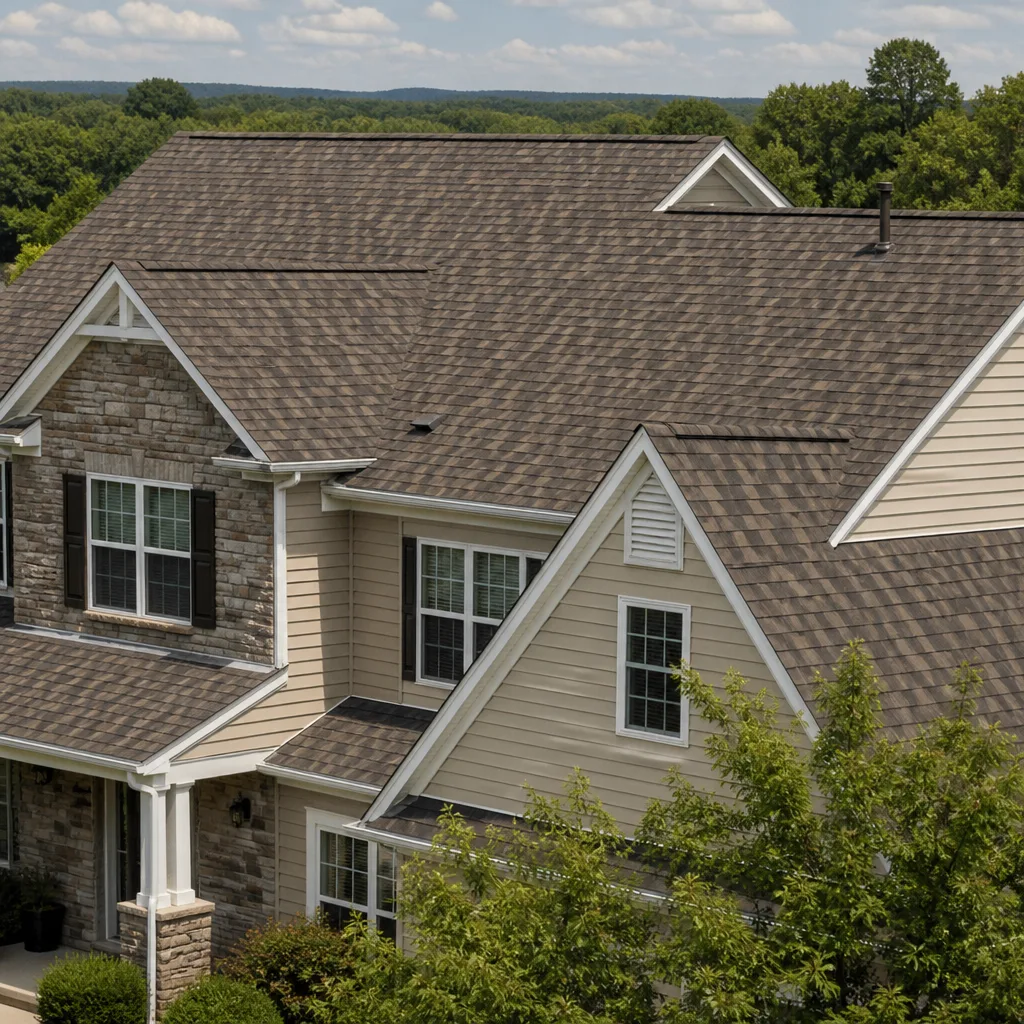 Owens Corning
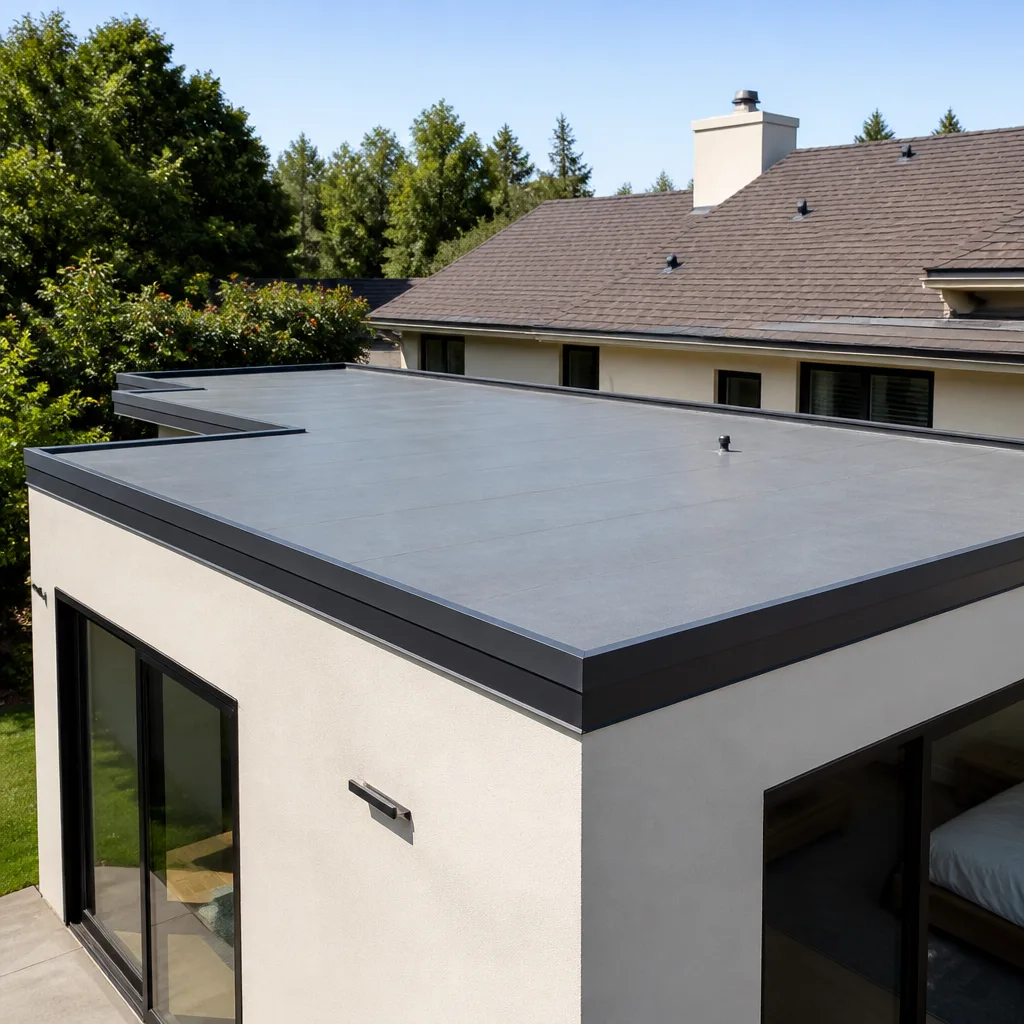 Flat & low-slope
Free roof inspection with deck photos before we talk money - GAF and Owens Corning certified installation
The Complete Roof Repair Guide for Enterprise Homeowners
Most roof repair guides are built around rain. They talk about leaks, saturated underlayment, and storm-driven water finding its way inside. Enterprise doesn’t work that way. We sit in one of the highest UV zones in the country, where the sun does more damage in a decade than rain does in a generation. The advice written for wetter climates misdiagnoses the roofs here before anyone lifts a shingle. This guide is a local framework: how UV-driven wear changes repair decisions, what the tract-home stock around Enterprise means for repair versus replacement, how to document damage for your HOA and future claims, and when a temporary patch is honestly the right call. We’ll walk through it step by step.
Quick Answer
Roof repair in Enterprise usually comes down to whether sun damage has compromised the shingles’ protective granules or merely aged their surface. On 2000s to 2010s tract homes, most repair decisions hinge on granule loss, flashing integrity, and fastener condition rather than water intrusion. A full-scope inspection tells you which repairs are warranted, which are temporary, and whether replacement is the honest answer.
Styles & brands we work with
- Architectural shingles
- Metal roofing
- Tile roofing
- GAF
- Owens Corning
- Flat & low-slope
Table of Contents
- Why UV Damage, Not Rain, Is the Real Enemy in Enterprise
- What Enterprise’s Tract-Home Roof Ages Tell You
- What to Inspect Before You Call a Roofer
- Temporary Patch vs. Warranted Repair
- How to Document Damage for HOA and Insurance
- Repair or Replace? A Decision Framework
- Choosing Materials in a Multi-Brand Market
- What a Proper Repair Process Looks Like
Why UV Damage, Not Rain, Is the Real Enemy in Enterprise
Shingles are built to shed water. They’re also built to reflect sun. Those are two different jobs, and in Enterprise the second job is the one that wears out first. The sun breaks down the asphalt binder that holds granules in place, and once those granules start washing off the surface, the shingle’s underlying mat is exposed to more UV. That cycle accelerates. A roof in a wet climate can show 15 years of rain exposure and still hold its granules. A roof in Enterprise can show the same age and be noticeably bare on the south and west slopes within 10 to 12 years.
What does that mean for repair? It means we look at UV damage differently than a roofer trained in a rainy market would. Three practical differences:
- South and west slopes age faster. If one slope is significantly more worn than the others, that’s UV exposure talking, not a defect. Spot repairs on the worst slope often make more sense than touching the whole roof.
- Granule loss is the primary wear signal. Not water stains, not sagging. Bald spots on shingles are the earliest and clearest indicator that a roof is nearing the end of its useful life.
- Flashing and sealant fail from heat cycling. Summer days swing from cool mornings to intense afternoon heat, and that expansion and contraction works on seals, pipe boots, and valley flashing more than rain does. Most “leaks” reported after a wind event were already compromised by sun-driven sealant failure.
We’ve seen this pattern across thousands of roofs in the Enterprise area, and it changes which repairs are worth doing. If you’re comparing quotes and one contractor talks mostly about water intrusion while your roof shows classic sun damage, ask them why. The answer should be specific to what’s actually on your slope. Working with a roofer who thinks in UV terms is where a repair decision starts paying for itself. You can read more about our roof repair process if you want the full picture.
What Enterprise’s Tract-Home Roof Ages Tell You
Enterprise grew fast through the 2000s and 2010s, which means a large share of the housing stock is now hitting the age where roof decisions become real. That’s not a problem. It’s just useful context, because a 15-year-old roof in Enterprise is not the same as a 15-year-old roof in a wet part of the country.
What tends to be true of roofs built in that window:
- Most are asphalt shingle on pitched roofs – the standard build for suburban Nevada, and the material most affected by granule loss.
- Builder-grade shingles were common. The original shingles installed on many tract homes in that period were mid-tier products, not premium lines. Mid-tier shingles have a realistic lifespan of about 15 to 20 years in this climate, sometimes less on south-facing slopes.
- Original flashings and pipe boots are reaching end of life. Pipe boots crack first. Valley metal is usually still fine, but sealant at penetrations often isn’t.
- HOA rules shape repair choices. Many neighborhoods in and around Enterprise have architectural review requirements that limit material color, type, and sometimes profile. That affects both what a repair should look like and what a replacement can be.
The practical takeaway: a 12 to 15-year-old roof in Enterprise deserves a real inspection, not a guess over the phone. That inspection should include granule assessment, flashing checks, attic ventilation survey, and a slope-by-slope wear comparison. If the roof is closer to 18 to 20 years old with significant bald spots on multiple slopes, you’re likely closer to a replacement conversation than a repair one. But that’s a conclusion from inspection, not a starting point. Enterprise Roofer offers a stand-alone full-scope inspection for exactly this reason: so you get an honest read before anyone starts talking about big money.
What to Inspect Before You Call a Roofer
This isn’t a DIY section. Do not climb on your roof. It’s also not a “maybe you can fix it yourself” section. It’s the opposite: this is what you can safely check from the ground, the attic, and your records, so that when you call, you arrive informed and can spot a lazy inspection or a rushed recommendation.
Five things to check from where you stand:
- Walk the perimeter of the house and look up. Note any slopes that look more worn than others. South and west slopes are usually the first to show damage in Enterprise.
- Look for granules in the gutters and at downspout outlets. Shingle granules look like coarse dark sand. If the gutters are full of it after a light rain, that’s the roof shedding.
- Check the attic for daylight and stains. A flashlight works better than a phone light. Look at the underside of the roof deck along the ridges and around penetrations. Dark stains, damp wood, or visible daylight mean water is already getting in.
- Note interior water stains and where they line up with the roof above. Water travels. A ceiling stain in the middle of a room often traces back to a slope edge or a pipe penetration several feet away.
- Pull your records. If the roof was installed or last replaced, get the date and the shingle product if you can find it. If you bought the home, the seller’s disclosure usually has the install information or the original roofer’s name.
Do all five before you make the call, and you’ll be able to tell a real inspection from a sales visit. A professional roofer will walk the roof (or access it safely), photograph what they find, and explain what they see slope by slope. If they haven’t been on the roof, they’re guessing. If you want a full-scope inspection without a replacement pitch attached, that’s what we offer.
Temporary Patch vs. Warranted Repair
This is the distinction most homeowners miss, and it’s where a lot of trust breaks down. A patch and a repair are not the same thing.
A temporary patch is exactly what it sounds like: it stops the immediate problem, it buys time, and it comes with no workmanship warranty. In Enterprise, temporary patches are the right call in specific situations: when a small puncture or tear from a wind event is on a roof that’s already within a year or two of replacement, when a leak appears mid-season and you need to stop water intrusion before a full repair can be authorized, or when the affected area is on a slope that’s already scheduled for replacement. Patches are honest. They’re also limited.
A warranted repair is a permanent fix, done to manufacturer standards, with a documented workmanship warranty. That includes removing the damaged shingle course, inspecting the deck underneath, replacing any rotted sheathing, replacing the flashing if compromised, and reinstalling new shingles matched to the existing roof. That’s the version that holds up through the next monsoon season and the next decade of UV exposure.
In Enterprise’s climate, here’s how the decision usually breaks down:
- Roof under 15 years old, damage localized: warranted repair is almost always the right call.
- Roof 15 to 20 years old, damage on one or two slopes: warranted repair if the rest of the roof is holding granules well. Temporary patch if the roof is showing granule loss everywhere else too.
- Roof 20+ years old, damage widespread: temporary patch is usually the honest recommendation. A full replacement is the real fix, and patching multiple failures gets expensive fast.
- Damage after a wind event on a sound roof: warranted repair, always. Sun-driven sealant fatigue makes the damage worse, not the roof older.
Ask any contractor to state clearly which one they’re quoting. If the answer is vague, ask again. A patch quoted as a repair and priced as one is where homeowner frustration starts. Our own policy is simple: we quote what the inspection found, and we tell you which category each recommendation falls into.
How to Document Damage for HOA and Insurance
In Enterprise, documentation matters more than in many places. HOA architectural review is common, and insurance carriers have tightened up on roof claims. Good documentation done before the repair saves a headache later.
Documentation that actually helps:
- Photograph the roof from the ground before any work starts. Include wide shots of each slope, close-ups of visible damage, and a photo of any granule accumulation in gutters. Date the images (most phones do this automatically).
- Get a written inspection report with photos. A real inspection generates a document that describes what was found, slope by slope, with supporting photos. That report is the piece of paper your HOA or insurer will want.
- Save the written estimate before work. The estimate should list what’s being done, the material being used (brand and product line), and whether the repair is warranted or temporary.
- Photograph the finished repair. Wide shot of the repaired area, close-up of the new shingles, and a photo of any flashing that was replaced.
- File the warranty documents with your home records. Workmanship warranty and material warranty are separate. Keep both. If you ever sell, they transfer to the buyer in most cases and help the sale.
If your neighborhood has architectural review requirements, submit the documentation with the HOA approval request. Some HOAs in the Enterprise area ask for material samples, color swatches, and photos of the existing roof. Having it all in one place makes the approval process short. If a repair is subject to an insurance claim, the “before” photos and the inspection report are what your adjuster will work from. Document first, repair second.
Repair or Replace? A Decision Framework
This is the question that most guides get wrong. They frame it as an either/or where replacement is always the “right” answer and repair is the “cheap” one. That’s not how it works in Enterprise. Repair is often the correct decision, and it can be the one that delivers more years of service per dollar.
The framework we use:
- Age: Under 15 years, repair holds up. 15 to 20 years, repair on localized damage and start planning for replacement. Over 20 years, replace unless the roof is in unusually good condition.
- Granule loss extent: Localized (one or two slopes) repair. Widespread (every slope shows bald shingles) replace.
- Deck condition: If the decking under the damaged area is solid and dry, repair is straightforward. If there’s rot, repair scope grows, and full replacement deserves a hard look.
- Number of leaks: One leak that traces to a single source is a repair. Multiple leaks appearing at once usually means the roof is failing as a whole system.
- Future plans: If you’re staying in the home for 10+ years, invest in the right long-term answer. If you’re selling in a year or two, a warranted repair on a sound roof is the honest and cost-effective choice.
What we don’t do is steer every inspection toward replacement. Repair is a legitimate outcome of an inspection, and it’s often the right answer. If you want to see how we frame the bigger decision, our page on roof replacement covers what to expect when replacement genuinely is the answer. But the inspection comes first, every time.
Choosing Materials in a Multi-Brand Market
When a repair or replacement does happen, the material choice matters, and it’s where brand loyalty from a contractor becomes a liability for the homeowner. If a roofer only installs one manufacturer’s products, their recommendation is shaped by what’s in the truck, not by what’s on your roof.
We work with seven of the industry’s top brands, including Boral, GAF, CertainTeed, and Owens Corning, along with IKO, Atlas, and Tamko. That’s not a marketing line. It’s what lets us recommend based on your roof’s actual needs. A repair on a mid-tier three-tab shingle doesn’t need a premium designer product. A replacement on a home where you plan to stay 20 years might.
Three practical questions to ask about material when you get a repair quote:
- What product line matches my existing shingles? Color and profile matching matters, both for appearance and for HOA approval. The repair should look like it was always there.
- Does the repair affect my existing material warranty? Some manufacturer warranties are voided by third-party repairs. Others require specific installation methods to stay in force. Ask.
- If replacement is coming, what material options exist at my budget? Understanding the difference between product lines and how each performs in Enterprise’s UV load helps you plan, rather than being surprised.
When a repair is done right in Enterprise, materials are matched, installation follows manufacturer spec, and warranty coverage stays intact. That’s the standard we hold repairs to. Learn more about how we approach the whole lifecycle at Enterprise Roofer.
What a Proper Repair Process Looks Like
A good repair has a shape. When it goes wrong, it’s usually because a step got skipped. Here’s what the process should look like from the homeowner’s chair.
- Inspection first, not estimate first. A real repair starts with an inspection of the roof, attic, and flashing, with photos. The estimate comes out of the inspection findings. If someone quotes a repair before they’ve been on the roof, that’s a red flag.
- Written estimate with line items. Labor, material, disposal, and any decking replacement should be separate lines. The estimate should state whether the repair is warranted or temporary and how long the workmanship warranty runs.
- Material confirmation. Before work starts, confirm the shingle brand and product line being installed. If it needs to match HOA-approved materials, confirm that too.
- Repair day. The crew pulls damaged shingles, inspects the exposed deck, replaces any compromised sheathing, replaces flashing at penetrations if needed, installs new shingles, and seals penetrations with proper sealant.
- Cleanup and inspection. Nails and debris get swept and magnet-swept. Final photos get taken. The warranty documents get handed over.
- Follow-up. If the repair is warranted, most decent shops will do a follow-up check after a rain event to confirm no leaks. Ask if that’s included.
This is the standard the roof repair process should meet every time, regardless of company. If a quote skips any of these steps, ask why. A crew that does the whole sequence is a crew that stands behind the outcome. That’s how we approach repairs in Enterprise, and it’s what makes the difference between a fix that lasts and a fix you’ll be calling about again. To see how we handle nearby jobs and neighborhoods, our Enterprise service area page has the details.
Common Mistakes to Avoid
- Calling for a repair before you’ve checked the attic. Interior condition tells you more than the roof surface alone. If you don’t check, you can’t tell a repair from a replacement conversation.
- Accepting a phone quote for roof repair. Every Enterprise roof is different. Ages, slopes, sun exposure, and material profiles vary. Any quote that isn’t based on an actual roof inspection is a guess dressed as an estimate.
- Confusing a patch with a repair. A patch buys time. A repair fixes the problem. Ask directly which you’re being quoted, and get the workmanship warranty in writing.
- Skipping documentation for the HOA or insurer. Enterprise HOAs often want architectural review documentation before work starts. Insurers want before/after photos. Both are easy to get if you start early and hard to reconstruct later.
- Letting a roofer pick the material by brand loyalty instead of by your roof. A roofer who only installs one manufacturer’s products is limited. Ask about multiple brands and see if the recommendation still holds up.
- Assuming granule loss means replacement. Visible granules in the gutter after a rain isn’t automatically a replacement trigger. On a 12-year-old roof, it’s often the signal for a warranted repair on the worst slope, not a full roof.
- Waiting for a leak to justify a repair. In Enterprise, the best repair window is before water intrusion. Sun damage is often visible on the surface before it causes an interior problem. If the roof is showing bald shingles or widescale wear, get the inspection before the leak.
See the difference
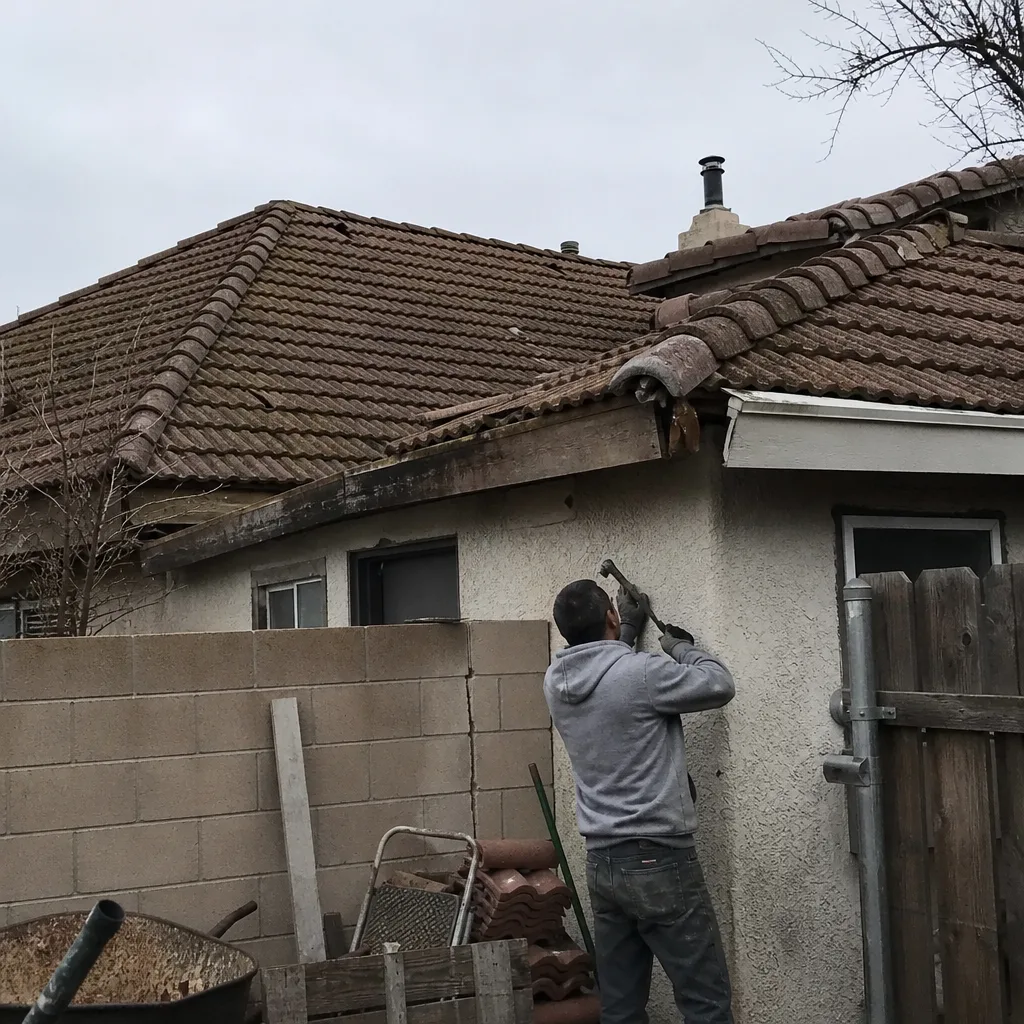 Before
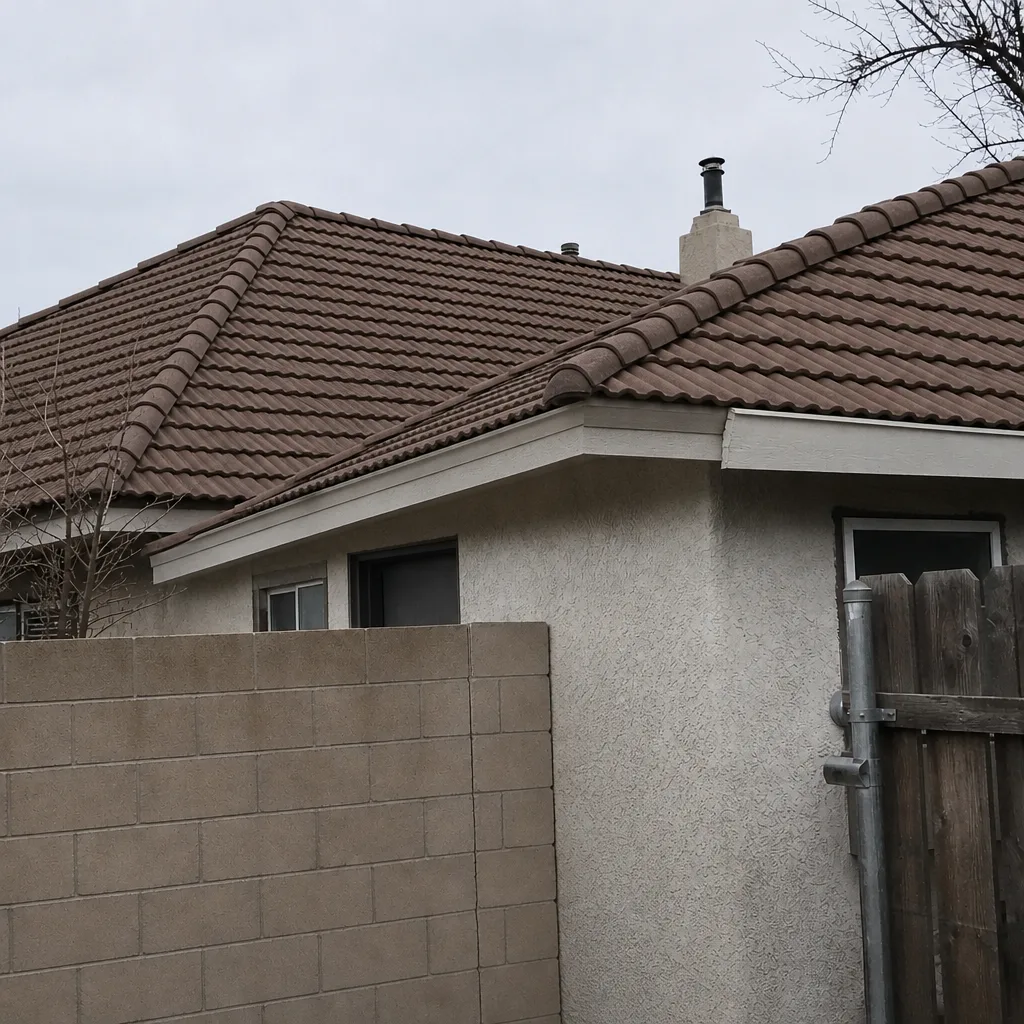 After
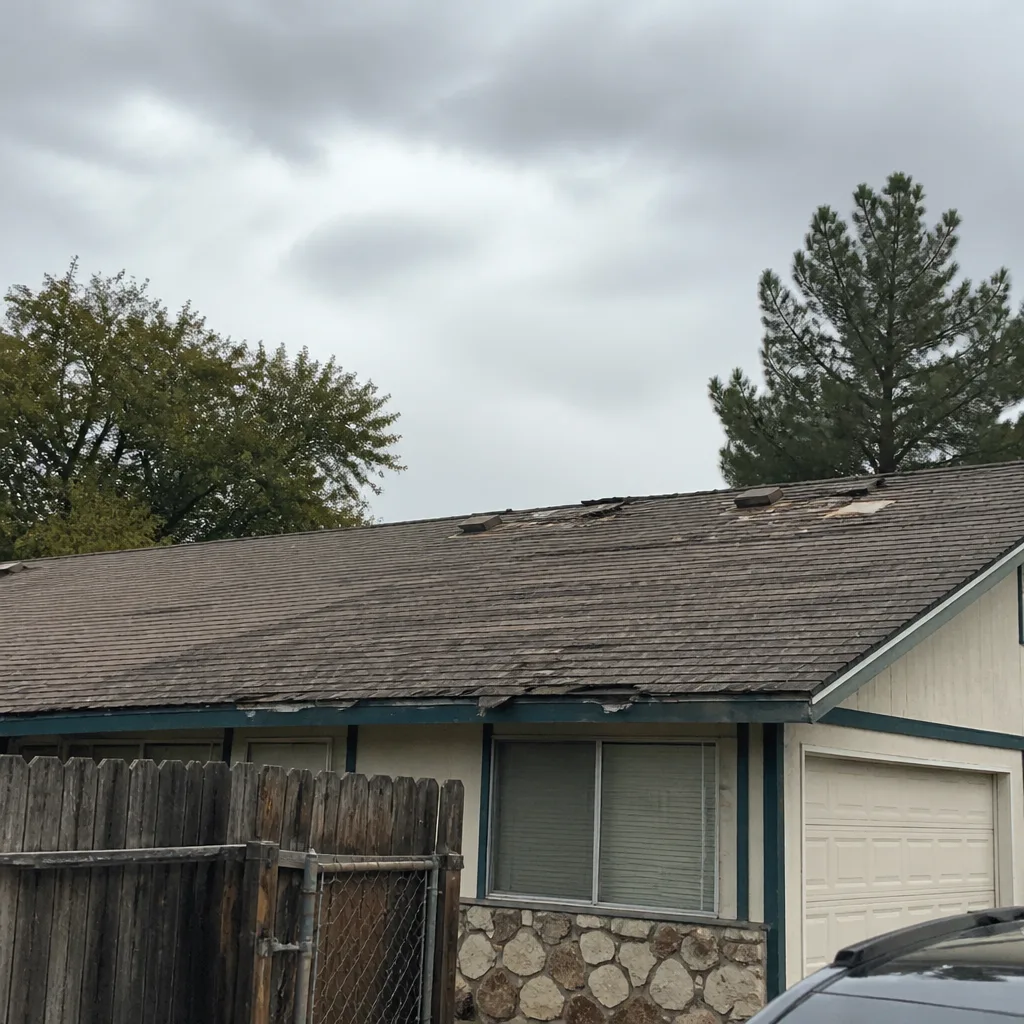 Before
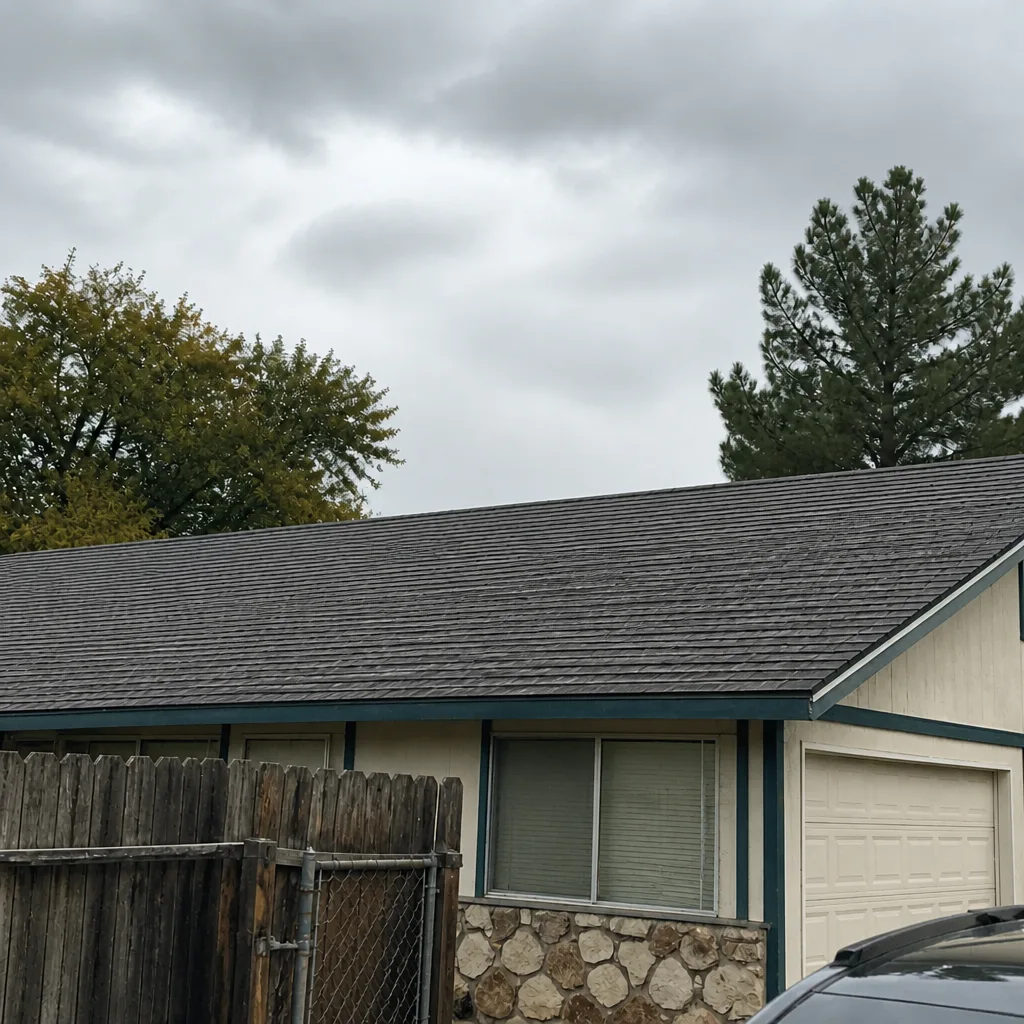 After
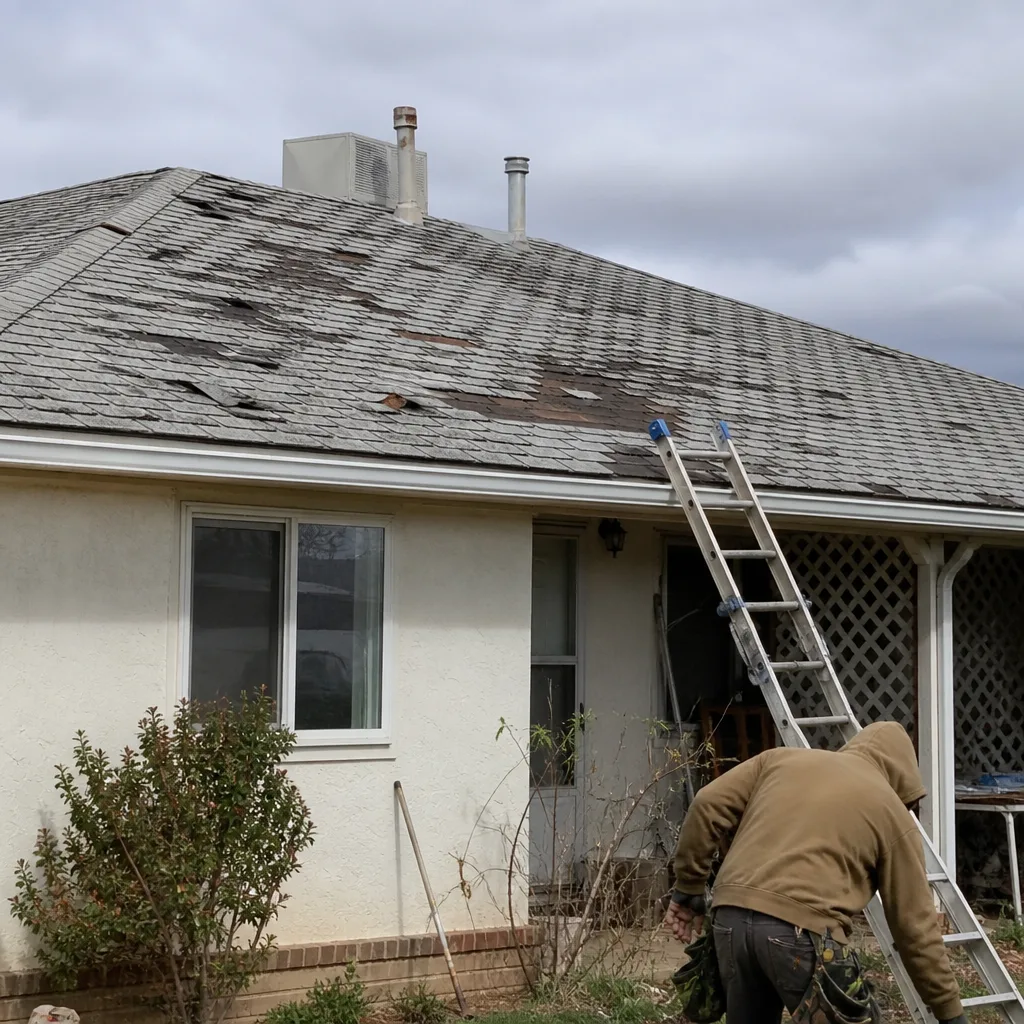 Before
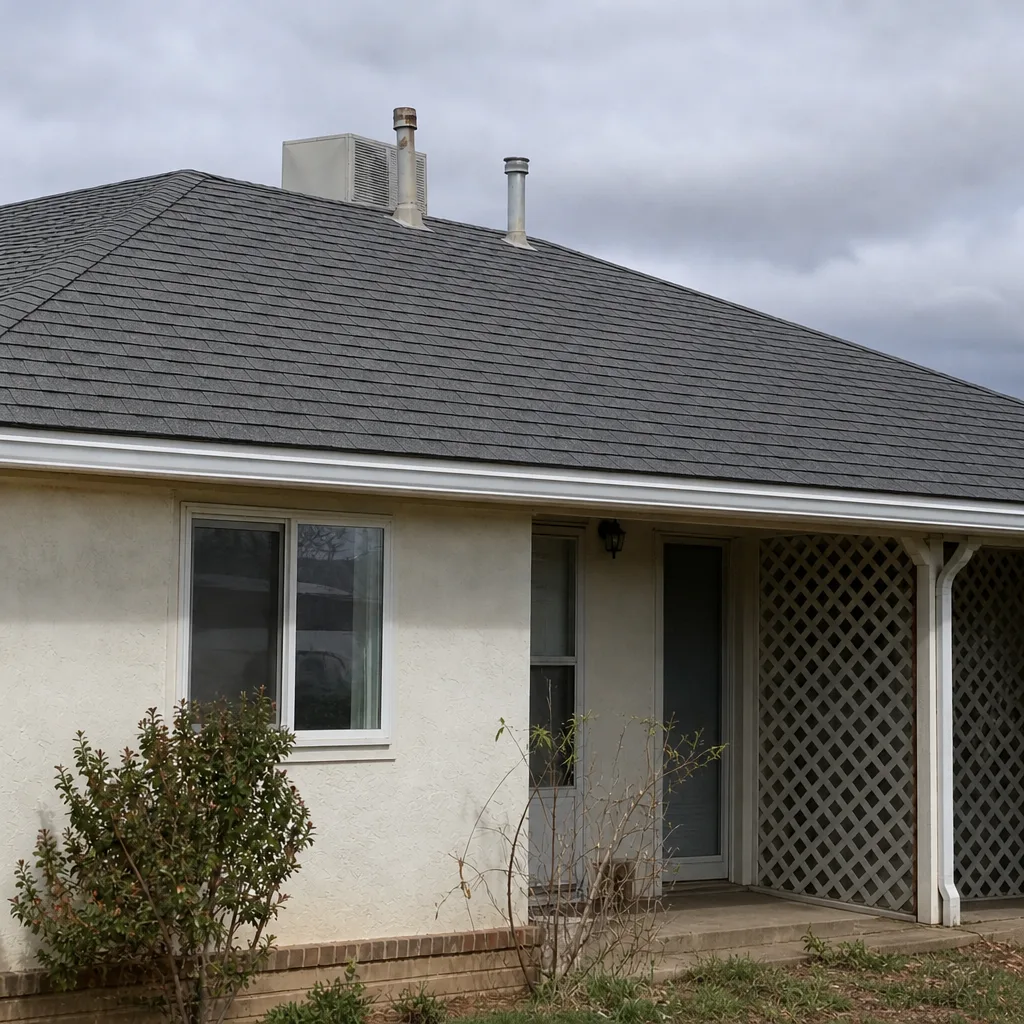 After
When to Call a Professional
Some things are worth a call, and some aren’t. In Enterprise, the honest list of “call now” situations includes: visible granule loss on multiple slopes on a roof 15 years or older, a ceiling stain you can’t trace, a leak that appears after a wind event, any roof 20 years or older approaching a decision point, or damage discovered during a home inspection. Roofs are also the first thing to call about if your HOA has flagged visible wear in a compliance letter. None of these are emergencies in the panic sense. They’re all situations where an inspection gives you real answers. Enterprise Roofer offers free estimates in Enterprise; call (866) 834-8493 to schedule an inspection or to walk through what you’re seeing. We answer 24/7. Fast dispatch from 7am to 7pm, Sunday through Friday.
Frequently Asked Questions
Roof repair in Enterprise typically runs from a few hundred dollars for a small flashing or pipe boot repair up to a few thousand dollars for a multi-slope shingle repair with some decking work. The biggest drivers are how many areas are affected, whether flashing needs replacement, and whether any decking under the repair is compromised. The written estimate sets the final price. Call (866) 834-8493 for an exact quote; estimates are free.
The honest answer comes from an inspection, not the driver’s seat of your car. In general, roofs under 15 years old with localized damage get a warrantied repair. Roofs 15 to 20 years old with sun-driven granule loss on every slope are usually closer to a replacement decision. Roofs over 20 years old with widespread wear should plan for replacement. Call (866) 834-8493 to get the actual answer for your roof; the estimate is free.
It should be, but you have to ask. A warranted repair carries a written workmanship warranty, and it uses new shingles matching your existing roof, with proper flashing and sealant. A temporary patch stops the problem but usually carries no warranty. Make sure your estimate says which one you’re getting. Call (866) 834-8493 to talk through the difference; estimates are free.
Because sun, not rain, is the primary enemy here. Enterprise’s UV load breaks down shingle asphalt and washes off granules faster than in wetter climates. South and west slopes age first, and mid-tier builder-grade shingles from the 2000s tract-home years often show significant wear by year 12 to 15. It’s normal for the region. Call (866) 834-8493 to schedule an inspection, and we’ll tell you which slopes are showing it and what to do about it; estimates are free.
It shouldn’t. A written estimate based on a real inspection is the final price. The one honest exception is decking: it’s often hidden under shingles, and if we find rot during the repair, we tell you and quote the additional work before proceeding. No surprises, no unauthorized change orders. Call (866) 834-8493 for a free estimate.
Most jurisdictions require a permit for structural repairs and replacements, and the permit pulls through your local building department. If your repair falls under a permit threshold, we’ll handle it. The exact requirements depend on your municipality and the scope of the repair. Call (866) 834-8493 to talk through your specific job; estimates are free.
The Bottom Line
Roof repair in Enterprise isn’t a mystery, but it’s not the same as roof repair in Seattle or even Reno. UV exposure drives the wear here, not rain. The tract-home stock from the 2000s and 2010s is now hitting the age where repair decisions become real, and the honest ones are grounded in a full-scope inspection, not a phone quote. Document damage for your HOA and insurer before work starts. Distinguish a patch from a warranted repair. Ask about multiple material brands instead of accepting a single-manufacturer recommendation. Repair is a legitimate answer, and often the right one. When you need an inspection you can trust to tell you what your roof actually needs, call (866) 834-8493 for a free estimate. We answer 24/7. Fast dispatch from 7am to 7pm, Sunday through Friday.
Written by the team at Enterprise Roofer.