
Last updated November 16, 2026
 Architectural shingles
 Metal roofing
 Tile roofing
 GAF
 Owens Corning
 Flat & low-slope
Free roof inspection with deck photos before we talk money - GAF and Owens Corning certified installation
Roof Repair Troubleshooting in Enterprise: Common Problems and How to Fix Them
A ceiling stain is a symptom, not a diagnosis. The leak source is almost never directly above the stain, and homeowners who don’t know this end up paying for repairs in the wrong spot while the real entry point keeps working water into their home. A blister on a shingle, a damp patch of insulation, a streak on a ceiling panel: each of these is a clue that points somewhere, and reading it wrong is how roofs get repaired twice. This guide is about matching what you can see from inside the house to the exterior failure that’s actually causing it, so that any quote you get addresses the source rather than the surface. In Enterprise, where the desert climate and the summer monsoon both leave their marks on a roof, that skill saves real money.
Quick Answer
To troubleshoot a roof problem in Enterprise, work backward from the symptom rather than jumping to a repair. Check the attic first to see where water is actually entering, then inspect the exterior at that location, testing flashing and penetrations before shingles. If a repair has already failed once, the original problem was probably misidentified, so get an independent inspection before paying for a second attempt at the same spot.
Styles & brands we work with
- Architectural shingles
- Metal roofing
- Tile roofing
- GAF
- Owens Corning
- Flat & low-slope
Table of Contents
- Mapping Interior Symptoms to Exterior Failures
- Using Your Attic as a Diagnostic Tool
- Wind Damage vs. Installation Defects
- Flashing Failures vs. Shingle Failures
- When a Repair Keeps Failing
- What Monsoon Season Reveals About a Roof
- Repair or Replace: Reading the Evidence
- When to Call a Professional
Mapping Interior Symptoms to Exterior Failures
The most reliable way to troubleshoot a roof is to start inside and work outward. Water travels along framing, under fasteners and across sheathing before it finds a place to drip, so the stain on your ceiling is often several feet from the actual hole. The mapping below is where most calls to a roofer in Enterprise begin, and where a good diagnostic visit should start as well.
Here’s how common symptoms translate to their likely source:
- Brown or yellow ceiling stain, roughly circular: usually a failed shingle, a popped nail, or a crack in a pipe boot above the stain and uphill from it. Follow the framing direction toward the ridge to narrow it down.
- Stain on an exterior wall near a window or door: almost always flashing, not shingles. Wall-step flashing and window head flashing are the usual culprits.
- Dark rings or dampness around a chimney: chimney flashing failure. The masonry itself is rarely the source.
- Damp insulation in the attic, no stain below: a slow entry somewhere above, often at a vent or ridge cap. Worth investigating before it becomes a stain.
- Musty smell without visible water: moisture is entering somewhere and being retained by the decking or insulation. A moisture meter during an inspection usually finds it.
Notice that none of these symptoms cluster around shingles by default. Homeowners often assume the shingle field is the problem, but in our experience in Enterprise, a good share of leaks trace back to a penetration or a piece of metal flashing. That distinction matters because the repairs are completely different, and a quote that proposes a shingle patch for a flashing leak will not stop the water.
Using Your Attic as a Diagnostic Tool
You can learn a lot about a roof without touching it. The attic is the best diagnostic tool a homeowner has, because it’s where water first appears after it gets past the roof surface. Going up with a flashlight after a rain event, or after a hose test in dry weather, tells you more than any guess from the ground.
Here’s a practical sequence for using the attic to narrow down a leak:
- Go up during or right after rain. Active water shows the entry point better than a dry surface, and you’ll see where the drip actually lands versus where the stain has spread.
- Look for water trails, not just drops. Water leaves a streak on the underside of the decking as it travels. Follow it uphill toward the ridge.
- Check under penetrations first. Plumbing vents, exhaust vents, and any penetration through the roof deck are prime suspects. Look for damp wood around the base of each one.
- Inspect the ridge line and valleys. Those are the places where water concentrates and where wind-driven rain pushes hardest in Enterprise.
- Look at the insulation. Compressed, dark, or damp insulation tells you where water has already been even if you don’t catch an active leak.
- Note the conditions. A leak that only appears in wind-driven rain points to a different failure than one that shows up in any storm.
Attic access also reveals whether you’re looking at a single leak or a wider pattern. One isolated damp spot is usually a straightforward repair. Multiple spots or widespread dampness on the decking often suggests an installation defect, aging underlayment, or a bigger problem that a shingle patch won’t solve. If you’re not comfortable climbing into the attic, that’s fine – a professional inspection can handle the attic-side assessment and the exterior walk at the same time. If you want the full lifecycle of a roof handled by one outfit, from Enterprise Roofer inspection through to replacement, that coordinated view is what makes the diagnosis reliable.
Wind Damage vs. Installation Defects
The desert climate in Enterprise is not gentle on a roof. Dry heat ages shingles from above, and the summer monsoon brings short, intense bursts of wind-driven rain. When shingles turn up missing or lifted after a storm, homeowners often assume wind damage and call for a repair. Sometimes they’re right. But sometimes the shingles were never fastened properly, and the storm only revealed a problem that had been sitting on the roof since installation. Distinguishing the two changes the repair entirely.
Here’s how the patterns usually differ:
- Wind damage tends to show a clear directional pattern. Shingles are torn or peeled from one edge, the damage clusters on ridges and corners, and adjacent shingles are often creased or lifted but not missing. A torn tab typically has a ragged break at the fastener line.
- Installation defects show up as cleaning up after a storm without addressing the defect. You’ll see shingles that look face-nailed, rows that were never sealed with roof cement, tabs with too few fasteners, or laps that don’t follow the manufacturer’s pattern. The damage tends to appear in the same relative position across a whole roof slope rather than clustered where the wind hit.
There’s a diagnostic trick here. If missing shingles appear in a pattern that repeats across the roofline, that’s a fastening or installation problem, not wind. If they cluster on the ridge or a corner and become sparser as you move inward, that’s wind. Both get repaired, but the installation defect often means there are more weak spots you can’t see yet, and a single patch treats one of them.
Working with multiple manufacturers helps at exactly this point. When we recommend a replacement shingle, we choose from GAF, Tamko, Atlas, and the rest of the brands we work with based on what fits your roof’s existing system and your budget. An honest recommendation isn’t driven by which brand a rep last pushed; it’s driven by whether the replacement will actually seal the way the original should have. Our technicians have up to 9 years of experience on repairs and replacements across that range of materials, which is why we can match what’s already on your roof instead of forcing a mismatched patch.
Flashing Failures vs. Shingle Failures
Flashing and shingles fail differently, look similar from the ground, and require completely different repairs. Shingles shed water off the roof surface. Flashing routes water around the edges and penetrations: chimneys, vent pipes, skylights, valleys, and wall intersections. When a leak appears near one of those features, the flashing is almost always the more likely source, even when the shingles look fine.
A quick way to separate the two:
- Look at the location of the leak. If it’s within about three feet of a chimney, vent, wall, or valley, suspect flashing. If it’s out in the middle of an open slope with no nearby features, shingles are more likely.
- Check the metal for corrosion or lifting. Flashing degrades from the edges outward. A piece that’s lifted at a corner, has a gap underneath, or shows crumbling sealant at the lap has probably been letting water in for a while.
- Check for a failed sealant bead. Sealant cracks in dry heat, and once it opens, the joint beneath it is exposed. That’s a flashing repair, not a shingle repair.
- Test the source directly. During a dry spell, a professional can run controlled water at the flashing and watch where it appears on the attic side. That confirms the source without a full roof removal.
Here in Enterprise, the dry climate accelerates flashing failure more than homeowners expect. Sealant that stays pliable in a wet climate cracks under the dry heat and the daily expansion and contraction cycle. Metal lifts slightly, the sealant under it parts, and the first monsoon storm pushes water under the lap. It’s common to see a roof with perfectly good shingles and leaking chimney flashing at the same time, and that’s exactly the kind of situation where a misdiagnosis costs the homeowner real money. A roofer who only sold shingle replacements would miss it. A roof repair plan built from a proper diagnostic visit targets the metal, not the shingles, and does the job once.
When a Repair Keeps Failing
If a roof has been repaired once and is leaking again in the same general area, the fix didn’t fail. The diagnosis did. That’s the single most useful thing to understand about repeat leaks. A sealant patch on a shingle that was never the source will look like a failed repair, but the real problem was above or uphill from the spot that got patched, and the water simply found its way around the patch after the next rain.
When a repair fails, these are the diagnostic questions worth asking before anyone touches the roof again:
- Was the source confirmed or assumed? A proper diagnosis traces water from the attic or tests the suspected entry point. An assumed repair is a guess with a nail in it.
- Was the repair at the symptom or at the source? If the last repair was at the stain location, it treated the symptom. Water typically enters uphill from where it drips.
- Did it fail after wind-driven rain or after any rain? A leak that only shows up in wind-driven events often means the failure is at a flashing lap or under a ridge, where ordinary rain wouldn’t reach.
- What else is under the same condition? A flashing failure at one chimney or vent usually means the others on the same roof are equally aged and equally cheap to fix preemptively.
- Is the decking still sound? Repeated water at the same spot softens sheathing and rots framing. If the second or third repair is going into soft wood, that’s the signal to stop patching.
We’ve seen repeat repairs in Enterprise that were three attempts at the same wrong location. The homeowner paid for three patches and the actual failure never got touched. That’s the reason we offer a full-scope inspection as a standalone service, not just as a stepping stone to a sale. The inspection exists to answer the question “what is actually leaking,” and sometimes the answer is a small repair at a totally different spot than where the last crew worked.
What Monsoon Season Reveals About a Roof
Most of a roof’s real condition is hidden in dry weather. The summer monsoon is when the weak points show themselves. Wind-driven rain finds every gap in flashing, every unsealed shingle lap, and every failed fastener, and it does it in a matter of weeks. That’s actually good news for a homeowner who wants an honest picture, because a roof that “looked fine” all spring often has a clear list of failures by the end of the first storm cycle.
Here’s what the season typically surfaces in Enterprise:
- Flashing laps that were never sealed. Ordinary rain runs off and misses them. Wind-driven rain pushes sideways and finds the gap.
- Lifted or unsealed shingle tabs. Heat and wind weaken the sealant strips, and once a tab lifts it lets water in at the fastener line.
- Valley leaks. Valleys concentrate water in ordinary storms, and a small obstruction or a worn valley lining shows up first when the rain is heavy.
- Penetration leaks. Pipe boots and vent flanges age out quietly and then fail in the first hard rain after they do.
- Gutter and fascia leaks that imitate roof leaks. Water backing up behind a clogged gutter can push under the drip edge and appear inside as a ceiling stain that has nothing to do with the roof surface.
If you’re watching your roof after a storm, this is the pre-storm checklist worth running: look at every piece of flashing for a lifted corner or cracked sealant, check for shingles that lifted at the corners, clear the valleys and gutters of debris, and note any new ceiling stains after each storm so you can compare them. If something shows up and you can’t locate the source, a call to (866) 834-8493 gets a diagnostic visit on the calendar. We answer 24/7. Fast dispatch from 7am to 7pm, Sunday through Friday.
Patching a leak without understanding its source is one of the most common mistakes, and in our experience it costs more than the diagnostic visit would have. A leak that only shows up in wind-driven rain is a very different repair from one that appears in any storm, and the two cannot be treated the same way.
Repair or Replace: Reading the Evidence
The repair-or-replace question deserves evidence, not a sales pitch. Not every roof that leaks needs a replacement. Some roofs that look fine from the ground need one. The evidence falls into a few categories, and a proper inspection looks at all of them:
- Age and condition of the shingle field. Granule loss, curling, and brittleness all have a cost-effective answer, and the answer isn’t always replacement.
- Number and location of failures. A single isolated leak with otherwise healthy shingles is a repair. Failures scattered across the roof often point to a system that’s finished.
- Condition of the decking. Soft or delaminated sheathing under a repair spot changes the calculation.
- Condition of the underlayment and flashing. Both are inside the shingle layer and can’t be assessed from outside. An inspection has to look at them.
- The pattern of past repairs. A roof with three patches in the same area is telling you something about how the next five years will go.
For a homeowner, the right question to ask before a repair or replacement decision is: “what specifically happens on this roof in two years if I do the smaller option?” A good answer names the failure points, explains what will probably fail first, and gives you the trade-offs. A bad answer is a fixed number with no description of what it covers. We’re a multi-brand roofer, so our recommendation isn’t locked to one material pipeline. When the evidence supports repair, we repair. When it supports replacement, we quote it honestly, and when the homeowner wants to compare materials, we can put GAF, CertainTeed, and Owens Corning against each other on the same roof. That’s what it means to work across seven of the industry’s leading manufacturing brands. You can read more about the full scope on our roof replacement page if replacement is where the evidence leads.
Common Mistakes to Avoid
Most of the trouble we see on Enterprise roofs isn’t caused by a bad storm. It’s caused by a small handful of avoidable mistakes made before and during the repair process. Here are the ones that show up most often:
- Repairing at the stain instead of at the source. The ceiling blotch is a symptom, and water travels downhill from where it entered. Patch at the stain and the leak keeps working. Track the entry point instead.
- Letting someone seal every shingle they can reach. Sealant is not a diagnostic tool. It hides problems and fails in dry heat, and a roof covered in sealant is often harder to read than the roof was before.
- Assuming the shingles are the problem because they’re what you can see. Flashing, penetrations, and boots cause a large share of leaks in a dry climate. Inspect the metal first when a leak is near a feature.
- Accepting a replacement quote without an attic walk. Anyone recommending a full replacement without looking at the underside of the deck is working from half the evidence. A diagnostic inspection should include the attic.
- Skipping the pre-monsoon check. The best time to fix a lifted flashing lap is before the first storm hits, not after water has been sitting in the decking for weeks. Get an inspection before the summer rains arrive.
- Ignoring a second or third repeat repair. If the same area has leaked twice, the diagnosis is the problem. A second patch at the same location is money spent on the same guess.
- Paying for a repair with no written scope. A written line-item quote that names what’s being fixed and why is how you verify the repair addresses the source. Verbal “we’ll patch that up” is how repeat repairs happen.
If you’ve already made one of these and you’re not sure where to go next, an independent inspection is the way to reset. Enterprise Roofer offers free estimates and a full-scope inspection so the diagnosis comes before the pitch. When you call (866) 834-8493, the person who answers can talk through what you’re seeing and help you decide what to check next.
See the difference
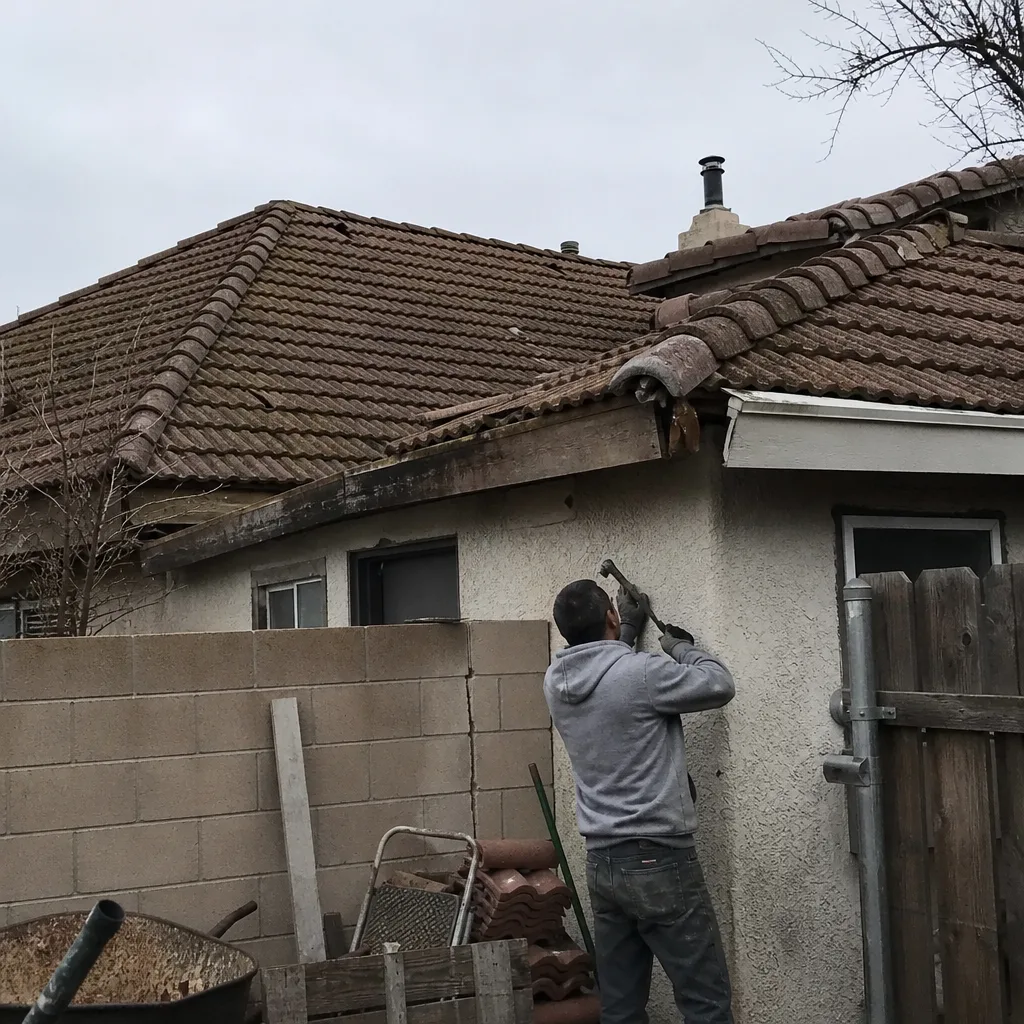 Before
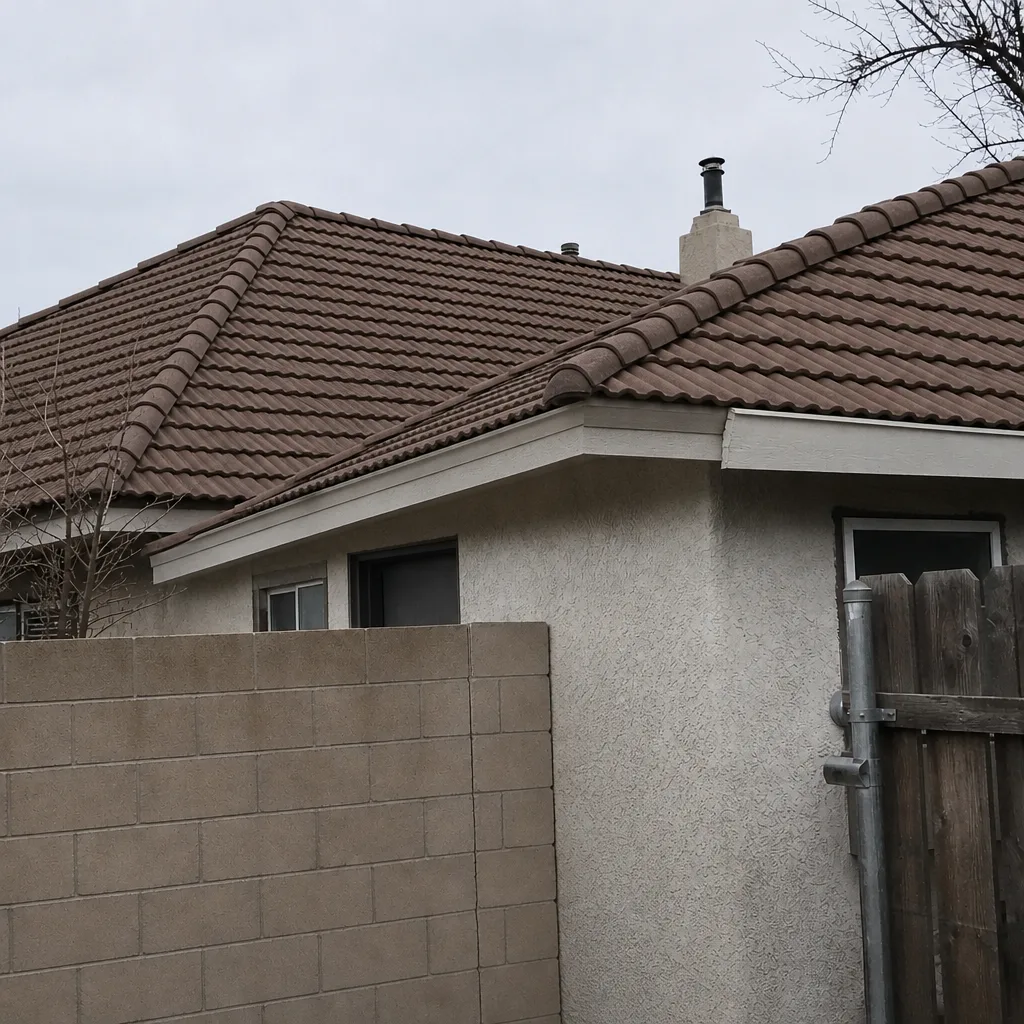 After
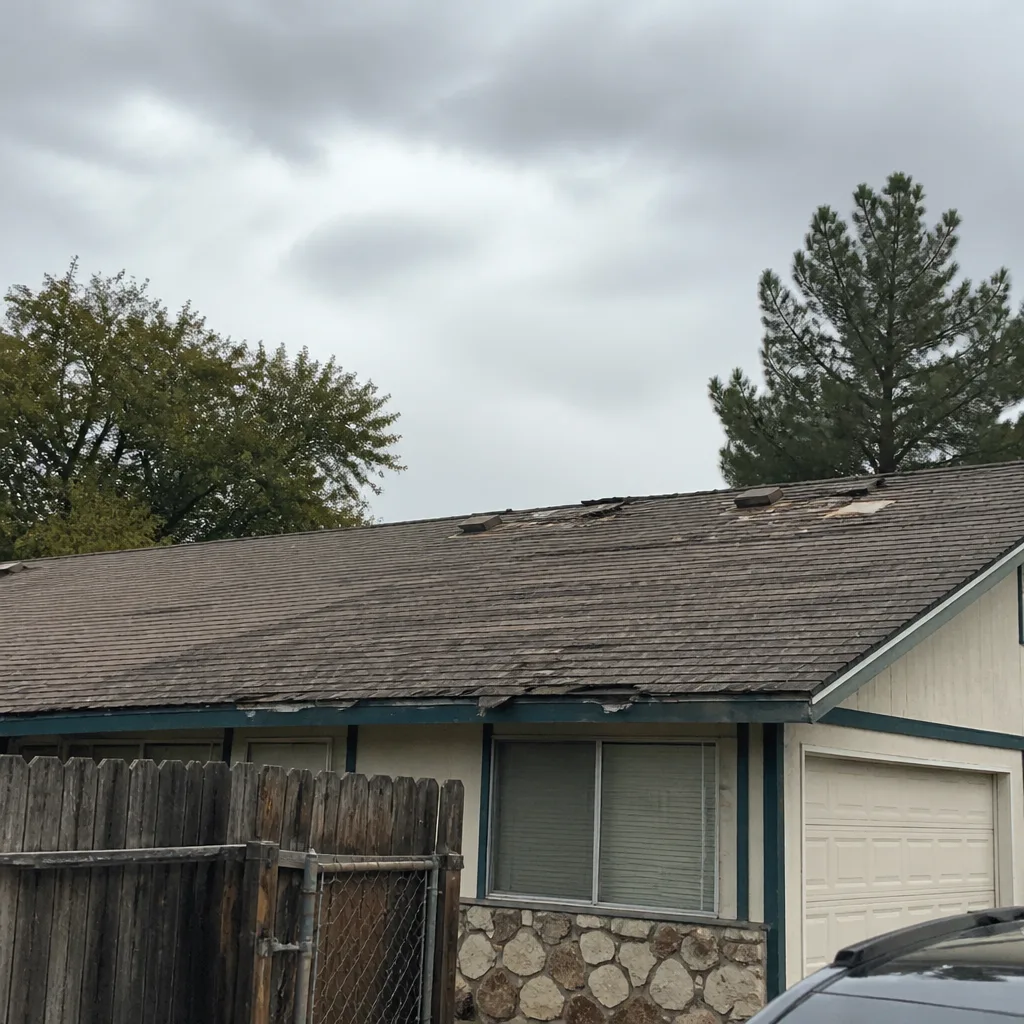 Before
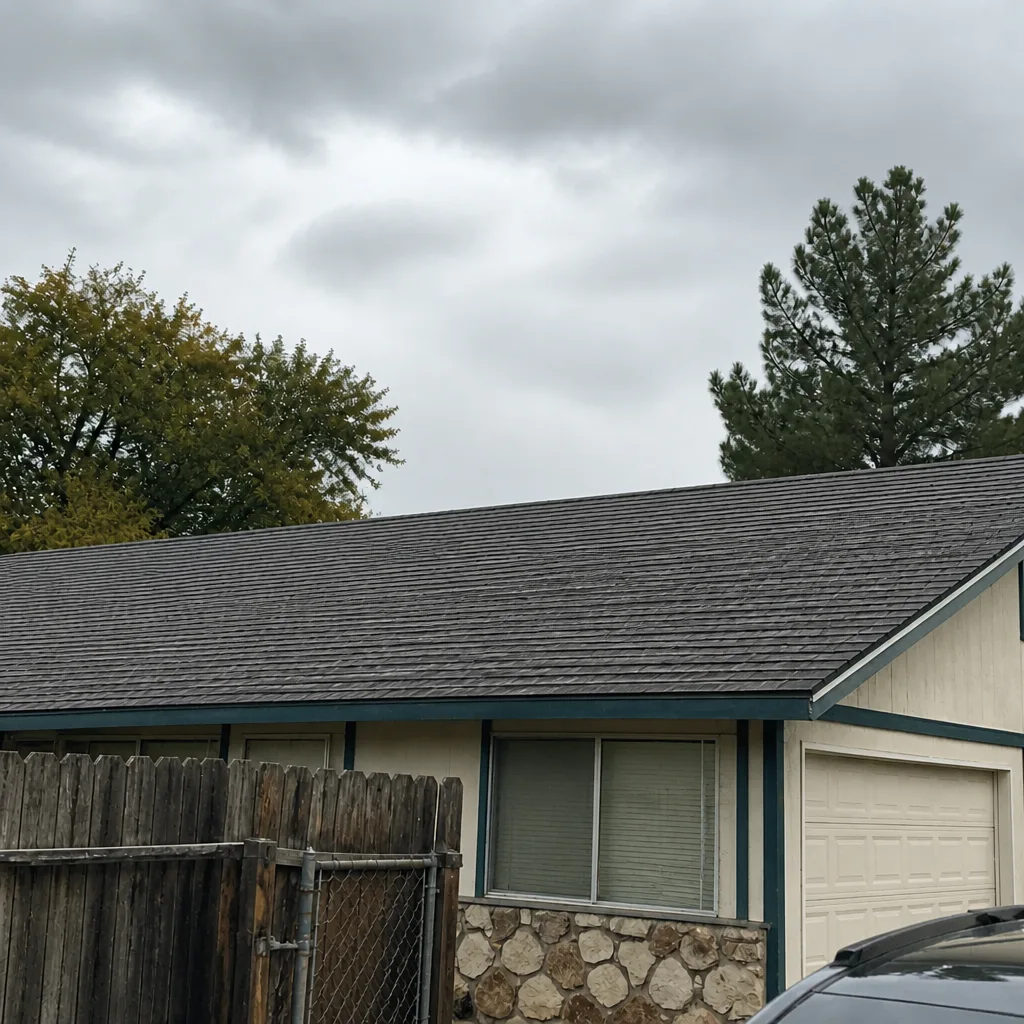 After
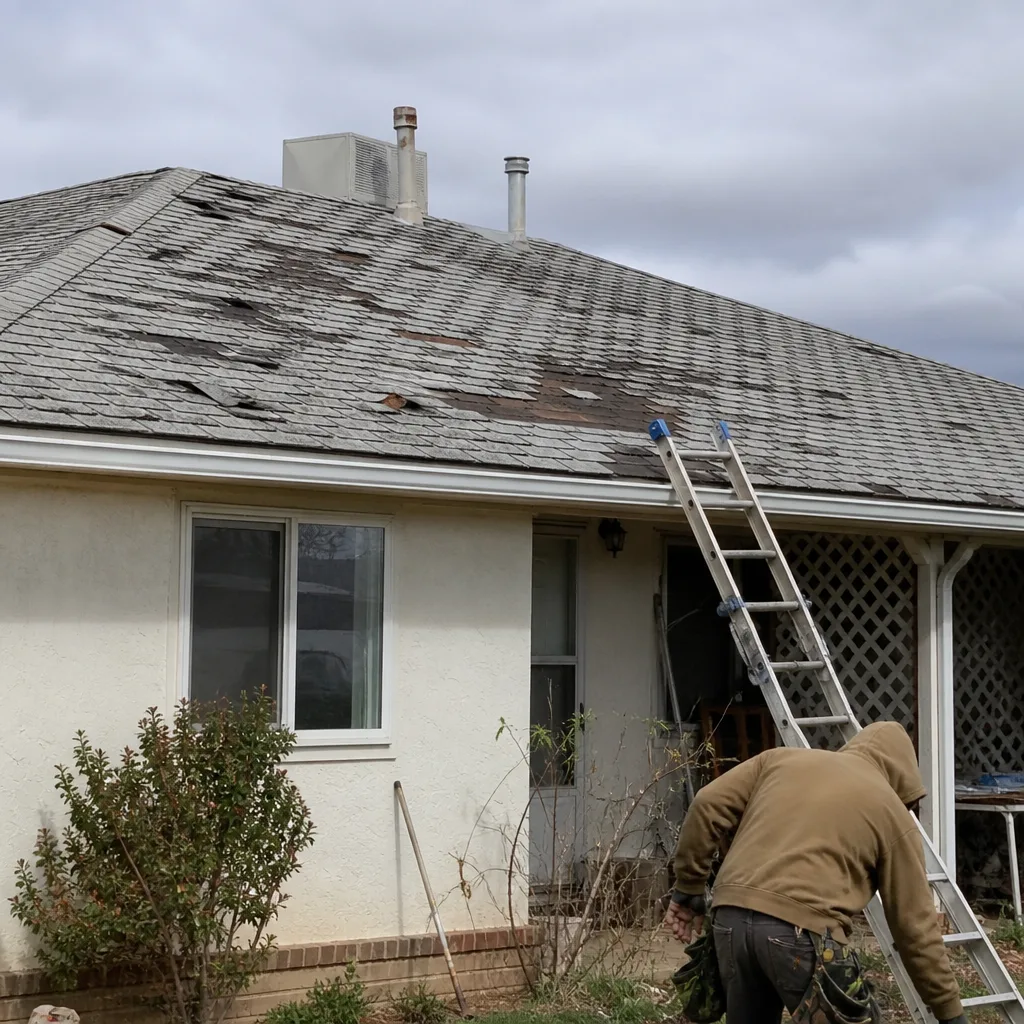 Before
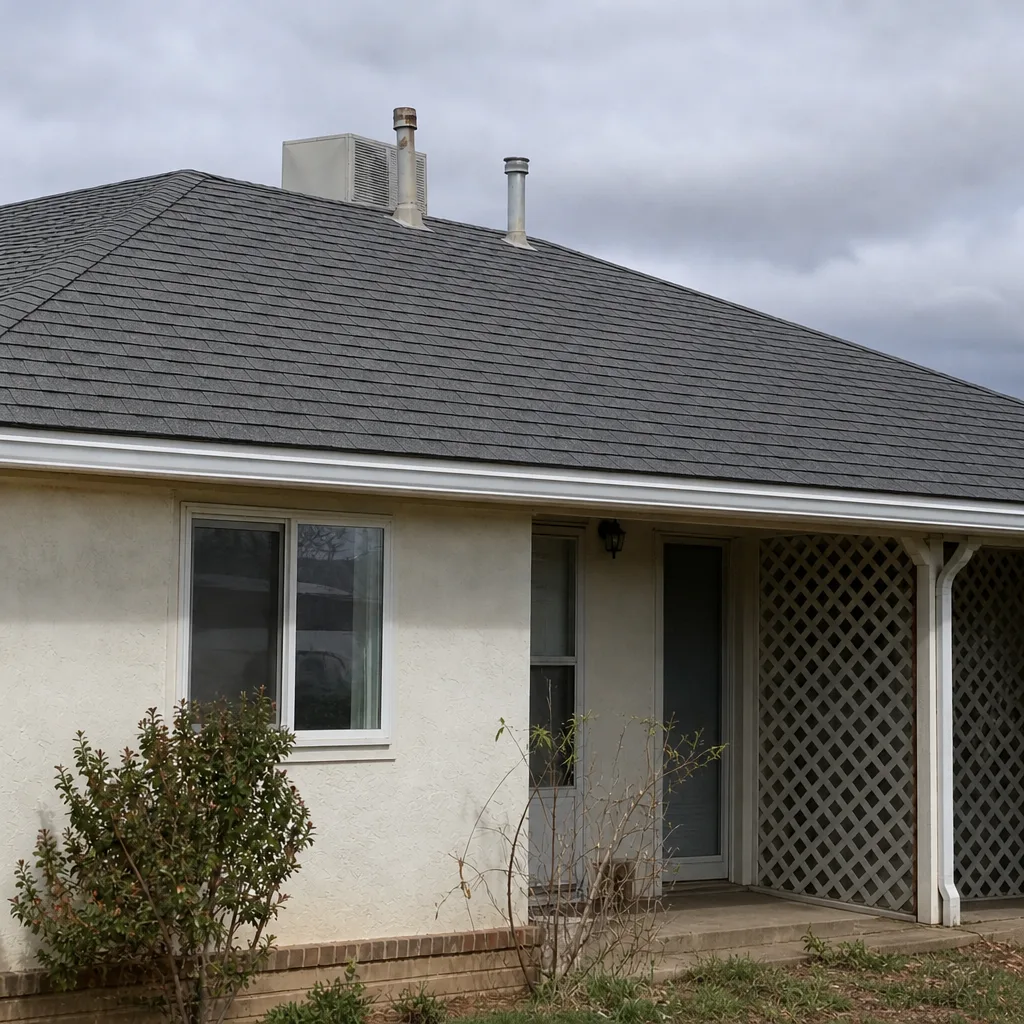 After
When to Call a Professional
Some troubleshooting is safe to do yourself from the ground and the attic. Some isn’t. If you’re seeing new ceiling stains spreading after a storm, water sitting in the attic after a rain, damp insulation around a penetration, or the same leak returning after a repair, that’s a call for a professional inspection. If you’ve had a second or third repair at the same location, get an independent diagnosis. If your roof has visible damage after a wind event that pulled shingles loose, get an inspection before you patch anything, because the pattern matters to the diagnosis. If your home is older and you haven’t had an inspection in years, get one now, before the next monsoon tests the roof for you.
A trained technician can get on the roof, run a controlled test, and read the evidence in the attic and on the surface in the same visit. That’s the difference between a repair that’s verified and a repair that’s hoped for. Enterprise Roofer offers free estimates in Enterprise. Call (866) 834-8493. We answer 24/7. Fast dispatch from 7am to 7pm, Sunday through Friday.
Frequently Asked Questions
Roof repairs in Enterprise vary with the type of failure and the area being worked on, and the written estimate sets the final price. Small flashing and penetration repairs sit at the low end of the range, while larger shingle repairs or repairs involving decking sit higher. The only reliable number is the one on a written, line-item quote based on an actual inspection. Call (866) 834-8493 for an exact quote. Estimates are free.
Start in the attic and trace water uphill from where it’s dripping, then match the entry point to what’s directly above it on the roof. The source is almost always above and uphill from the stain, and the most common sources are penetrations, flashing, and shingle laps rather than the shingle field itself. If you can’t trace it, a diagnostic inspection will confirm the source before any repair is quoted.
A small, isolated leak is not an emergency, but it should be repaired before the next storm. A leak that’s already saturating insulation or decking, or that shows up across multiple spots after a monsoon storm, deserves prompt attention. Water sitting in the structure is where the real cost accumulates. Call (866) 834-8493 and we’ll get a diagnostic visit scheduled.
Because the original repair addressed the symptom rather than the source. Water enters uphill from where it drips, so a patch at the ceiling stain location can miss the actual hole entirely. If a repair has failed once, the next step is an independent diagnosis of the whole area, not another patch in the same spot. Our inspection treats a repeat leak as a diagnostic question, not a repeat job.
Yes. Flashing repairs are their own category of work and don’t require touching the shingle field unless the flashing is embedded in it. Chimney, vent, and wall flashing are repaired as focused jobs, and they’re often the right fix on an otherwise healthy roof. A repair-first approach is a legitimate outcome, not a lesser one.
We work across seven leading brands, including GAF, CertainTeed, Owens Corning, IKO, Atlas, Tamko, and Boral, so a repair can match what’s already on your roof rather than forcing a mismatched patch. The choice of material is driven by your roof and your budget, not by which brand we happen to stock. Call (866) 834-8493 and we’ll talk through the options.
The Bottom Line
The core habit worth taking from this guide is to work backward from the symptom, not forward from the repair. Check the attic before the roof. Inspect flashing before shingles. Treat a repeat leak as a diagnosis problem, not a repair problem. In Enterprise, the dry heat, the monsoon, and the concentrated water at penetrations and valleys all push failures toward the metal and the laps, which is exactly where crews that patch blindly miss them. If you need a second set of eyes, our team at Enterprise is set up to deliver a full-scope inspection, a repair, or a replacement, with no upsell bias toward the biggest job. One company for the whole lifecycle of your roof, and a written estimate that sets the final price before work begins.
Ready to find out what’s actually going on up there? Call (866) 834-8493 to schedule your free estimate. We answer 24/7. Fast dispatch from 7am to 7pm, Sunday through Friday.
Written by the team at Enterprise Roofer.