
Last updated November 16, 2026
 Metal roofing
 Architectural shingles
 Tile roofing
 GAF
 Owens Corning
 Flat & low-slope
Free roof inspection with deck photos before we talk money - GAF and Owens Corning certified installation
Roofing Permits, Codes & Inspections in Enterprise, NV: What You Need to Know
Most roofing permit confusion in Enterprise starts with the mailing address. Your home may read “Las Vegas, NV” on an envelope, but that label has nothing to do with which building department has authority over your roof. Enterprise sits in unincorporated Clark County, and that single fact changes the permit pathway, the inspection calendar, and the code edition that applies to your project. Contractors who assume “Las Vegas” means “City of Las Vegas” get this wrong more often than you’d expect. This guide walks through the actual jurisdictional sequence for an Enterprise re-roof: how to confirm your authority having jurisdiction, which code applies, when a permit is required, what inspections involve, and why skipping the permit creates problems that surface years later at resale.
Quick Answer
Most roof replacements in Enterprise fall under Clark County Development Services, not the City of Las Vegas, because Enterprise is an unincorporated community. That means your permit application, plan review, and inspection scheduling all go through the county, and the code that governs your job is whichever edition of the International Residential Code Clark County has adopted, plus Nevada’s state-level amendments. A licensed roofer should pull this permit before the first shingle comes off, and the inspection sequence runs through the structural and final phases of the re-roof.
Styles & brands we work with
- Architectural shingles
- Metal roofing
- Tile roofing
- GAF
- Owens Corning
- Flat & low-slope
Table of Contents
- Which department has jurisdiction over your Enterprise roof?
- How to confirm your jurisdiction before you hire anyone
- Which code edition applies to Enterprise roofing work
- When you need a permit, and when you might not
- What the Clark County inspection sequence looks like
- What happens if an inspection fails
- Why unpermitted roofing bites you at resale and claim time
- Common mistakes to avoid
Which Department Has Jurisdiction Over Your Enterprise Roof?
Clark County Development Services is the authority having jurisdiction (AHJ) for building permits and inspections throughout unincorporated Clark County, and that includes Enterprise. The City of Las Vegas Building & Safety Division handles only addresses that fall inside the city limits. Same mailing prefix, two completely separate departments with separate intake, separate review queues, and separate inspection calendars.
You can see the split in how Enterprise is laid out. Neighborhoods on the south and west side of the community – areas like Mountain’s Edge, Southern Highlands, and the parcels off Blue Diamond Road – sit firmly in unincorporated county territory. Some addresses closer to the 215 and the eastern edges brush up against city boundaries, and those are the ones that trip people up. It isn’t about the ZIP code on your mail.
Why does it matter to a roofing job specifically?
- Plan review turnaround differs. The county and the city run independent permit queues, so the same re-roof application can clear at different speeds depending on which desk it lands on.
- Inspection scheduling runs on different calendars. When a contractor calls for an inspection, they call the department that issued the permit. Ask for the wrong one and you get a day of delays minimum.
- Code adoption timing can differ. Clark County and the City of Las Vegas adopt model code editions on their own schedules, so the governing edition isn’t guaranteed to match across the boundary.
- Records live in different systems. When a title company or insurer pulls permit history at resale, they’ll search the correct department’s records. A county permit that was never filed with the county won’t show up, even if you tried to file it somewhere else.
Enterprise Roofer works in Enterprise and the surrounding county territory routinely, and knowing which desk the file belongs on is the first question we settle before any paperwork goes out.
How to Confirm Your Jurisdiction Before You Hire Anyone
Don’t take a contractor’s word for which department handles your address. Confirm it yourself in about two minutes, and write down what you find.
- Open the Clark County Assessor’s parcel lookup. Search by your street address. The record will show your parcel number and the taxing jurisdiction tied to it.
- Check the Clark County jurisdiction map. Development Services publishes a map showing incorporated versus unincorporated boundaries. Find your parcel on it. If it sits in unincorporated territory, you’re a county permit.
- Call Development Services directly. Give them the address and ask which department issues building permits for that parcel. They’ll tell you in one sentence, and that sentence is the answer.
- Ask your contractor to show you the permit application before work starts. The application names the department receiving it. If the name doesn’t match what you confirmed in step 3, stop and ask why.
One more test that catches a lot of confusion: look at what city services you actually receive. If your trash and street maintenance come from Clark County rather than the City of Las Vegas, that’s a strong signal you’re in unincorporated territory. It isn’t a legal determination, but it lines up with the boundary almost every time.
Keep a screenshot or printout of what you find. When you’re comparing roofing bids, that piece of paper tells you immediately whether each contractor understands the job they’re quoting.
Which Code Edition Applies to Enterprise Roofing Work
Clark County adopts the International Residential Code (IRC) as its residential building code, updated periodically as new editions are released. Nevada layers state amendments on top. The specific edition in force is set by the county’s most recent adoption ordinance, and it changes when the county updates. So the honest answer to “which year’s code applies?” is: check with Development Services before your project, and ask them to confirm the currently adopted edition in writing. Any contractor who recites a code year from memory without verifying it is guessing.
What the IRC actually requires of a roofing job, in plain terms:
- Underlayment specifications for the climate and slope. Desert heat and intense UV exposure put real stress on underlayment, so the product rating matters more here than in milder climates.
- Fastening schedules for shingles or tile – nail placement, nail count, and pattern. Inspectors check this directly.
- Flashing details at penetrations, valleys, and wall intersections. This is where most leaks begin, and it’s the part of the code most often skipped on a rushed job.
- Ventilation requirements for attic intake and exhaust, which the IRC addresses and which the desert heat makes a comfort issue as much as a code issue.
- Ice barrier requirements that are written for cold climates. In Enterprise they almost never come into play, so don’t let a contractor sell you a “code-required” ice barrier you don’t need. Ask them to quote the section.
Nevada’s state amendments mostly touch energy, structural, and safety provisions rather than shingle installation itself, but they’re part of the package your contractor is obligating themselves to when they sign the permit application. When we work in Enterprise we favor materials from established manufacturers – GAF, CertainTeed, and Owens Corning systems among them – because their published installation specs align cleanly with what an inspector is going to look for.
When You Need a Permit, and When You Might Not
A full roof replacement in Enterprise requires a building permit. That’s not ambiguous. The permit triggers plan review and inspections, and skipping it isn’t a paperwork shortcut, it’s an unpermitted structural alteration to your home.
Small repairs exist in a grayer zone. Clark County generally treats minor repair work – patching a localized leak, replacing a handful of damaged shingles, re-flashing a single penetration – as not requiring a permit, provided it doesn’t involve structural changes or a significant portion of the roof surface. However, the boundary between “repair” and “re-roof” is not a single number you can plug in, and the county’s own intake team is the authoritative source. Call and describe the scope. If they say permit, get the permit.
Here’s where it usually goes wrong: a homeowner gets a bid for a full tear-off and re-shingle from one contractor, and a smaller repair bid from another. The repair bid is presented as “no permit needed, saves you money.” That’s fine if the scope truly is repair. If a contractor is quietly re-shingling a whole elevation without a permit while calling it a repair, you own the problem.
Scope factors that push a job out of the repair category and into permit territory include:
- Removal of the existing roof covering down to the deck.
- Replacement of the entire roof plane or multiple planes.
- Alteration of roof decking or sheathing.
- Changing the roofing material type (for example, asphalt shingle to tile or Boral).
- Any structural modification – rafters, fascia, or framing.
If you’re not sure which side of the line your project falls on, ask for a full-scope inspection before you choose a contractor. A written inspection tells you what your roof actually needs, and that’s the basis for the right permit conversation. It isn’t sales prep, and it shouldn’t be biased toward a replacement pitch.
What the Clark County Inspection Sequence Looks Like
For a standard permitted re-roof in Clark County, the inspection sequence is short, and if the contractor sequences it correctly it runs smoothly. Most residential re-roofs in Enterprise follow this pattern:
- Pre-inspection or deck inspection. After tear-off and before new underlayment goes down, the county may send an inspector to verify the decking condition, sheathing attachment, and any framing repairs. Some scopes are folded into the final inspection instead, so ask at permit intake.
- In-progress inspection on some jobs. If the scope includes structural work or a material change, expect a mid-project visit before the covering is installed.
- Final inspection. Once the roof is complete, an inspector verifies underlayment, flashing, fastening, and ventilation, and closes the permit.
Scheduling works through Clark County’s inspection request system, either online or by phone. Requests are typically date-specific, so what time an inspector shows up on a given day is a window, not a promise. A realistic re-roof can lose a day of productivity on each inspection stage if the contractor didn’t sequence the crew properly, which is precisely why the sequence matters to your timeline and not just to code.
What inspectors actually look at on the roof:
- Nail pattern and penetration through shingles, especially at high-wind-zone edges.
- Underlayment type, overlap, and coverage at valleys.
- Flashing at walls, vents, chimneys, and skylights.
- Decking condition and attachment.
- Attic ventilation – intake at the eaves, exhaust at the ridge or hips.
If the job fails, the inspector issues corrections in writing. The contractor addresses them and requests a re-inspection. That’s a normal outcome for a fixable issue, but re-inspection scheduling costs days. In a permitted re-roof, we plan a week’s buffer into the schedule for re-inspection in case one is called. That’s not pessimism. That’s how county inspections actually run in Enterprise.
What a Failed Inspection Means for Your Timeline
A failed inspection is not a scandal. It’s a correction list. What matters is what the contractor does in the 24 hours after the visit.
The most common items flagged in this climate are fastener pattern gaps, underlayment overlap in valleys, and missing or undersized attic intake ventilation – things you can’t see from the ground and that rush crews get wrong when they’re behind schedule. Correction notices are specific. The inspector writes what needs to change, and the contractor has to address it before re-inspection.
Questions to ask if your inspection fails:
- What exactly did the inspector list, and can I see the correction notice?
- Is the correction being made by the same crew, or is someone else coming out?
- How many days until re-inspection, and who schedules it?
- Does any of this move the completion date, and by how much?
The best protection against a failed inspection is a contractor who knows the inspection sequence and builds it into the schedule. Enterprise Roofer treats the inspection stages as fixed points in the project plan, not as afterthoughts. When a re-roof gets flagged, our job is to correct it, schedule the re-inspection, and keep you informed – not hand back a list of excuses.
Why Unpermitted Roofing Bites You at Resale and Claim Time
An unpermitted roof is a record-keeping gap that becomes a legal and financial problem in two specific moments: when you sell, and when you file an insurance claim.
At resale. Title companies and buyer’s agents pull permit history as part of a routine file review. If the roof was replaced recently but no permit shows on the county or city record, the buyer’s agent flags it. That flag typically triggers a request for documentation, an inspection contingency, or a price concession. Sometimes the seller has to go through a retroactive permit process, which may involve opening up a finished roof. Discovery happens before closing, not after, and it sits on your side of the table.
At claim time. Homeowner insurance carriers routinely verify permits when a claim involves the roof. A replacement with no permit history can complicate or reduce a claim, and some carriers treat unpermitted work as a coverage concern. If a storm claim comes in and the carrier asks for the permit, an unpermitted roof leaves you explaining yourself instead of handing over a document.
This isn’t a scare tactic. It’s how the loan and claims processes work in Clark County specifically, because both institutions search the county’s permit database and the city’s. A missing record is exactly that – missing – regardless of how well the roof was installed.
If you’ve inherited an unpermitted roof from a previous owner, ask which department has jurisdiction, request a permit history on the property, and see what a licensed inspection reveals about the work. There’s usually a path to remediate, but you want to know before the buyer’s agent does. When you’re weighing whether to repair or re-roof, our team can walk the roof and tell you what the file is likely to show. Visit our Enterprise Roofer home page to see our inspection, repair, and replacement services side by side.
Common Mistakes to Avoid
- Assuming “Las Vegas, NV” means City of Las Vegas. Enterprise addresses carry the Las Vegas mailing designation but sit in unincorporated Clark County. Confirm the jurisdiction with the county before anyone bids the job, because the wrong department means the wrong queue and the wrong record file.
- Letting a contractor talk you out of a permit to save time. A permit adds days, not weeks, to a well-run re-roof. Skipping it creates a resale and insurance exposure you can’t unwind easily, and no price discount is worth that trade.
- Taking a verbal “no permit needed” on a full re-roof. Small repairs may not require a permit. A full tear-off almost certainly does. Get the scope in writing and, if in doubt, call the county intake line yourself.
- Forgetting to check attic ventilation. Desert heat makes an undersized intake or blocked exhaust a comfort and code problem. Inspectors look for it, and so should you before the job is quoted.
- Getting only one bid from only one brand. When every quote carries the same manufacturer, you’re not getting need-based recommendations, you’re getting whatever that contractor stocks. A multi-brand roofer can match the material to your roof’s slope, exposure, and budget.
- Not asking who schedules the inspection. If the permit is in the contractor’s name and they go dark mid-project, you’re the one on the county’s calendar. Know who holds the permit and who makes the inspection calls.
- Assuming a final inspection closes when the crew drives away. The permit is only cleared when the county signs off. Ask for the closed permit record when the job wraps, and keep it with your closing paperwork.
See the difference
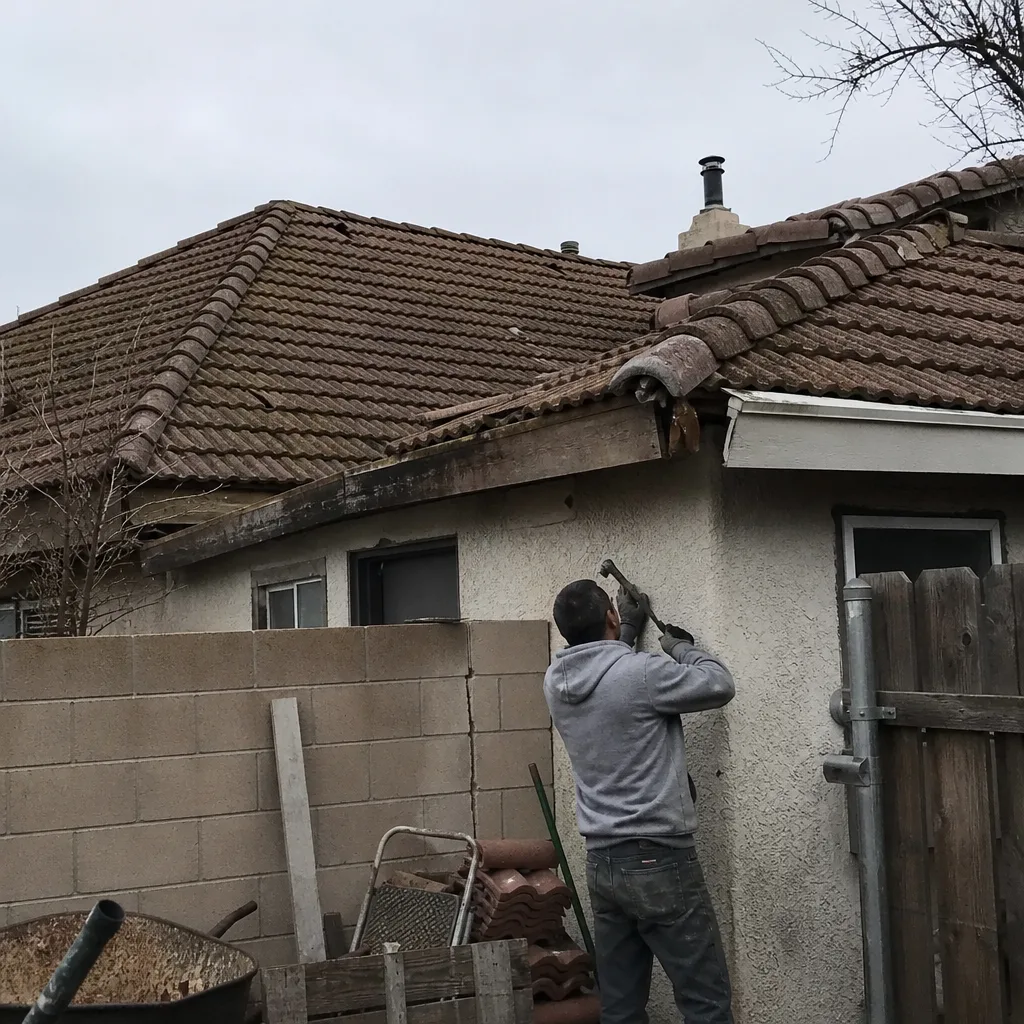 Before
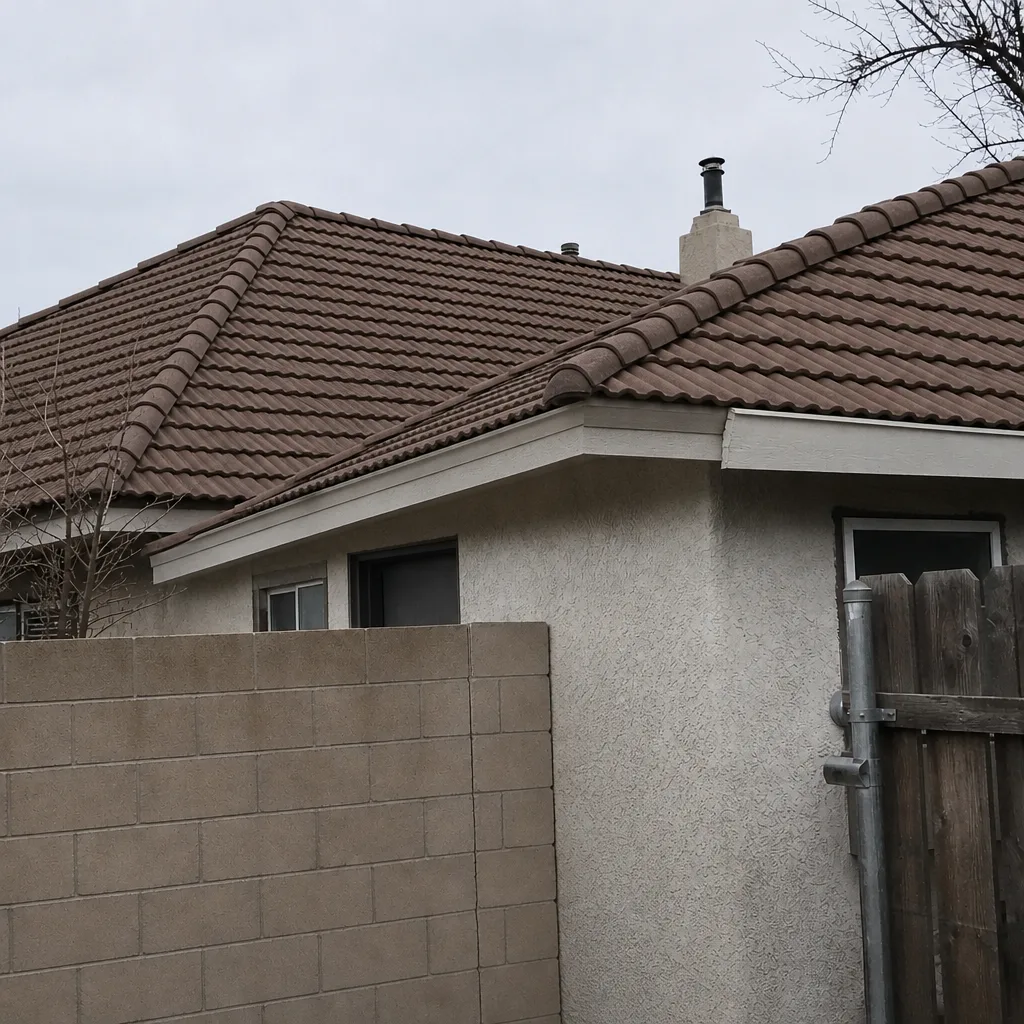 After
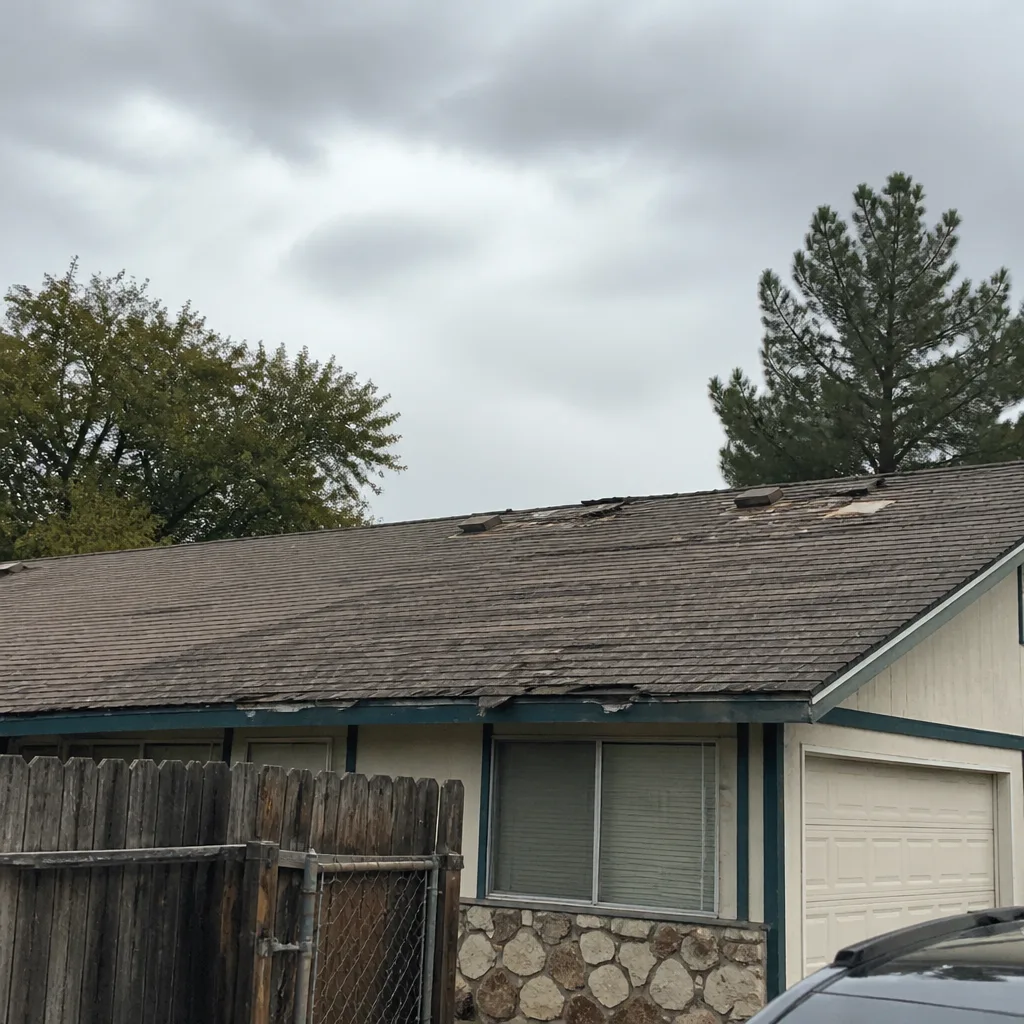 Before
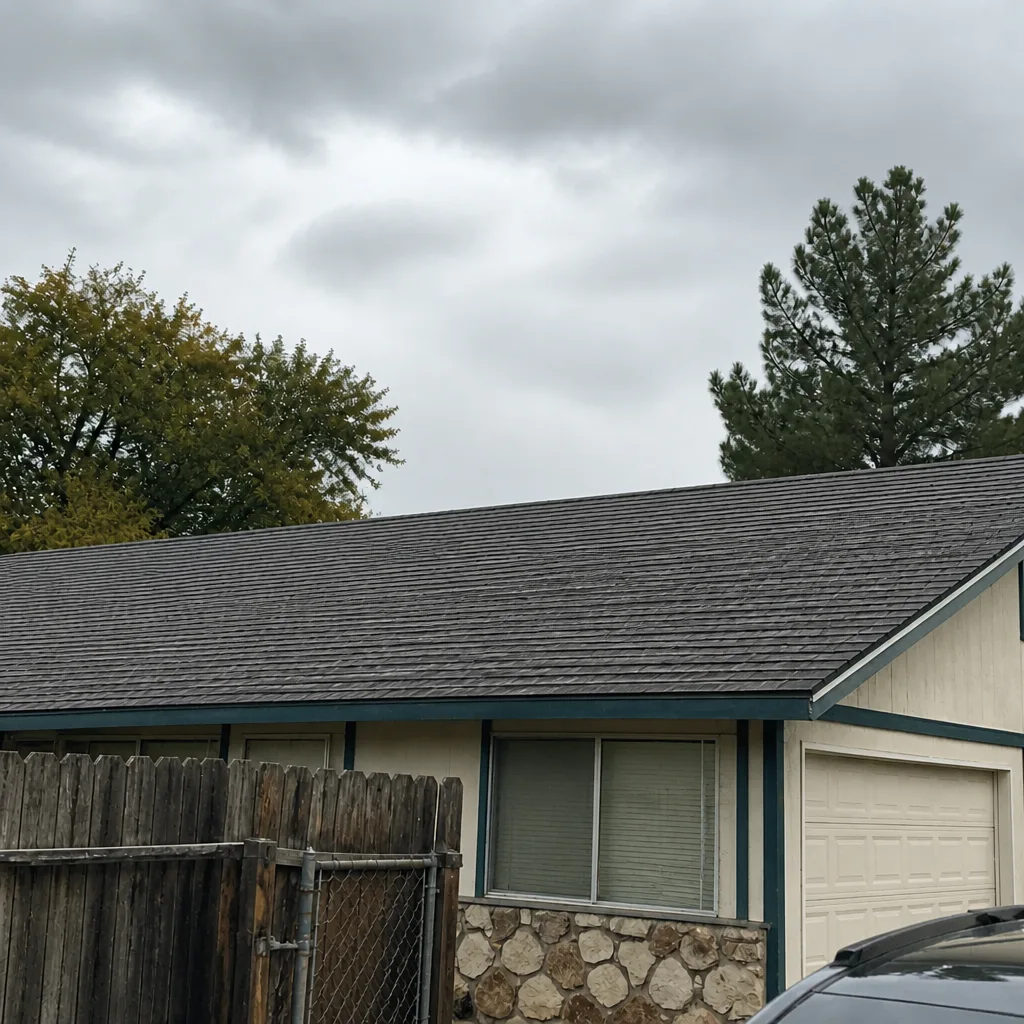 After
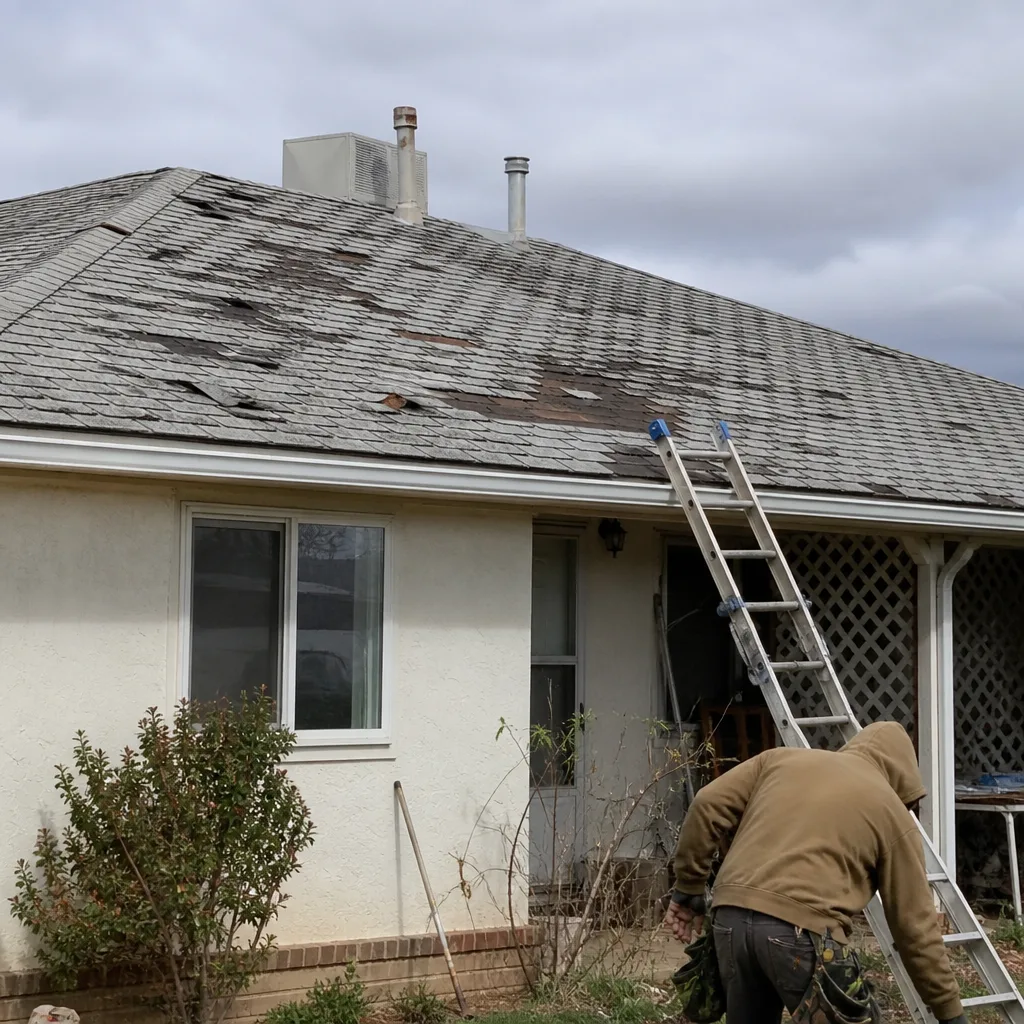 Before
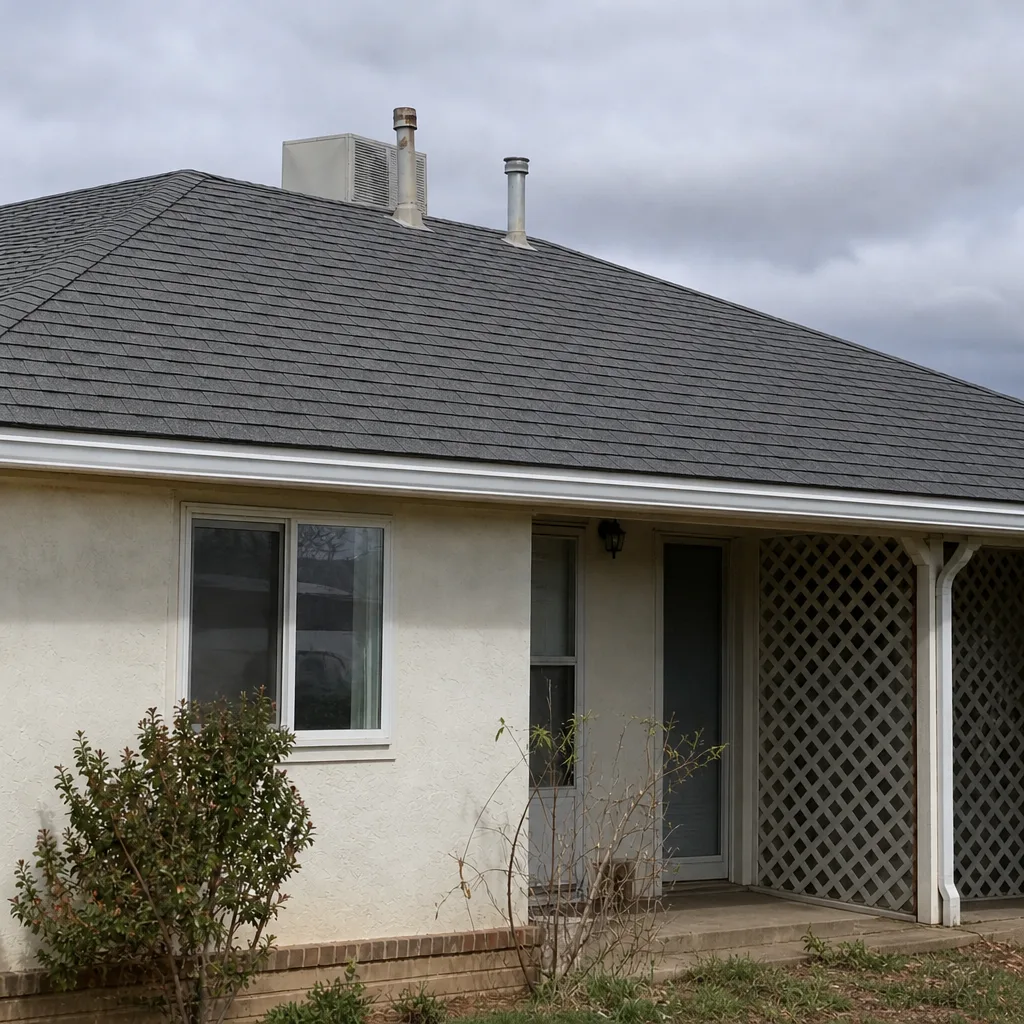 After
When to Call a Professional
Some roof questions are DIY-friendly: a loose ridge vent, a stray shingle on the driveway after wind, a gutter that needs re-hanging. Once the question involves permit jurisdiction, code edition, or whether a scope counts as repair versus replacement, it’s time to bring in a licensed roofer who works in this county. The same is true if your roof is over twenty years old and you’re hearing “you need a full replacement” from one contractor while another says “just repair it” – that disagreement is a signal to get a full-scope inspection before you spend a dollar. And if you’ve got an inherited unpermitted roof, or you’re preparing to sell, an inspection plus a permit history check will tell you where you stand. Enterprise Roofer offers free estimates in Enterprise – call (866) 834-8493. We answer 24/7. Fast dispatch from 7am to 7pm, Sunday through Friday.
Frequently Asked Questions
Yes, a full roof replacement in Enterprise requires a building permit from Clark County Development Services, because Enterprise is unincorporated Clark County. Small repairs may not require a permit, but the boundary depends on scope, so call the county to confirm before work starts. For an exact answer on your roof, call (866) 834-8493 and we’ll walk through the scope with you – estimates are free.
Enterprise is unincorporated Clark County, so building permits go through Clark County Development Services, not the City of Las Vegas Building & Safety Division. Confirm your specific parcel on the county map or by calling Development Services directly. If you’re not sure which department covers you, we can help check before a bid goes out.
Clark County adopts a version of the International Residential Code and applies Nevada state amendments on top; the exact edition in force is set by the county’s current adoption ordinance. Ask Development Services to confirm the edition in writing before your contractor orders materials. We verify the adopted edition on every permitted job in Enterprise.
Inspection scheduling times vary by county volume and season, and requests are typically date-specific rather than same-day. Plan on the inspection sequence taking several days from roof completion to final sign-off. To talk through what a realistic timeline looks like for your scope, call (866) 834-8493.
The inspector issues a written correction list, the contractor addresses the items, and a re-inspection is scheduled. Failed inspections are routine and fixable, but each one costs days on the calendar, so a well-sequenced job plans for the possibility. Call (866) 834-8493 for a free estimate and an inspection schedule that accounts for it.
It can, because title companies and buyer’s agents pull permit history during a sale, and carriers review permits during roof-related claims. An unpermitted replacement can trigger a contingency, a price reduction, or a coverage complication. If you inherited one, get a full inspection and check the county records – our team can help you sort out where it stands.
Yes, we work with seven of the industry’s top brands – including GAF, CertainTeed, Owens Corning, and IKO – so the material recommendation is driven by your roof’s slope, exposure, and budget rather than a single manufacturer’s inventory. That matters for a permitted job where the code edition, flashing requirements, and underlayment spec have to line up. Call (866) 834-8493 to talk through options for a free estimate.
From first inspection through final county sign-off, roof repair and roof replacement both stay with one company in Enterprise. If you’re south in Enterprise and wondering where your permit belongs, that’s a question we answer on every estimate.
The Bottom Line
The permit for your Enterprise roof belongs to Clark County, not the City of Las Vegas, and that single jurisdictional fact drives everything else – code edition, plan review, inspection calendar, and the record a title company sees at resale. Confirm your jurisdiction yourself, ask your contractor which code edition is in force, insist on a permit for any full replacement, and treat the inspection sequence as part of the job timeline rather than an inconvenience. Repair versus replacement is a scope decision, not a sales one, and the right answer for your roof should be based on what the inspection actually finds. If you want a contractor who can talk code, permits, and material choice in the same conversation, call (866) 834-8493 for a free estimate. We answer 24/7. Fast dispatch from 7am to 7pm, Sunday through Friday.
Written by the team at Enterprise Roofer.