
Last updated November 16, 2026
 Architectural shingles
 Metal roofing
 Tile roofing
 GAF
 Owens Corning
 Flat & low-slope
Free roof inspection with deck photos before we talk money - GAF and Owens Corning certified installation
Roof Repair Maintenance Checklist for Enterprise Homeowners
Most roof maintenance checklists you’ll find online were written for temperate climates with four even seasons. They tell you to clean the gutters in fall and check the shingles in spring, and that advice lands sideways in Enterprise, where the roof’s real enemies are relentless sun and a short, violent rainy season. The biggest mistake here isn’t skipping an inspection. It’s ignoring the six weeks after monsoon season ends in September, when storm-driven moisture dries out of the desert heat and takes the evidence of the damage with it. This guide gives you a checklist organized around the two things that actually wear out a roof in Enterprise, and tells you plainly which tasks you can do from the ground and which ones need someone on the roof.
Quick Answer
An Enterprise roof maintenance checklist should be built around two events, not a calendar: sustained UV thermal cycling that ages shingles year-round, and the monsoon season that delivers most of the region’s roughly 4 inches of annual rain in violent bursts. Before the rains arrive in June, clear debris and check seals and fasteners. After they end in October, look for moisture evidence before the heat erases it. Attic ventilation is a year-round check, not a seasonal one. Anything that requires walking the roof is a job for a trained professional.
Styles & brands we work with
- Architectural shingles
- Metal roofing
- Tile roofing
- GAF
- Owens Corning
- Flat & low-slope
Table of Contents
- Why Standard Calendar Checklists Fail in Enterprise
- The Pre-Monsoon Checklist: What to Do Before June
- The Post-Monsoon Checklist: The Six-Week Window After September
- Thermal Cycling Damage Markers on Asphalt Shingles
- Attic Inspection: A Year-Round Task, Not a Seasonal One
- What You Can Do Safely From the Ground
- What Requires Roof Access and a Trained Eye
- Building a Simple Two-Event Maintenance Schedule for Your Roof
Why Standard Calendar Checklists Fail in Enterprise
The typical checklist assumes the roof takes its worst beating in winter. In Enterprise, winter is mild. The beating comes from heat and from the way the shingles expand and contract under it. Asphalt shingles in sustained 110°F+ environments go through thousands of small thermal cycles over a single summer, and each cycle asks the shingle to flex a little. Over time those cycles break down the mat, loosen the granules, and push seams open. That’s the slow, year-round damage. The fast damage happens during monsoon season, when storm-driven rain hits a roof that hasn’t seen meaningful precipitation in months.
Why does the gap between those two stressors matter? Because most homeowners in Enterprise deal with the roof reactively, only when a stain shows up on the ceiling. By then the problem has usually been developing for a season or two. A maintenance checklist that’s built around the two real events gives you a way to look for the damage while it’s still cheap to fix, rather than after it’s undermined the decking.
There’s a second reason the calendar approach falls apart here. The dry air makes a lot of small problems invisible. A loose flashing detail or a hairline crack in a pipe boot doesn’t show up as a drip until the first real rain drives water sideways into it. That’s why the pre-monsoon check and the post-monsoon check both matter, and why the weeks right after the rains stop are the most important of the whole year.
If you’re in Enterprise and you’re not sure what your roof is actually telling you, a full-scope inspection is the place to start. It’s not a sales visit. It’s a diagnostic, and the repair decision comes after it, not before.
The Pre-Monsoon Checklist: What to Do Before June
The pre-monsoon task is simple in concept: make sure the roof is ready to shed water that will arrive fast and hard. Enterprise averages only about 4 inches of rain a year, but a big share of that falls in violent bursts during monsoon season. A roof that handles a slow soaking drizzle can fail under an inch of rain in twenty minutes if the drainage isn’t clear. Do these tasks in late May, before the storms settle in:
- Clear debris from the roof surface and drainage paths. Wind-blown sand, seed pods, and dried vegetation collect in valleys and behind penetrations. When the first rain arrives, that debris acts like a dam and pushes water under shingle edges.
- Check the seals around every roof penetration. Pipe boots, vent flanges, and skylight curbs are where water gets in first. Look for cracking, shrinkage, and gaps at the sealant line. This is an area where the heat does the damage long before the rain tests it.
- Inspect the flashing at walls, valleys, and chimneys. Flashing is the metal that directs water away from the places a roof changes direction or meets a wall. If a flashing detail has lifted or pulled loose, monsoon rain will find it. Flashing repairs are one of the most common fixes we see going into storm season.
- Confirm the fascia and drip edge are intact. The drip edge is the metal strip at the roof’s edge that sends water away from the fascia board and into the gutter line. When it’s bent or missing, water runs behind the gutter and rots the edge of the roof.
- Walk the perimeter and look for loose or lifted shingles. A shingle that’s already lifting before storm season is one that monsoon wind will peel off entirely. Catch it early.
None of these require a shingle-by-shingle roof walk if you’re careful from the ground. Where you can see a penetration or a flashing detail from a ladder at the edge, look. Where you can’t, that’s the next section’s job.
The Post-Monsoon Checklist: The Six-Week Window After September
This is the part most homeowners miss, and it’s the part that costs the most. After the monsoon rains stop in September, any water that got under the shingles or behind the flashing starts to dry out. Within a few weeks of desert heat, the evidence is gone. A stain that was visible in early October has faded by Thanksgiving. The wood underneath is still wet, still swelling, still growing whatever the moisture feeds. The window to catch it is short, and it closes around the end of October.
Here’s what to do in that six-week window:
- Go into the attic and look, not just feel. Look for water stains on the underside of the roof deck, dark streaks on rafters, and any sign of moisture where the decking meets the framing. Use a flashlight and look at the wood from different angles. A stain that’s invisible straight on can show up from a low angle.
- Check for daylight through the roof deck. A house that has no visible light coming through when you stand in the attic during the day is likely fine on that front. Light coming through is a sign the deck or a penetration has failed.
- Look at the ceiling and wall lines indoors. Discoloration at ceiling corners, along the tops of exterior walls, and around any light fixture near the roof line is a moisture clue. Photograph anything you’re not sure about before the heat erases it.
- Walk the yard and look at the ground below the roofline. Granule piles under downspouts and dark water staining on exterior walls tell you where water went during the storm. Persistent dampness at the foundation line after the storms end is worth a call.
- Check the flashing details again. Storm-driven rain comes in sideways, so flashing that would never leak in a straight-down rain can leak in a monsoon wind. Look for bent or lifted flashing, and for any sealant that’s pulled away.
If you did the pre-monsoon checklist and found some of these signs anyway, that’s not a failure. It’s exactly why the pre-monsoon check is worth doing. In our experience, the roofs that make it through monsoon season with the least damage are the ones that were ready for it, and the roofs that get repaired cheaply are the ones that were inspected in October, not the ones that were looked at after a ceiling stain in January.
Thermal Cycling Damage Markers on Asphalt Shingles
Thermal cycling doesn’t show up all at once. It shows up in a few specific patterns that tell you how far along the shingles are. These are the markers worth knowing in Enterprise, where sustained 110°F+ summer days do the work that a decade of freeze-thaw would do in a colder climate:
- Granule loss patterns. Granules are the mineral coating on the shingle surface that protect the asphalt underneath from UV. When the shingles cycle through heat and cool, the asphalt underneath softens and releases granules. An even loss across the whole roof is normal aging. Concentrated loss at the edges, in valleys, and near ridge caps means those areas are breaking down faster and are at the point where they need attention.
- Tab lifting. Thermal expansion pushes the shingle tabs up at the seams. When the shingle cools at night it doesn’t always settle back flat. Lifted tabs are the first stage of the problem, and once a tab is lifted, wind and rain get under it easily.
- Ridge cap separation. The ridge caps are the shingles folded over the peak of the roof. They take the most heat and the most flex, and they’re the first place you’ll see separation. A gap at the ridge cap is a direct path for water running down both sides of the roof.
- Brittle shingles. A shingle that’s lost its flexibility will crack if you flex it, and it’s already cracking where it’s laid over a ridge or a hip. Brittleness is the terminal stage of thermal fatigue. Once a shingle is brittle, patching it is a bridge, not a fix.
- Cupping and curling. When the shingle edges curl upward or the tabs cup, the roof has lost its ability to lie flat. Cupping is usually a sign the whole field is near the end of its useful life, not just one area.
Which of those you can judge from the ground depends on your roof pitch and your sightlines. Granule loss at the bottom edge and cupping from the driveway are often visible. Tab lifting and ridge cap separation require getting up close, which is the part that should go to someone equipped for it. If you want a straight answer about the condition of your shingles, a roof repair visit that starts with a diagnostic inspection is the right first step, and a repair is a legitimate outcome of it, not a consolation prize.
On materials, we work with seven of the industry’s leading brands, including GAF, CertainTeed, Owens Corning, and IKO. That matters for a checklist like this because the shingle you install determines how many thermal cycles you get before the markers above become the plan. A quality architectural shingle from any of those brands will outlast a builder-grade three-tab in this climate by a wide margin, and the recommendation should follow the roof’s needs and your budget, not a single manufacturer’s sales sheet.
Attic Inspection: A Year-Round Task, Not a Seasonal One
Most checklists treat the attic as a fall task. In Enterprise, the attic is a summer task and a winter task and a post-monsoon task, because the heat load makes it the part of the roof system that works hardest all year. A roof doesn’t fail from the top down only. It fails from the inside out when the attic can’t vent the heat it collects. That makes ventilation a maintenance issue, not just a comfort one.
What does attic ventilation failure look like? Here’s what to check, on a schedule you set for yourself, ideally once a month during the hottest stretch and again after monsoon season:
- Measure the temperature difference between the attic and the outside air on a hot afternoon. A well-vented attic in Enterprise should track close to the outside temperature. If the attic is running dramatically hotter, the ventilation is not moving enough air.
- Look for condensation on the underside of the roof deck, on rafters, and on any metal in the attic. Condensation in a desert attic is a red flag. It usually means the home is leaking air from the living space into the attic, or that the venting is imbalanced.
- Check that the intake and exhaust vents are actually open. Intake vents at the eaves and exhaust vents at the ridge work as a pair. If the intake is blocked by insulation, the exhaust can’t pull air through, and the whole system stalls.
- Confirm the insulation isn’t covering the vents. Insulation blown in or moved around over the years can bury the intake vents at the eaves. That’s a common, cheap-to-fix cause of an overheated attic.
- Look for moisture damage at the deck. Discoloration on the underside of the sheathing is the earliest visible sign that the attic environment is hurting the roof structure.
Ventilation failure accelerates every other problem in this guide. A hot attic cooks the shingles from below at the same time the sun cooks them from above, and it shortens the time between thermal cycles. What would be a maintenance-only year in a cooler climate becomes a repair year in Enterprise if the attic is working against the roof. Getting this right is part of what a thorough Enterprise Roofer inspection covers, because the roof is a system and the attic is half of it.
What You Can Do Safely From the Ground
Plenty of this checklist is genuinely owner-performable, and we’d rather you know which parts than have you guess. The line is simple: if the task can be done with your feet on the ground or on a stable ladder at the edge of the roof, you can likely handle it yourself. If it requires walking the roof, leaning over an edge to reach a detail, or getting onto a low-slope section without fall protection, it doesn’t belong on a homeowner’s list.
Here’s what’s realistically in your wheelhouse:
- Clearing debris from the ground with a long-handled tool, and clearing the drainage paths you can safely reach from a ladder.
- Photographing the roofline from the yard at different times of day. Good photos of the shingle edges and any visible flashing are genuinely useful when you call a professional.
- The full attic inspection. Anyone can walk an attic with a flashlight and take notes. It’s the highest-value task on this list that doesn’t require roof access.
- Checking the ceilings and walls indoors for moisture stains after each monsoon event. Photograph them and date the photos.
- Yard-level checks for granule piles, water staining, and drainage problems at the foundation.
- Checking the gutters from the ground with a mirror or a camera on a pole, rather than climbing to scoop them by hand.
Some of what we’d tell you to skip: don’t walk a shingle roof in summer heat. The shingles soften in the heat and scuff easily, and a slip on a hot roof is a serious fall. Don’t try to reseal flashing from a ladder at full extension. Don’t attempt temporary repairs on a steep section for the sake of saving an appointment. The cost of a repair visit is small next to the cost of a fall, and the value of an honest assessment is that it tells you which repairs are urgent and which can wait.
What Requires Roof Access and a Trained Eye
The other half of the checklist needs someone on the roof, and the sooner you accept that, the better your maintenance will go. Roof access is not just a safety question, it’s a judgment question. The difference between a shingle that’s a year from failing and one that has five years left is a trained eye, and a homeowner looking at the same shingle from three feet away on a ladder can’t always make that call.
These tasks need a professional:
- Walking the full roof surface to inspect every field, valley, and penetration. This is the core of a complete inspection.
- Assessing shingle condition tab by tab and judging how much life is left in the field.
- Checking the ridge caps and hip caps up close, where thermal separation happens first.
- Inspecting flashing details at walls, chimneys, and skylights where a leak is most likely to start.
- Confirming deck condition where soft spots are suspected, and pulling up shingles or flashing to see what’s underneath when the assessment calls for it.
- Evaluating the whole roof system as a unit: shingles, ventilation, underlayment, and flashing together. The full picture is what tells you whether you’re looking at a repair or a replacement.
This is where a full-scope inspection pays off, and it’s why we offer inspection as a standalone service, not just as the front end of a replacement sale. The honest question isn’t “does this roof need replacing?” It’s “what does this roof actually need, and what can it wait for?” Sometimes the answer is a few targeted repairs. Sometimes it’s that the roof is genuinely at the end of its life. Presenting both as equally valid outcomes of an inspection is the only way to make the assessment trustworthy. If the answer is that the roof has reached the end, that’s a roof replacement conversation, and it should be a conversation, not a pitch.
Building a Simple Two-Event Maintenance Schedule for Your Roof
You don’t need a twelve-month checklist. You need two events and one recurring habit. Here’s the whole schedule in one place, organized the way the weather actually works in Enterprise:
The pre-monsoon event (late May): Clear debris, check seals and flashing, confirm the drip edge and fascia, look at the shingles from the ground for lifting, and make sure the attic vents are clear and open. This is the “get ready” pass.
The post-monsoon event (October): This is the important one. Get into the attic with a flashlight and look for stains, light, and moisture. Check the ceiling and walls indoors. Walk the yard and look for water staining and granule piles. If anything looks off, call for an inspection before the evidence dries out. Do this within six weeks of the rains ending.
The recurring habit: check the attic once a month through the hottest stretch of summer. It’s the cheapest and fastest task on the list, and it’s the one that catches ventilation failure before it turns into shingle damage. Keep a simple log of what you see and when you saw it, with photos. A dated photo of a ceiling stain from October tells a professional more than a description six months later ever could.
That’s the whole system. Two events, one habit, and one rule about what you do yourself. It’s less work than a generic twelve-task checklist, and it’s aimed at the two things that actually wear out a roof in Enterprise.
Common Mistakes to Avoid
- Skipping the October inspection because the roof looks fine from the ground. In the desert heat, water evidence dries within weeks and the damage it caused keeps going. The post-monsoon window is short and easy to miss.
- Treating the attic as a fall task. In Enterprise, the attic works hardest in summer, and a ventilation problem that shows up in August isn’t going to wait for a fall check. It’s a year-round system, and it needs year-round attention.
- Walking a hot shingle roof in July or August. The shingles soften under sustained heat and scuff easily, and the fall risk on a hot roof is real. Any task that needs full roof access is a professional task.
- Trying to judge thermal damage from the driveway. Granule loss and cupping are often visible from the ground, but tab lifting and ridge cap separation aren’t. A clean-looking roofline is not the same as a sound roof.
- Assuming a salesperson’s pitch is the same as an inspection. An assessment that starts with “you need a new roof” before anyone has been on the roof isn’t an assessment. Ask for the diagnosis, and ask what repairs would buy you.
- Waiting for a ceiling stain before calling anyone. A stain is usually the last stage of a problem that started a season earlier. By the time it shows, the repair is bigger and the deck is more likely to be involved.
- Assuming the checks are the same as for a wet climate. A checklist written for a four-season climate tells you to clear gutters in fall and check shingles in spring. That’s not what a roof in Enterprise is up against. The two stressors are UV thermal cycling and the monsoon burst, and the checklist should follow them.
See the difference
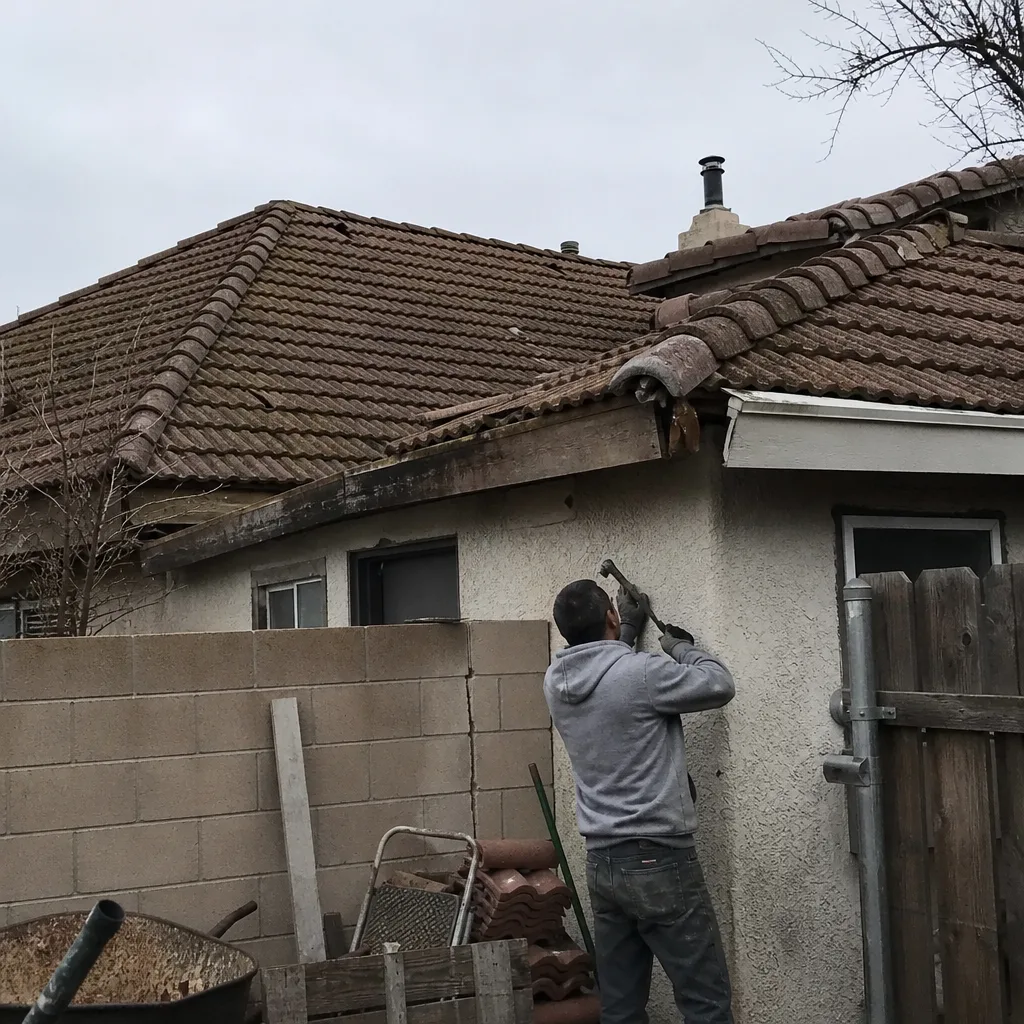 Before
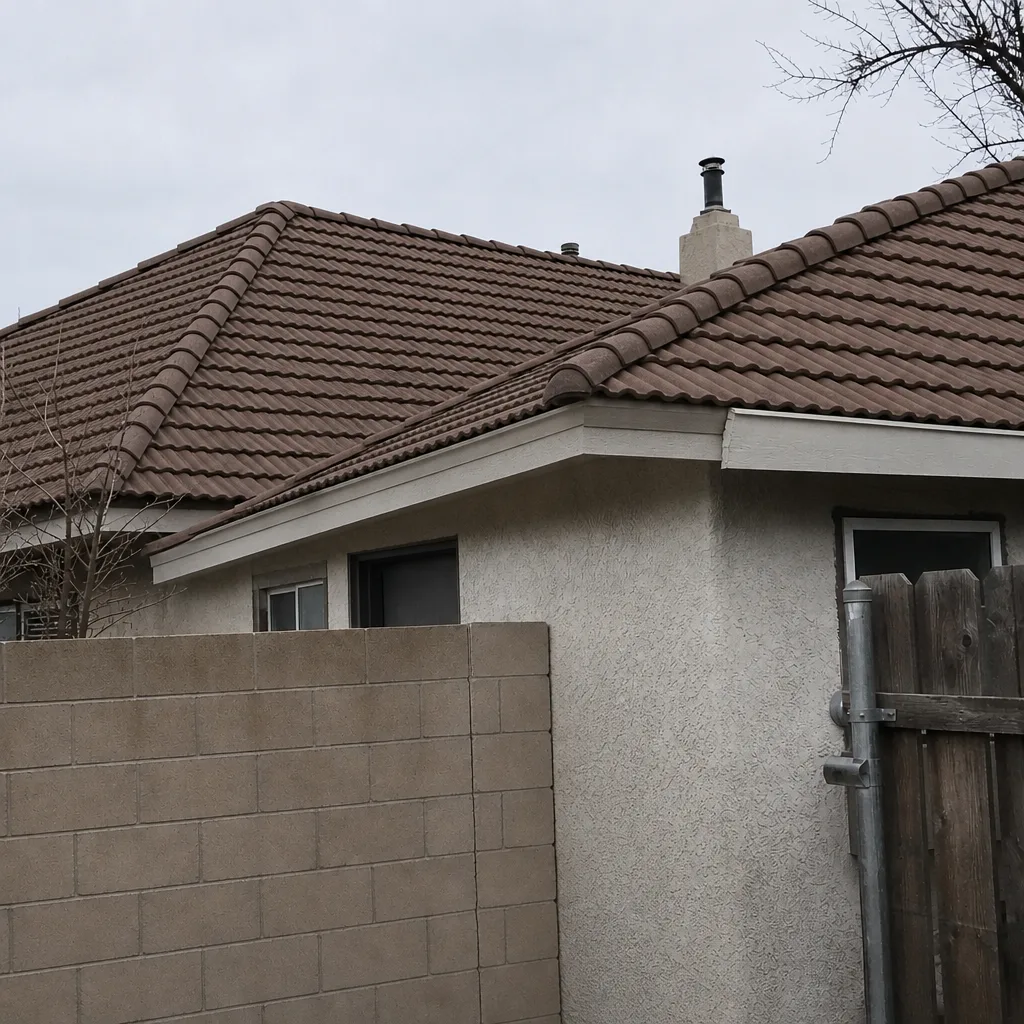 After
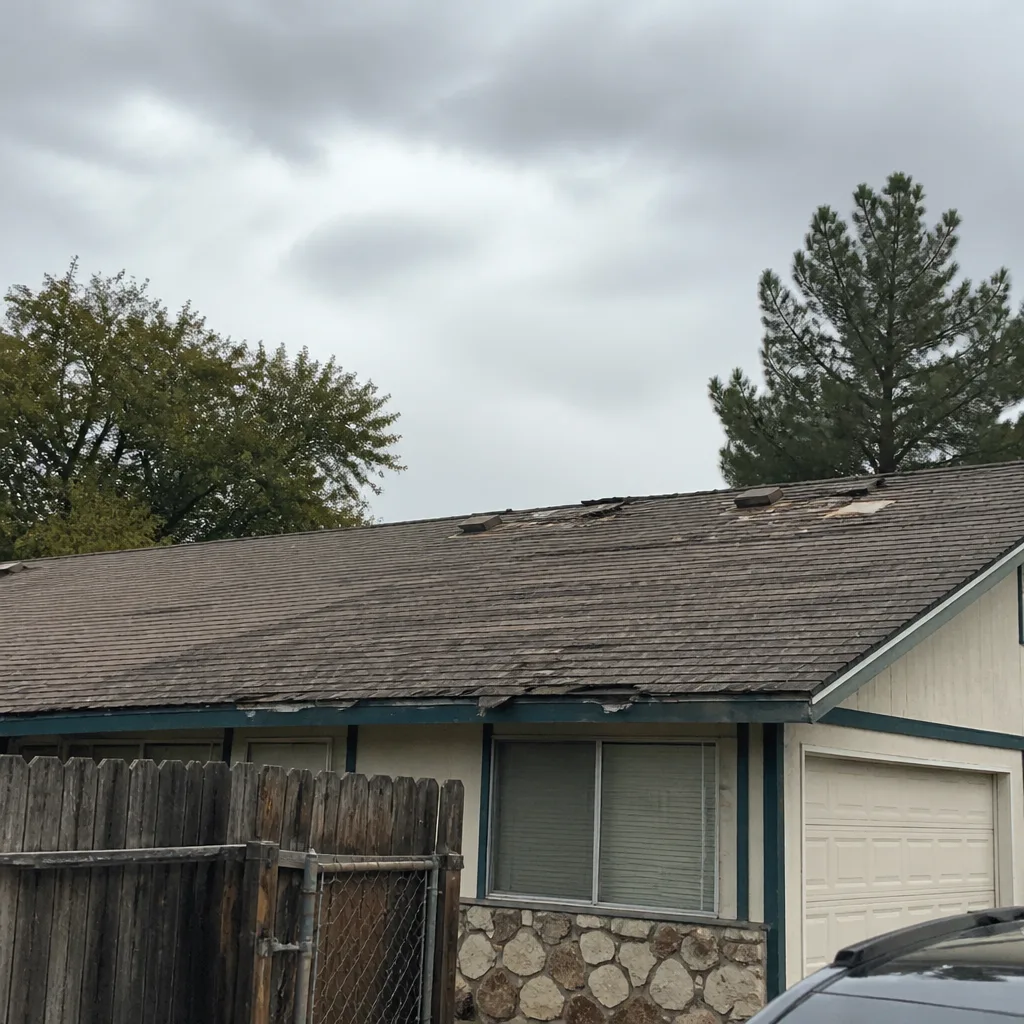 Before
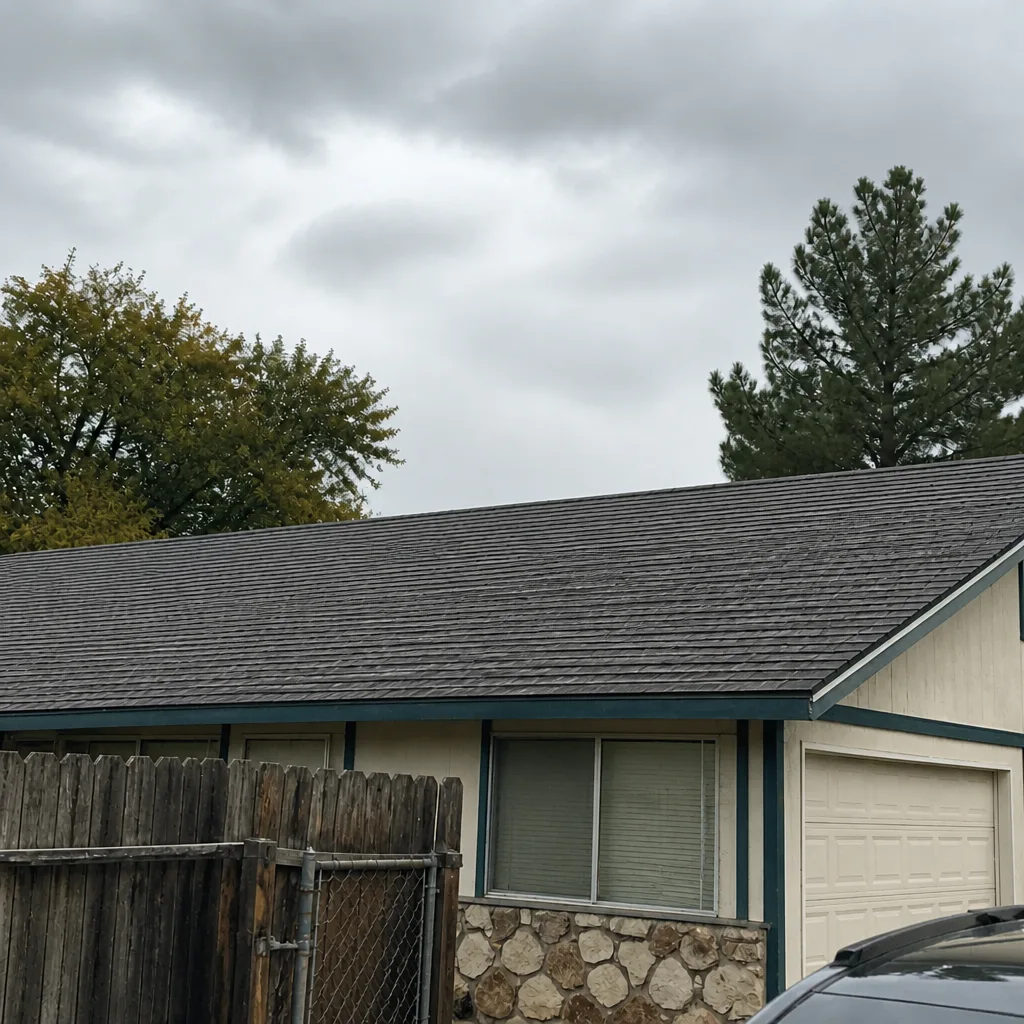 After
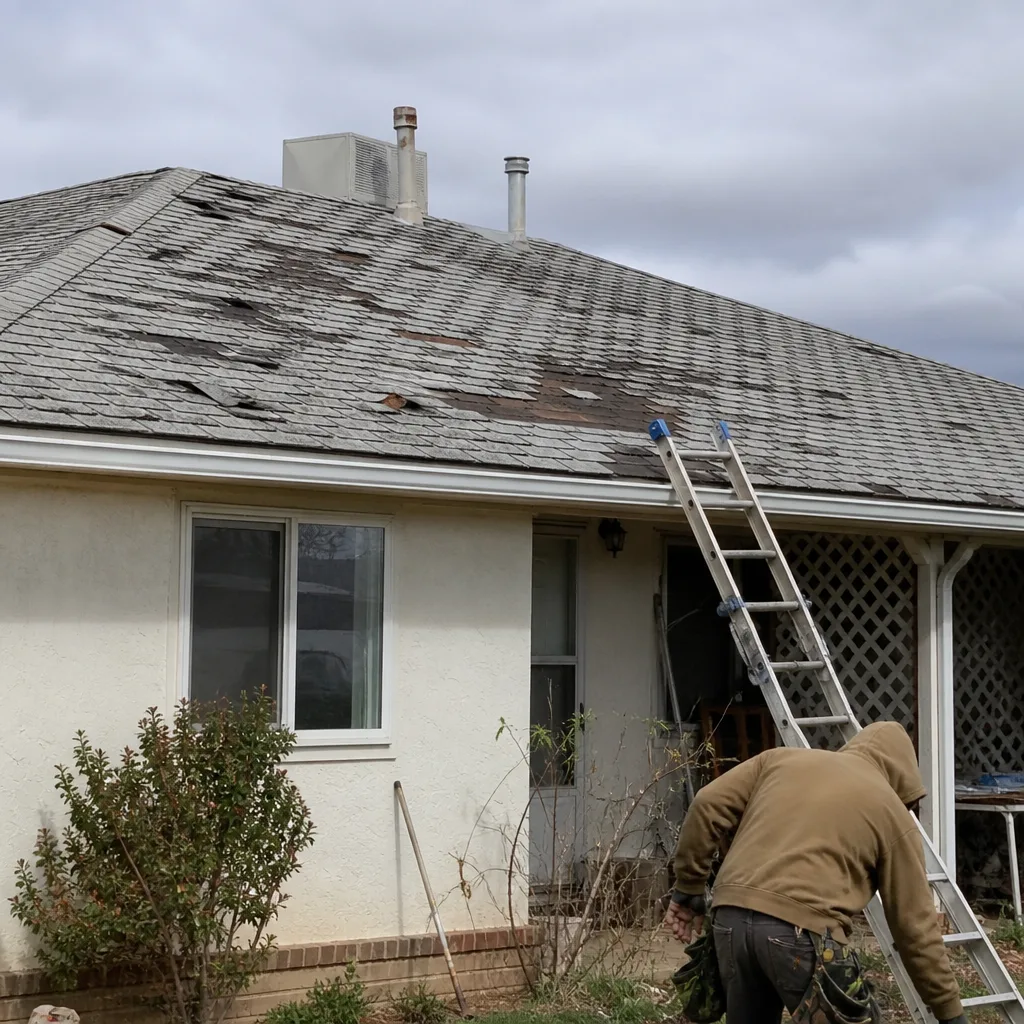 Before
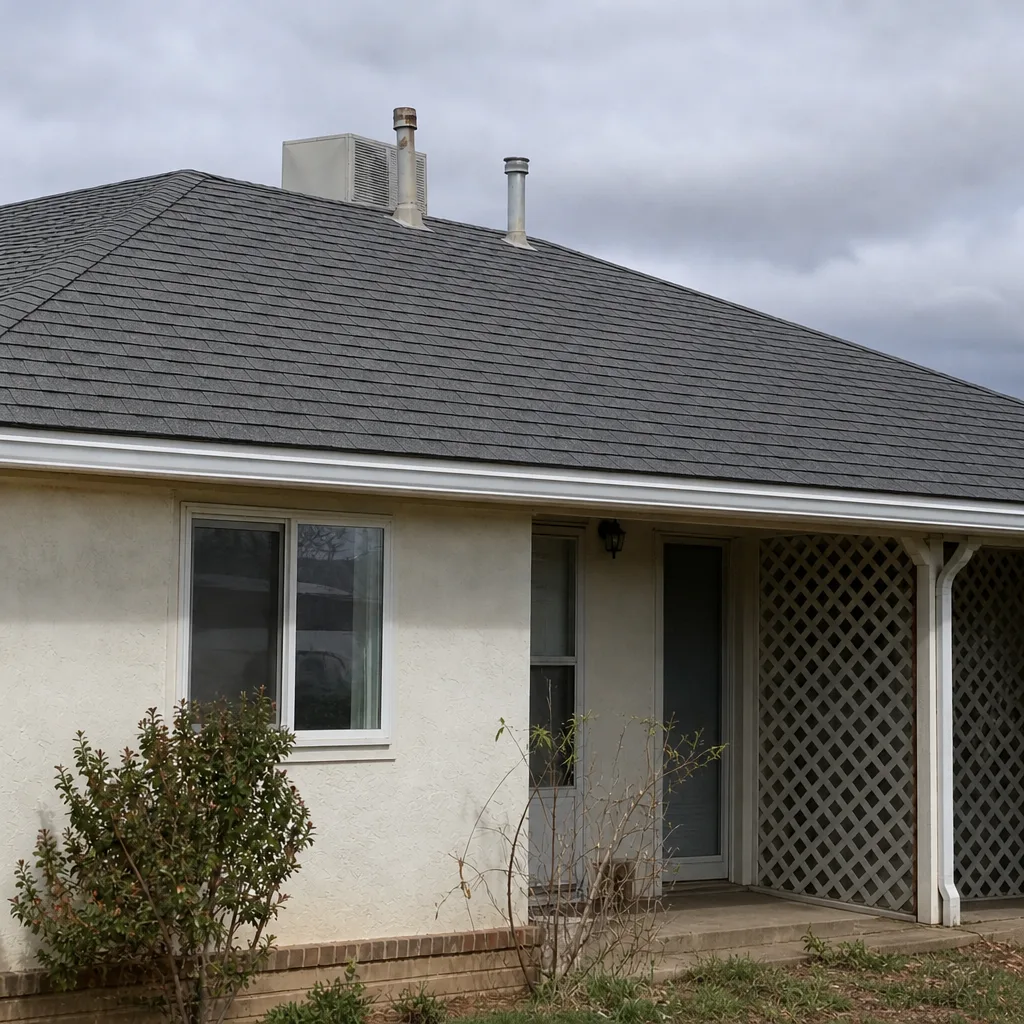 After
When to Call a Professional
Call a professional when any of these applies: you found ceiling, wall, or attic staining after the monsoon season, regardless of how small it looks; you saw daylight coming through the roof deck from inside the attic; you’ve got visible shingle damage like lifted tabs, separated ridge caps, or granule loss concentrated in the valleys and at the edges; you’ve noticed a hot attic problem that clearing vents and insulation hasn’t fixed; or you simply don’t know the condition of the roof and want a straight answer before storm season or before you sell. Also call if a storm event has passed and you’re unsure whether anything got through. We answer 24/7 for storm calls, and we’d rather take the call and tell you the roof is fine than have you miss a leak that’s already drying into the decking.
Enterprise Roofer works across three service tiers, inspection, repair, and replacement, handled by one company from first call to final nail. Our technicians have up to 9 years of experience, and we work with materials from GAF, CertainTeed, Owens Corning, IKO, Atlas, Tamko, and Boral, so the material recommendation follows the roof’s needs and your budget. We offer free estimates in Enterprise, and the written estimate sets the price. Call (866) 834-8493.
Frequently Asked Questions
A checklist for Enterprise should focus on two stressors rather than the four seasons: sustained UV thermal cycling and the monsoon season. That means a pre-monsoon pass in late May, a careful post-monsoon inspection in October within six weeks of the rains ending, and a year-round attic and ventilation habit. The specific tasks listed in this guide cover debris, flashing, seals, shingle condition, and attic moisture, which together cover the ways roofs in this climate actually fail.
Twice a year for the owner-performable checks and once a month in summer for the attic. Most homeowners do a pre-monsoon pass in late May and a post-monsoon inspection in October, then check the attic monthly through the hot stretch. A professional inspection is worth scheduling when you don’t know the roof’s condition, after a storm, or when the roof is past the midpoint of its expected life. Timing the professional inspection to the fall, right after the monsoon season, gives you the best chance of catching moisture damage before it disappears.
You can do a good portion of it safely from the ground and from inside the attic, and you should. Clearing debris, checking the attic for stains and daylight, photographing the roofline, and looking for water staining in the yard are all within reach for most homeowners. The tasks that require walking the roof surface, getting close to ridge caps and flashing, or judging how much life is left in the shingles need a trained eye and the right equipment. Roof access in the summer heat is genuinely dangerous, and it’s not a task to DIY. Call (866) 834-8493 for a professional inspection, and the estimate is free.
Roof repair costs in Enterprise depend on the scope, from small flashing and pipe boot repairs to larger storm-related fixes, and the honest answer is that the price is set per job by the written estimate. What we can say plainly is that repair is framed as a legitimate outcome of the inspection, not a stopgap before a replacement. An inspection tells you what the roof actually needs, and if repair is the answer, that’s what we recommend. Call (866) 834-8493 for a free estimate so you can see the actual numbers for your roof.
Because the evidence of moisture intrusion dries and disappears within weeks in the desert heat. In Enterprise, monsoon rain hits a roof that’s been dry for months, and the water that gets past a flashing detail or a failed seal has a short window before it’s dried out on the surface. The wood underneath doesn’t dry at the same rate. A stain that’s visible in early October is often gone by Thanksgiving, and the damage it signaled continues. The six weeks after September are the best chance of catching a problem before it costs more.
If you’ve done the owner-performable checks and everything looks fine, you may not need one every year. But there’s a real difference between “no visible damage” and “no damage,” and in this climate the invisible kind is common. A full-scope inspection is worth doing when the roof is past the midpoint of its life, after a storm, before a sale, and anytime you’re not sure. It’s a diagnostic, not a sales pitch, and the repair decision follows the diagnosis. Call (866) 834-8493 to schedule one, and estimates are free.
The Bottom Line
A roof maintenance checklist for Enterprise should be built around the two things that actually wear out a roof here: the sustained UV thermal cycling that grinds shingles down year-round, and the monsoon bursts that deliver most of the region’s roughly 4 inches of annual rain in short, violent windows. The biggest, easiest-to-miss item is the post-monsoon inspection in October, because that’s when moisture evidence is still visible and still fixable. Everything else, the pre-monsoon pass, the attic checks, the ground-level tasks, is aimed at keeping the roof ready for those two events. Everything that requires getting on the roof belongs with a professional, and a full-scope inspection from one company that handles inspection, repair, and replacement is the right starting point.
If this checklist has left you with questions about your own roof, that’s a good reason to call. Enterprise Roofer offers free estimates in Enterprise, and we answer 24/7. Call (866) 834-8493 to schedule your free estimate. Fast dispatch from 7am to 7pm, Sunday through Friday.
Written by the team at Enterprise Roofer.