
Last updated November 16, 2026
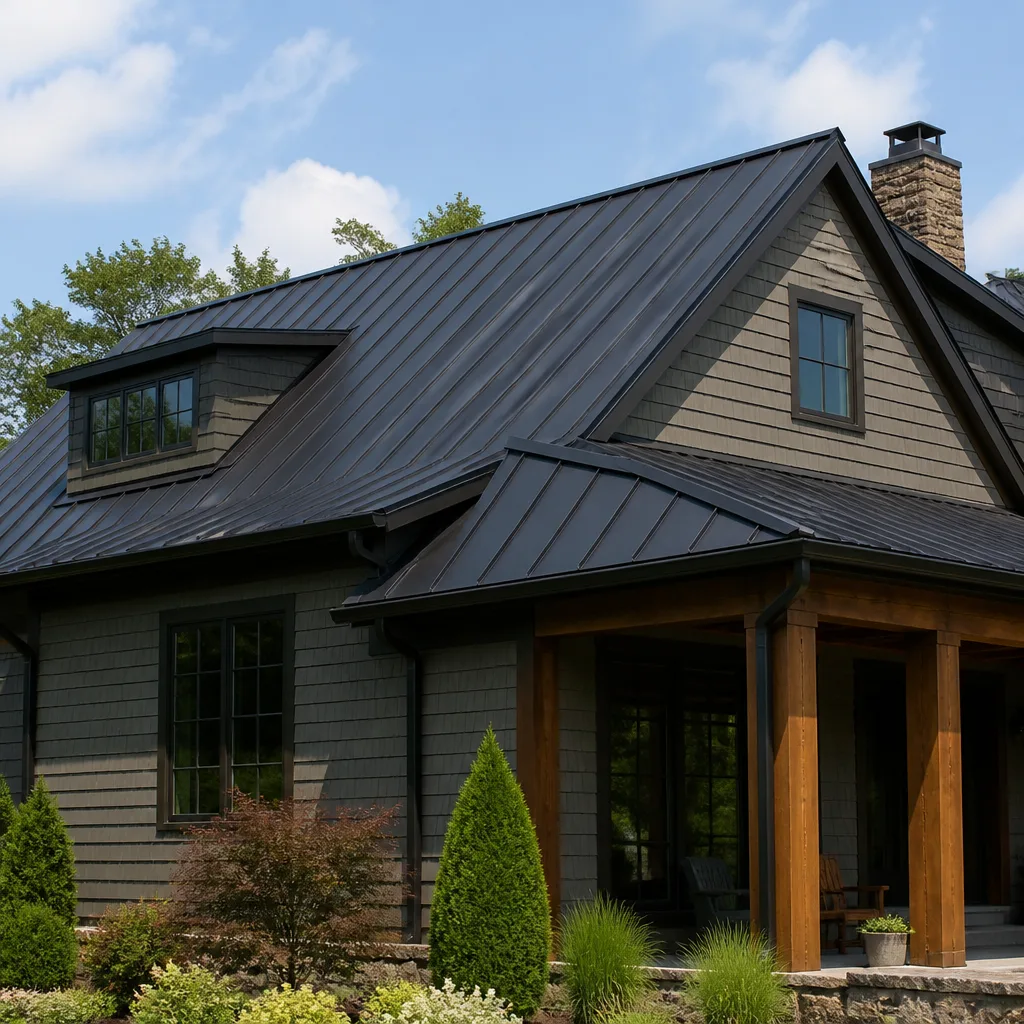 Metal roofing
 Architectural shingles
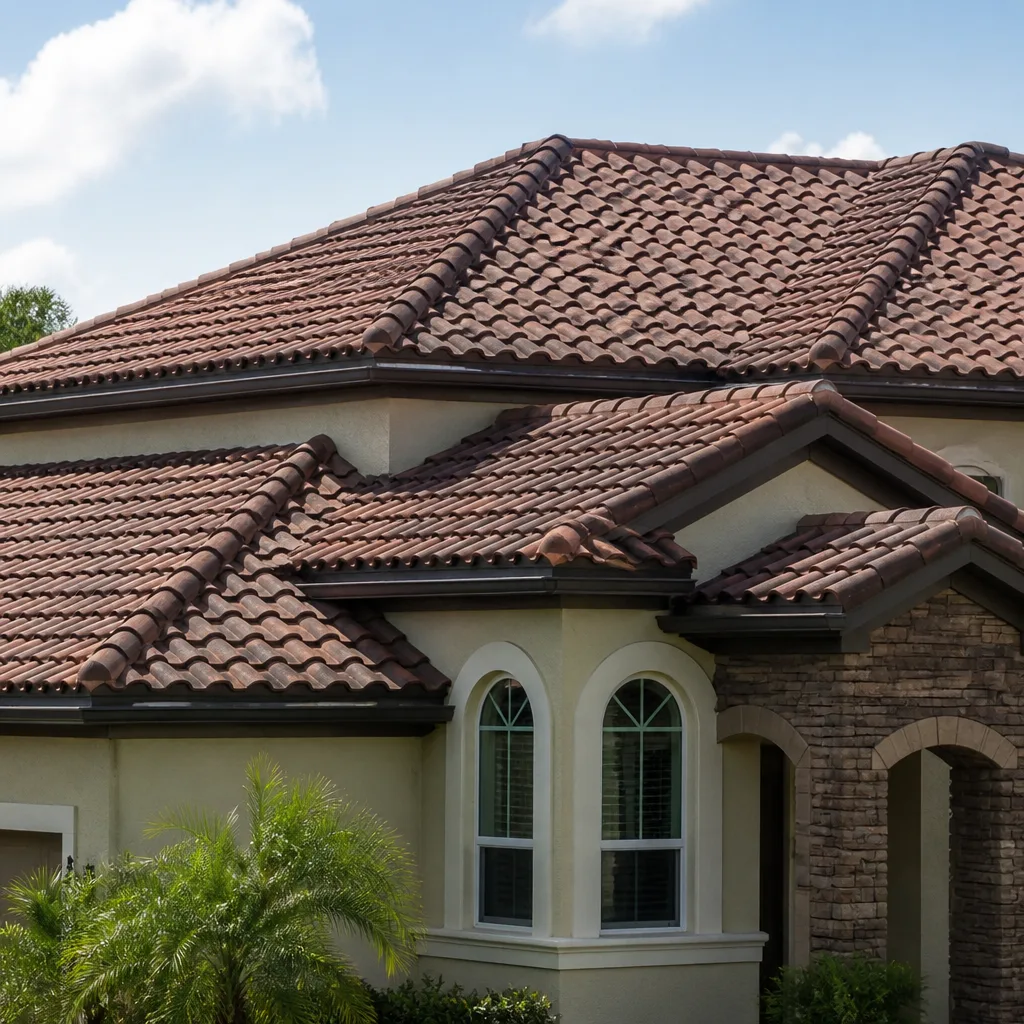 Tile roofing
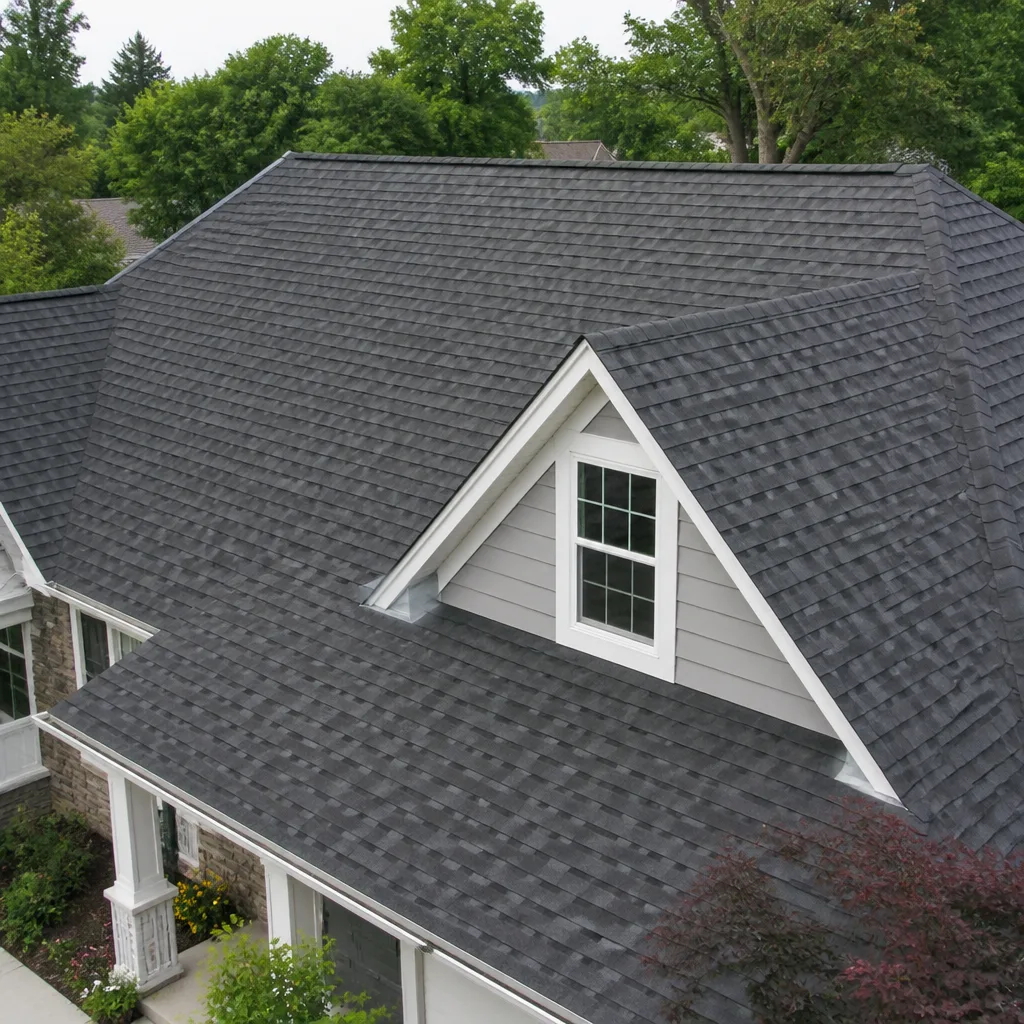 GAF
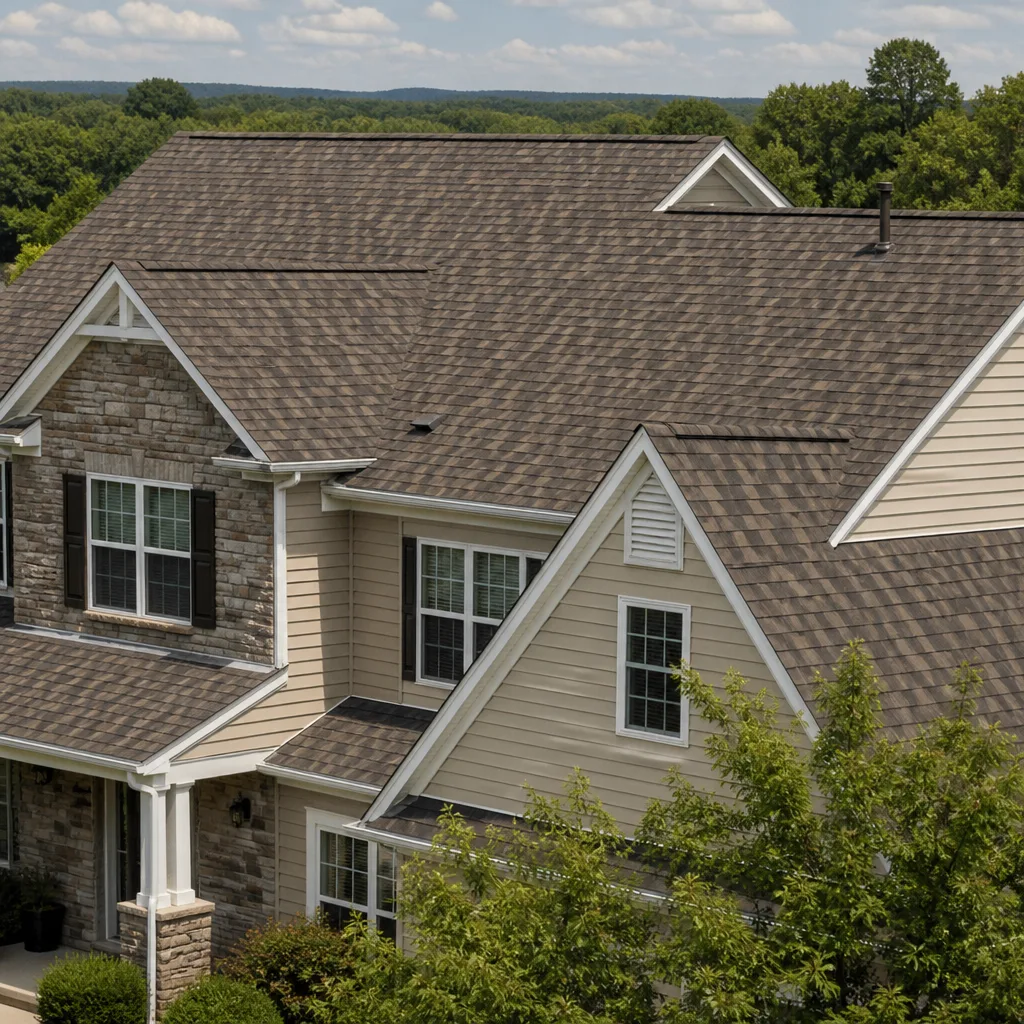 Owens Corning
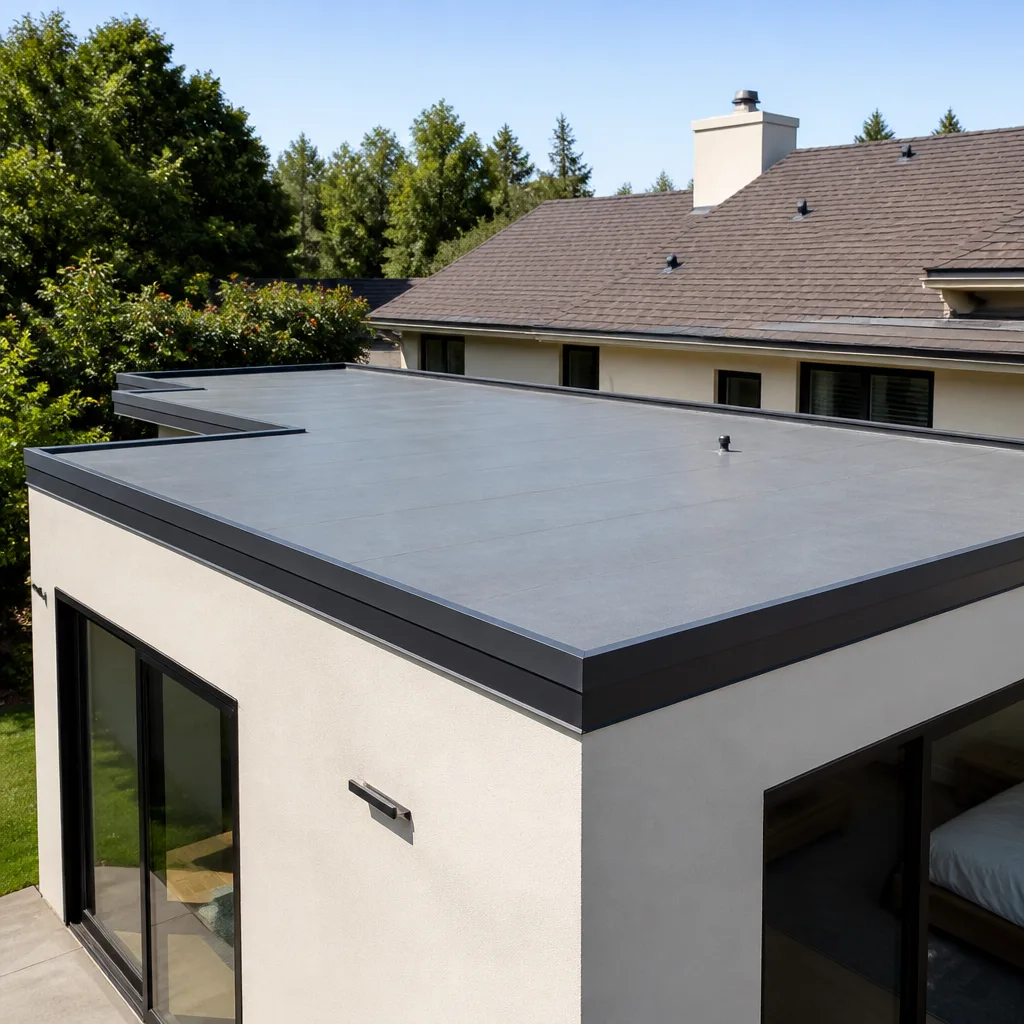 Flat & low-slope
Free roof inspection with deck photos before we talk money - GAF and Owens Corning certified installation
DIY vs Professional Roofing: The Enterprise Homeowner’s Decision Guide
Most comparisons of DIY and professional roofing start with the price tag. In Enterprise, that’s the wrong starting point. Nevada law lets you work on your own primary residence, but Clark County still requires a permit for most re-roofing, and a homeowner-pulled permit has to clear the same inspection sequence a licensed contractor does – with nobody standing behind you if a phase fails. Add a desert climate that pushes shingle surfaces well past 150°F on a July afternoon and the real questions stop being about money. This guide walks through the legal side, the heat side, and the material side, so you can decide what’s genuinely worth doing yourself and what isn’t.
Quick Answer
For most Enterprise homeowners, professional roofing is the right call for anything beyond small repairs. Full re-roofs and roof sections need a Clark County permit and inspections that a homeowner can pull but not easily pass alone, and desert heat makes ladder work and shingle installation genuinely dangerous in summer. Minor repairs below permit thresholds – a lifted shingle, cracked flashing, debris in a valley – are reasonable DIY territory if you work early in the morning and stay off the roof entirely once the heat builds.
Styles & brands we work with
- Architectural shingles
- Metal roofing
- Tile roofing
- GAF
- Owens Corning
- Flat & low-slope
Table of Contents
- Do You Need a Permit to DIY Your Roof in Enterprise?
- Why Desert Heat Changes the DIY Math
- How Heat Affects Shingle Installation and Material Performance
- What DIY Scope Is Actually Reasonable in Enterprise
- Contractor Pricing, Multi-Brand Access, and Warranty Tiers
- Warranty, Permits, and Future Resale Disclosure
- Common Mistakes to Avoid
- When to Call a Professional
Do You Need a Permit to DIY Your Roof in Enterprise?
Yes, most re-roofing in Enterprise requires a Clark County permit, and that requirement applies whether a licensed contractor pulls it or you do. Nevada law doesn’t bar homeowners from working on their own primary residence, but the permit is a separate matter from who swings the hammer. A homeowner-pulled permit is legal, and it also puts you on the hook for the same inspection sequence a contractor would face.
What that sequence involves is the part most DIY research skips. Re-roof inspections typically check the deck condition, underlayment and flashing details, and the finished installation at defined phases. If a phase fails, you correct it at your own cost and schedule another inspection. There’s no licensed professional absorbing that risk or troubleshooting the failed item with the inspector on your behalf. When we handle a job, that back-and-forth stays with us from the first inspection through the final sign-off.
- What a homeowner permit allows: work on your own primary residence, with the same inspection requirements as a contractor’s job.
- What it restricts: anything requiring a licensed trade (electrical, gas, structural changes) is outside homeowner scope, even on your own roof.
- What it doesn’t cover: liability if a helper is injured, and warranty protection if a manufacturer’s certified installation requirements aren’t met.
Before you buy a single bundle of shingles, call Clark County’s building department and ask what your specific address requires. The permit is the easy part. The inspections are where DIY roof projects in Enterprise stall, and starting over mid-project with an open permit on record is a slow, expensive way to learn that.
Why Desert Heat Changes the DIY Math
Roofing in Enterprise is seasonal work for a reason. Ambient temperatures in the high 90s push roof surface temperatures far higher, and professional crews typically stop or reschedule shingle work once the heat crosses safe thresholds for both workers and materials. Roofing involves standing on a surface that radiates heat from below and above at once, with no shade and no relief. Heat illness comes on faster than most people expect, and a solo homeowner has no spotter, no water rotation, and no one to call for help if something goes wrong.
That’s the safety half. The other half is that heat exposure degrades the human side of the equation even when nothing goes wrong. Judgment slips, grip weakens, and reaction time slows – exactly the conditions where a stumble on a two-story pitch turns into a hospital visit. Professional crews work with site safety protocols, hydration and rotation schedules, and the option to walk away when conditions turn unsafe.
In practical terms, this reshapes the DIY schedule:
- Work early mornings only. Start at first light and get off the roof by mid-morning once the surface heats up.
- Watch the surface, not the air temp. A 95°F afternoon can mean a roof surface that will burn skin on contact.
- Never work alone. Have someone on the ground with a phone and water within reach.
- Stage materials in shade. Shingles left in direct sun before installation are harder to handle and more prone to damage.
- Know the stop point. If you’re dizzy, cramping, or feeling off, you get down. No exceptions.
Our technicians have up to 9 years of experience working in Enterprise heat, and that experience is mostly about knowing when not to be on a roof. That’s a call a solo homeowner doesn’t always get to make alone.
How Heat Affects Shingle Installation and Material Performance
Asphalt shingles are engineered for a temperature window. Below roughly 40°F they get stiff and don’t seal. Above about 100°F they soften, and that softening is where installation errors multiply. The adhesive strips on each shingle – the factory-applied sealant that bonds one course to the next – activate under heat and pressure. In a temperate climate, they seal gradually over the first hot season. In Enterprise, an August installation can activate them the moment they’re laid down, often before the shingle is aligned and set correctly.
What goes wrong when that happens:
- Misaligned seal lines. A shingle that seals before it’s properly positioned is locked in the wrong place, and pulling it up damages the seal.
- Bridging and wrinkling. Soft shingles wrinkle underfoot and won’t lay flat, which can prevent the next course from seating correctly.
- Nail placement drift. Soft mats let nails overdrive, punching through the shingle face instead of sitting flush in the nail line.
- Premature adhesive activation. Once the strip seals, later corrections become destructive rather than simple.
None of this shows up immediately. A poorly installed roof can look complete and fail in the first wind event or the first hard monsoon, because the shingles never bonded properly to begin with. Pro installers use pattern, temperature, and handling techniques that steady shingles into place without triggering premature sealant activation. The technique matters as much as the brand on the wrapper. When we evaluate a roof, we choose materials by need and budget across brands like GAF, CertainTeed, and Owens Corning – the installation method underneath is what makes them perform.
What DIY Scope Is Actually Reasonable in Enterprise
Some repairs are below the permit threshold, safe to do early in the morning, and don’t void a manufacturer warranty if they’re minor. Those are reasonable DIY territory. Most things beyond that scope aren’t, and the boundary is tighter than most homeowners assume. Property maintenance – clearing debris, cleaning gutters, trimming branches – is always fine. Anything that involves removing shingle courses, changing flashing, or opening the roof deck generally isn’t.
Reasonable DIY work in Enterprise:
- Clearing debris, dried vegetation, and dust from valleys and gutters after a wind event.
- Replacing a single lifted or cracked shingle within reach, done before the surface heats up.
- Tightening exposed fasteners and clearing caulk lines where they’ve dried out.
- Inspecting a roof from the ground with binoculars to spot missing shingles, sagging lines, or debris pools.
Repairs we handle as legitimate work, not as a sales funnel for replacement:
- Flashing repairs around vents, skylights, and wall junctions.
- Sectional repairs and replacement of worn shingle courses.
- Underlayment repairs where moisture has worked in.
- Storm and impact damage follow-up after a monsoon.
The honest boundary is simple. If the work requires removing more than a few shingles, or opening a valley or penetration, it’s a professional repair. If it requires stripping the roof, it’s a professional job with a permit. Roof repair in Enterprise isn’t always a lead-in to replacement – an honest inspection tells you what the roof needs, whether that’s a small repair or a full re-roof. When you’re in Enterprise, we structure that inspection as a standalone service so you get an answer either way.
Contractor Pricing, Multi-Brand Access, and Warranty Tiers
On a retail basis, a homeowner buys shingles from a big-box store or a local supplier at a counter price and pays retail on the trim materials. Contractors buy through manufacturer accounts with trade pricing, which brings material costs down and lets the labor line stay predictable in the estimate. That’s the obvious part. The less obvious part is what you can’t buy at any counter: the manufacturer warranty tiers tied to certified installation, which is often a decade longer than the basic warranty a retail purchase gets.
Those tiers usually require installation by a certified or authorized contractor. If you install a shingle system yourself, you typically get the basic product warranty – which covers material defects but not installation errors – and the extra protection on the labor side stays off the table. If a wind event peels back a section five years later, the manufacturer can point to installation as the cause, and you own the fix.
Cost comparison, roughly framed:
- Retail material pricing on a full roof runs higher per bundle than trade pricing on the same product line.
- Warranty tiers available through certified installers extend coverage on labor and workmanship beyond the basic product warranty.
- Inspection risk on failed permit phases is entirely yours on a homeowner permit.
- Labor replaces your weekends and your summer mornings, and a written estimate fixes the price before the work starts.
We work with seven leading brands – GAF, CertainTeed, Owens Corning, IKO, Atlas, Tamko, and Boral – so the recommendation follows your roof’s needs and budget, not a single manufacturer’s lineup. On a premium shingle line, the gap between retail and trade pricing plus the warranty tier difference shifts the real-world cost comparison more than most DIY calculations account for. A free estimate with a written line-item quote will show you the actual numbers for your roof.
Warranty, Permits, and Future Resale Disclosure
A permit pulled by a homeowner is a permanent part of your property record. When you sell, a buyer’s inspector will pull the permits, and if the work was done under a homeowner permit without a completed inspection sequence, the sale can stall. Lenders and title companies look at this closely, and a buyer’s agent will flag an unpermitted or failed-inspection roof as a negotiation point. In Enterprise, where most homes are on slab and roof condition is a genuine buyer concern, that shows up in the offer.
Warranties don’t transfer cleanly from DIY jobs either. A manufacturer warranty on a professionally installed roof is often transferable to the next owner, which is a real selling point in a listing. A basic product warranty from a retail purchase is far narrower, and most buyer’s inspectors know the difference. If you’ve had work done on a home you’re selling, disclosure typically requires you to describe it accurately – which means any open permits need to be closed and any failed inspections resolved before the sale closes.
The straightforward version for anyone considering DIY on a project that needs a permit: it’s not just a construction decision, it’s a financial decision that follows the house. When you’re in Enterprise, we handle permit pulls and inspections as part of the job, so the record closes clean when you go to sell.
Common Mistakes to Avoid
- Starting the roof without checking permit requirements. Clark County requires a permit for most re-roofing. Pulling a permit after the fact is a slow, expensive process, and the inspection sequence has to happen either way.
- Working past mid-morning in summer. The high desert heat peaks early on a roof surface. Most serious heat incidents happen in the afternoon when homeowners push through “one more bundle.”
- Installing shingles above 100°F ambient. The adhesive strips activate prematurely, which locks misalignments in place and prevents proper sealing. It’s the most common installation problem we see on DIY roofs in Enterprise.
- Storing shingles in direct sun before installation. Soft, hot shingles wrinkle underfoot and won’t lay flat. Stage them in shade and install in the early morning batch by batch.
- Assuming a basic product warranty equals a certified install warranty. The gap on labor coverage is real, and manufacturers typically attribute failures after DIY installs to installation.
- Tearing into a valley or penetration repair without knowing where it stops. What looks like one loose shingle often opens into underlayment and deck damage that turns a small repair into a full section replacement.
- Working alone on a two-story roof. No spotter, no water handoff, no one to call for help. If you can’t get down safely on your own, don’t go up.
See the difference
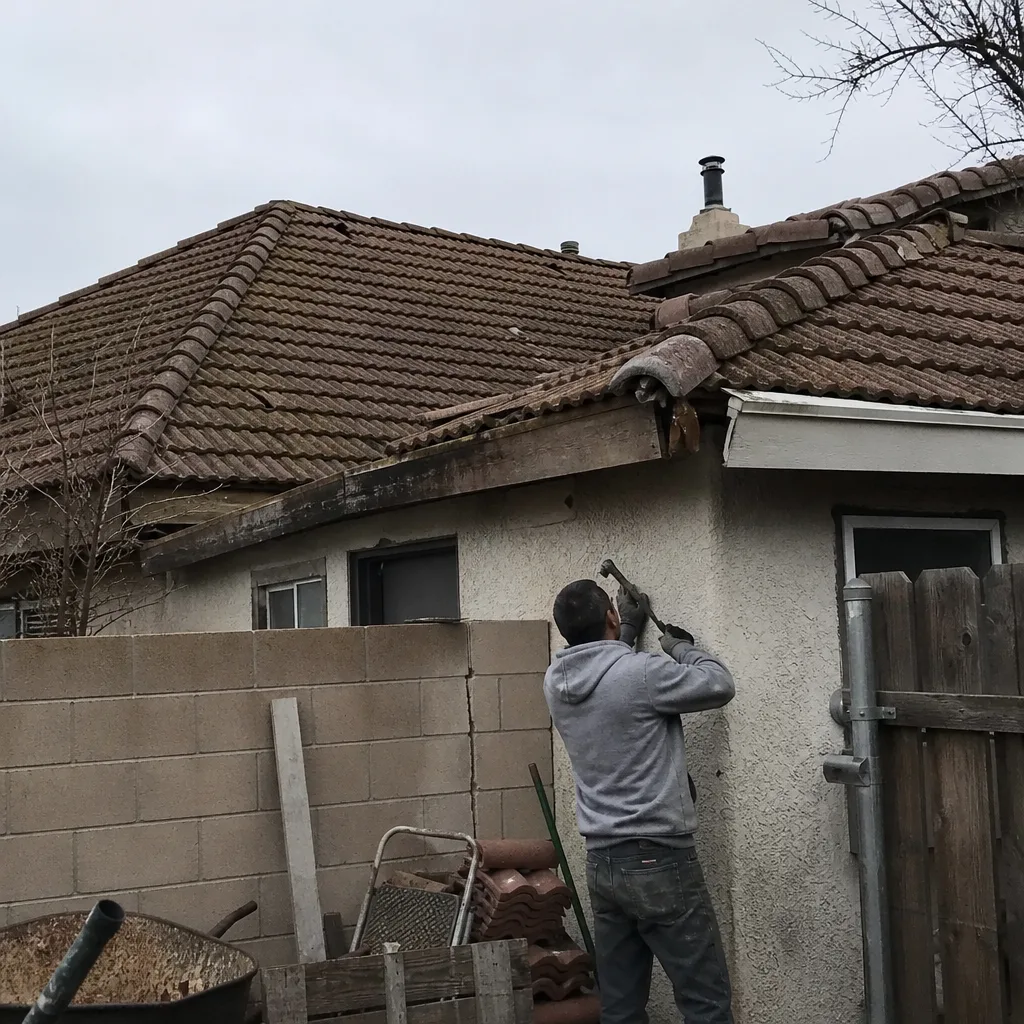 Before
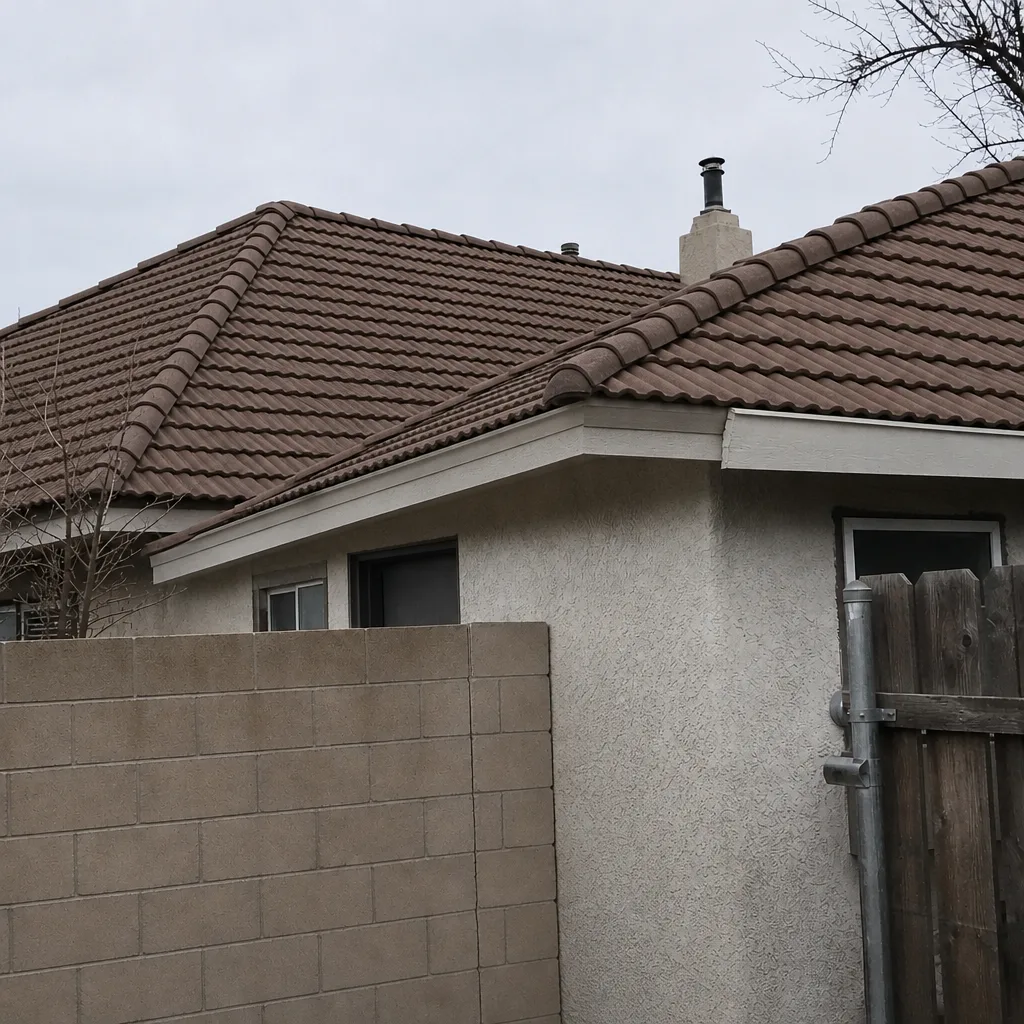 After
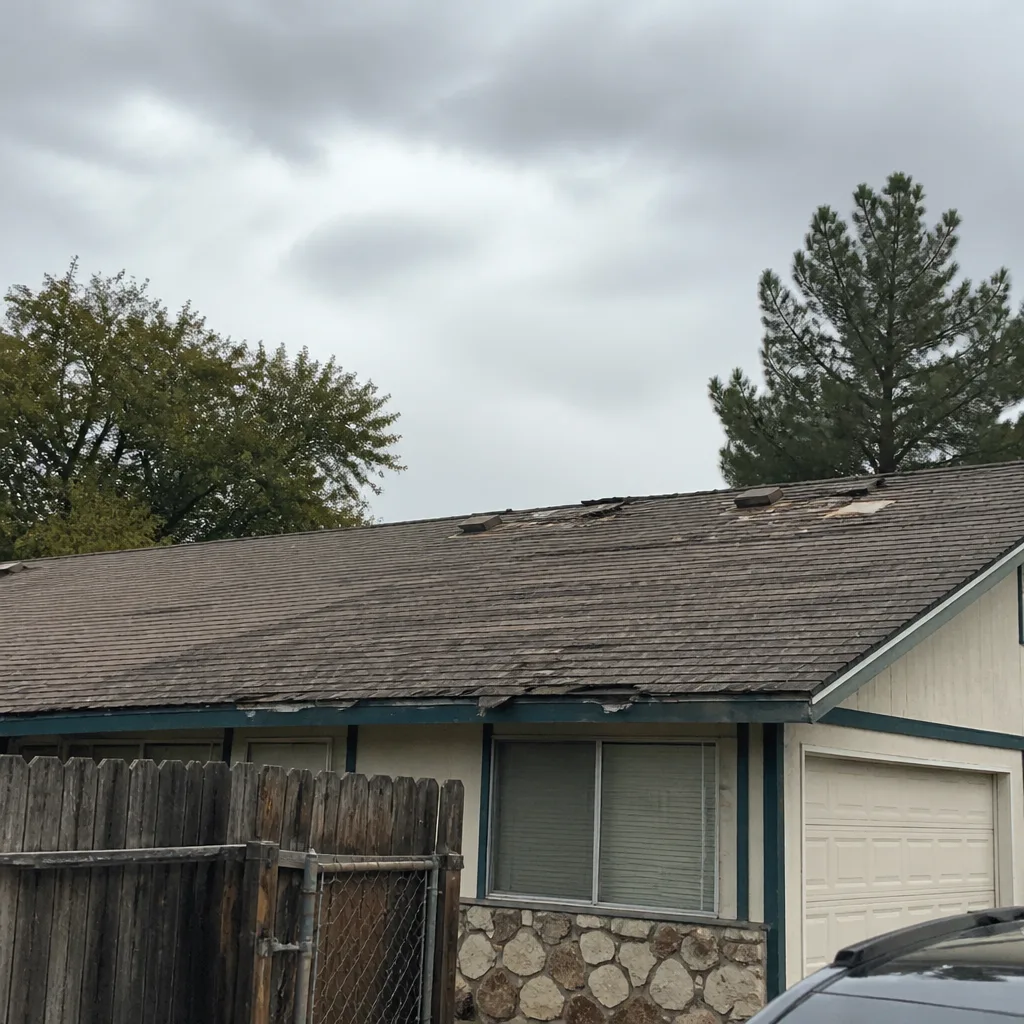 Before
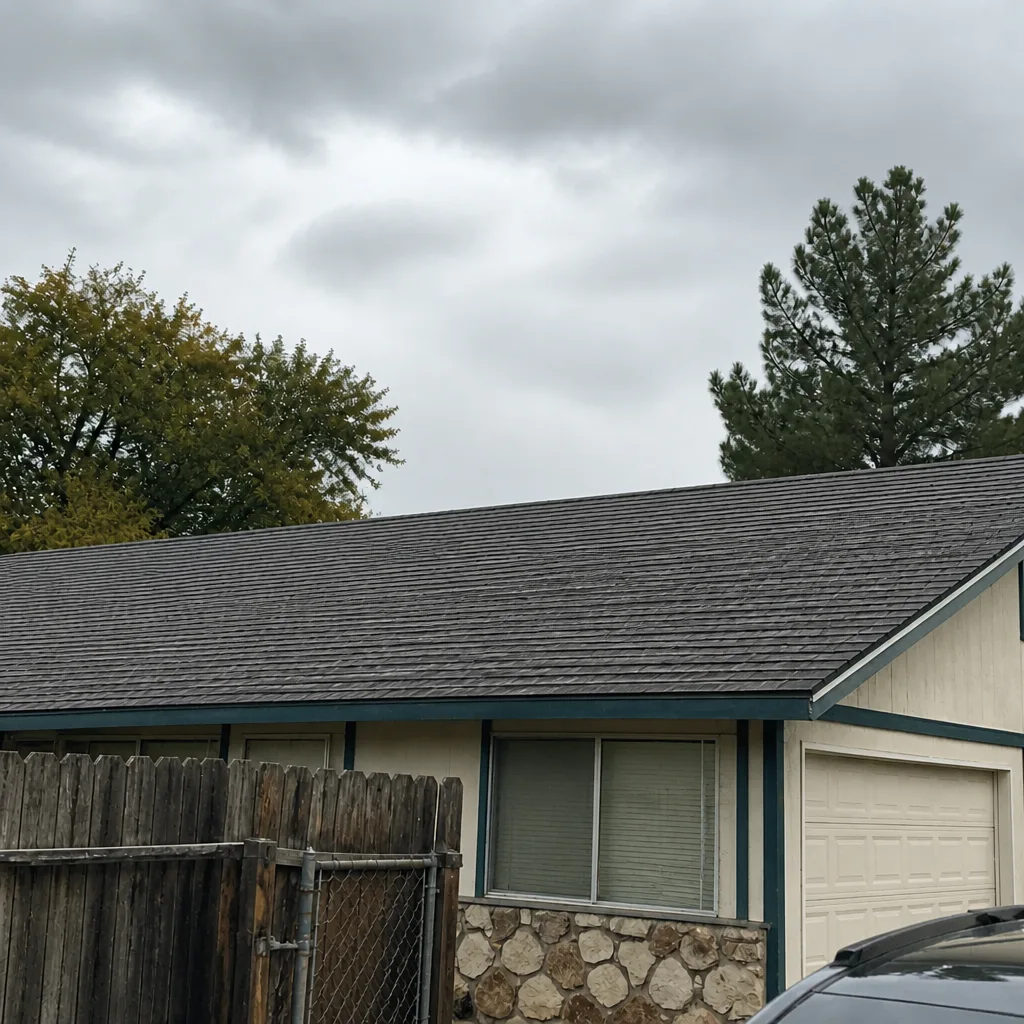 After
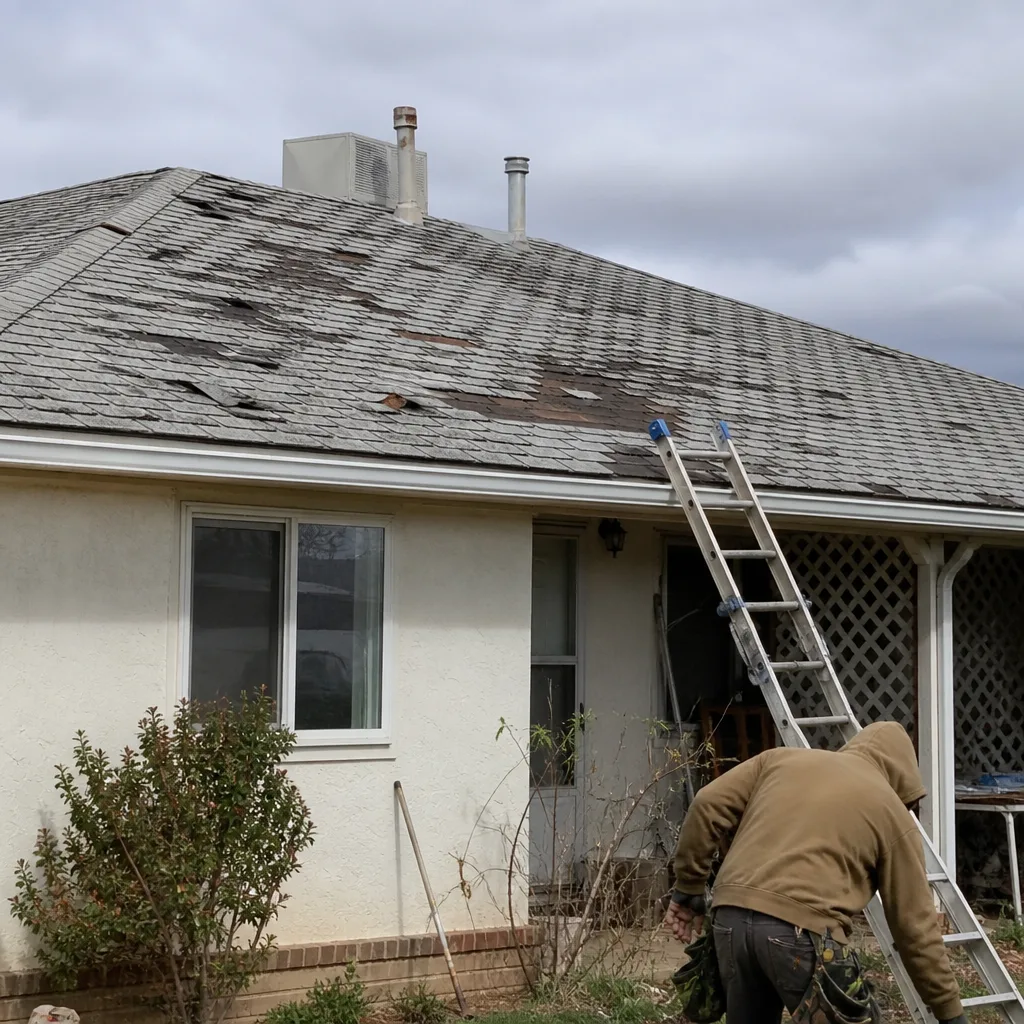 Before
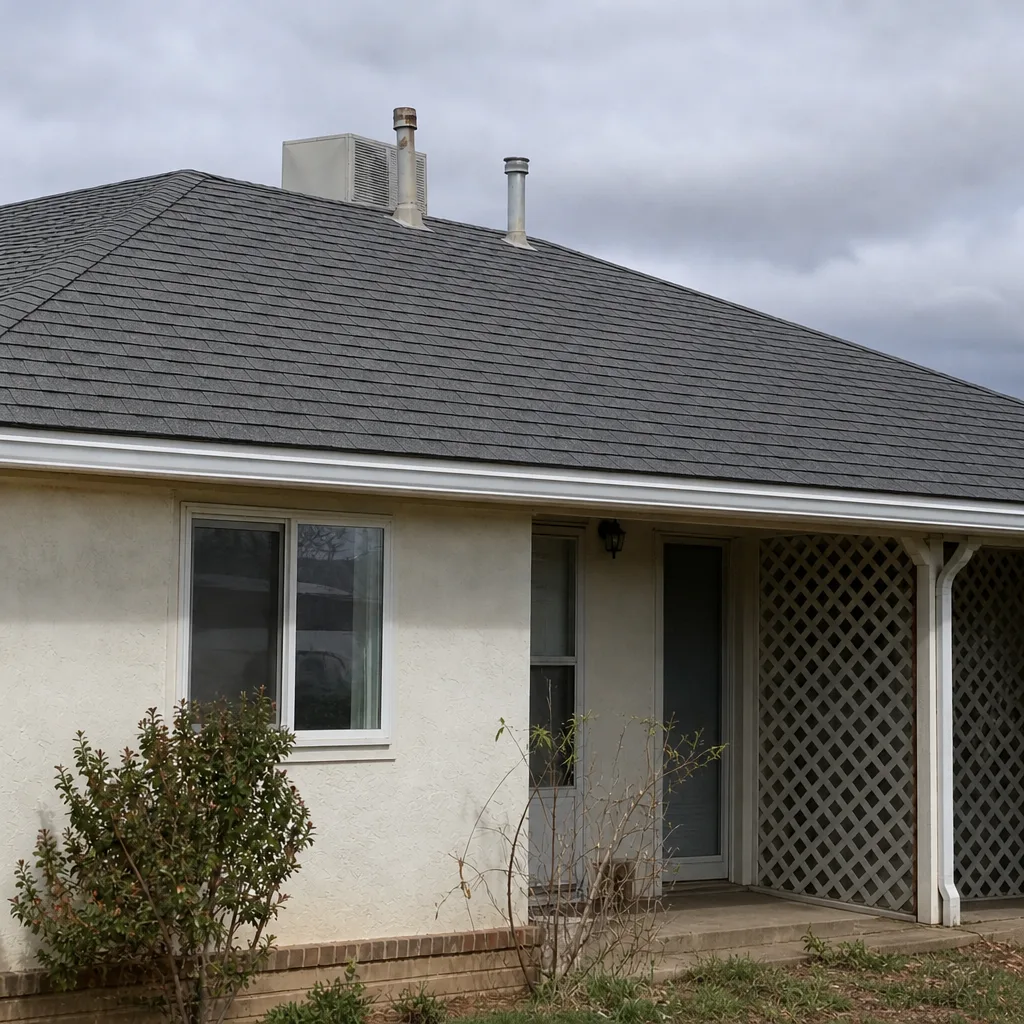 After
When to Call a Professional
Call for anything on the roof structure itself – stripped shingles, deck repairs, flashing around penetrations, valley work, and full replacements. Call if the permit question gets complicated, if you’ve had a failed inspection phase on a homeowner permit, or if a repair reveals more damage than expected. Call for storm or impact damage assessment, ceiling stains that suggest a leak, and any work you’d be doing in August heat. And call for a standalone inspection when you’re not sure whether repair or replacement is the right answer – a diagnostic inspection isn’t biased toward an upsell, and it’s the fastest way to a straight answer.
Enterprise Roofer connects you with independent local professionals who handle inspection, repair, and replacement from one starting point, so the job doesn’t get handed off. Enterprise Roofer offers free estimates in Enterprise – call (866) 834-8493. We answer 24/7. Fast dispatch from 7am to 7pm, Sunday through Friday.
Frequently Asked Questions
Yes, Nevada law allows homeowners to work on their own primary residence, but Clark County still requires a permit for most re-roofing regardless of who performs the work. A homeowner-pulled permit carries the same inspection sequence a licensed contractor faces, and you carry any correction costs and re-inspection risk alone. Call (866) 834-8493 for an exact quote – estimates are free.
Most professional crews stop installing shingles once ambient temperatures climb above safe working thresholds, and shingle handling typically gets unreliable above about 100°F because the adhesive strips activate prematurely. In Enterprise, that means the practical installation window is early morning during the summer months. Our technicians have up to 9 years of experience scheduling around this, and we plan shingle work accordingly – call (866) 834-8493 for a free estimate.
The homeowner is responsible for correcting the failed work and scheduling a re-inspection at their own cost. There’s no licensed professional absorbing the risk or speaking with the inspector on your behalf, so the phase has to be corrected before the next phase can proceed. Call (866) 834-8493 for an exact quote on handling the correction – estimates are free.
It typically narrows what’s covered. A shingle product warranty often remains in effect for material defects, but the extended labor and workmanship warranties tied to certified installation are usually not available on a homeowner install. If a manufacturer attributes a failure to installation, the repair cost usually lands on the homeowner. Call (866) 834-8493 to discuss options – estimates are free.
For minor items like clearing debris, replacing a single lifted shingle, or tightening a dried caulk line, yes, if you work early in the morning and stay off the roof once the surface heats. Once the repair requires moving multiple shingles, opening a valley, or getting into flashing or underlayment, it’s a professional repair – the scope grows quickly and a small mistake turns into water intrusion. Call (866) 834-8493 for roof repair in Enterprise – estimates are free.
The gap is narrower than the raw material comparison suggests. Trade pricing on premium shingle lines brings material costs down through contractor accounts, and warranty tiers available only through certified installers cover labor that a DIY roof leaves uncovered. Add permit risk, inspection risk, and heat-related timeline delays, and the DIY savings on a full roof often don’t hold. Call (866) 834-8493 for a written line-item quote on a roof replacement – estimates are free.
The Bottom Line
The DIY vs professional question in Enterprise is less about material cost than about permits, inspections, and heat. Nevada gives homeowners the legal room to do their own roofing, but Clark County requires a permit for most re-roofing, and a homeowner permit carries the same inspection sequence without a licensed professional to backstop a failed phase. Summer shingle installation in a desert climate adds safety and performance risks that cost comparisons alone don’t capture. The reasonable DIY scope is small repairs – a lifted shingle, debris, dried caulk – done early in the morning. Beyond that, a professional inspection and written estimate will tell you what the roof actually needs, whether that’s a targeted repair or a full replacement.
If you’d like a straight assessment of your roof and a written line-item quote, call (866) 834-8493. We answer 24/7. Fast dispatch from 7am to 7pm, Sunday through Friday. From a standalone inspection through roof repair and full replacement, roof repair and replacement work stays with one team from the first shingle lifted to the final inspection.
Written by the team at Enterprise Roofer.